
Quartz
Subscribe
Quartz
Subscribe
Edition
Business News
A.I.
Technology
Money & Markets
Leadership
Lifestyle
Latest

Get Quartz in your inbox

Free daily briefing on global business news.

Business News
AirlinesAutomobilesFoodPharmaceuticalsPolitics & GovernmentRetail & EcommerceSpace & AerospaceEarnings
Technology
A.I.ComputingConsumer TechSpace & AerospaceEarnings
Money & Markets
Economic IndicatorsMarketsPersonal FinanceEarnings
Lifestyle
Cars & BikesCollectingEntertainmentFood & Fine DiningHealth and FitnessReal EstateTravel
Quartz

Global business news for a smarter world

Topics

  • Business News
  • Money & Markets
  • Tech & Innovation
  • Generation A.I.
  • Lifestyle
  • Leadership

Products

  • Daily Brief
  • Weekly Digest
  • Member Benefits
  • Quartz Pro

Legal

  • Sitemap
  • About
  • Accessibility
  • Privacy
  • Terms of Service
  • Advertising

© 2026 Quartz Media, Inc. All rights reserved.

A.I.

Quantum computing is coming to a data center near you

Quantum computers can solve problems that that classical machines can't. Companies like Nvidia and Microsoft have already built its infrastructure

By Jackie Snow·5 min read·Updated May 14, 2026
Add QZ to Google
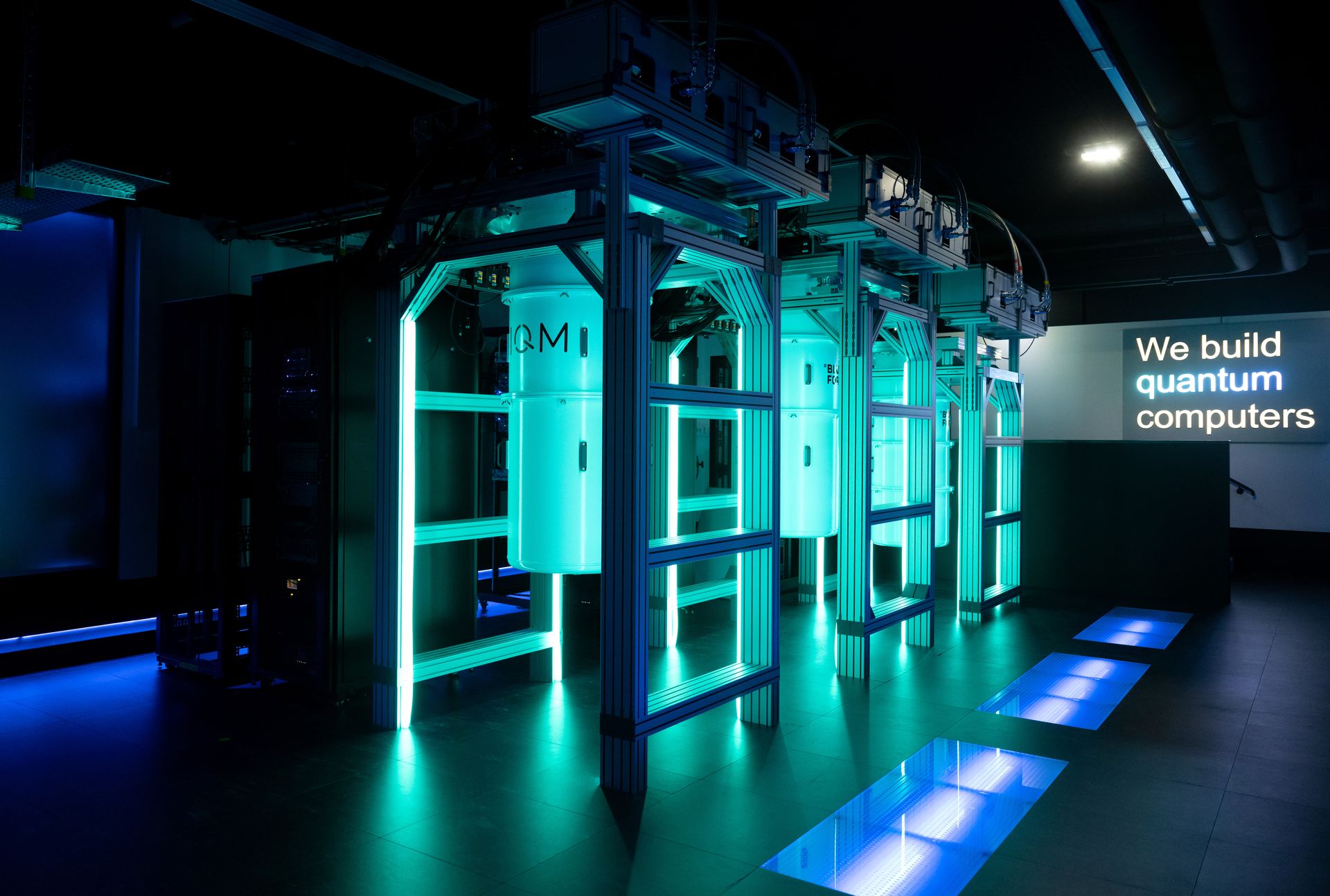
Quantum computing is coming to a data center near you

Photo by Sven Hoppe/picture alliance via Getty Images

For years, AI data centers and quantum computing have been covered as separate stories with separate problems. One is about gigawatts, grid strain, and utility fights over who pays for the buildout. The other is about lab physics, cryogenic cooling, and breakthroughs that are always a decade away.

That separation has started to collapse. Microsoft $MSFT has been pushing a quantum processor designed to fit into standard server rack footprints. IBM $IBM has a quantum computer running next to a classical supercomputer. And NVIDIA this month launched Ising, a family of open source AI models built specifically to manage the errors that plague quantum hardware, pitched as the path to what the company is calling "quantum GPU supercomputing."

It's a notable shift for a technology that has spent a decade being covered mostly as a lab curiosity or a cybersecurity threat. Quantum is moving into the infrastructure conversation because the infrastructure is there.

A different tool for a different job

There's an assumption (and sometimes a pitch) that quantum will do for AI what GPUs did. Drop in, speed things up, change the economics. That's not what the people actually building these systems say.

What they describe is a different category of machine. Quantum computers are fast at a narrow but valuable set of problems that classical machines struggle with or can't solve at all. Designing new battery chemistries is one. Modeling molecular interactions for drug discovery is another. It can build photovoltaic cells that convert light to electricity more efficiently, or optimize portfolios and price derivatives in ways that give financial firms an edge a competitor can't match.

The same machines can also break the encryption that secures most of the internet, which is why governments and enterprises are already migrating toward post-quantum cryptography on a timeline set by the hardware's progress rather than their own preferences.

What's changed is where the quantum processor lives. The emerging picture is one where a quantum processing unit, or QPU, sits alongside a CPU and a GPU inside the same data center, handing off workloads between them.

"A misconception many folks used to have is that a quantum machine is a standalone entity. It's not. A quantum machine is very much part of the ecosystem. It sits right next to a hyperscaler," said Zulfi Alam, the corporate vice president of quantum at Microsoft.

The physical footprint is modest. Microsoft's current design fits inside a standard server rack and draws about 30 kilowatts, most of that for the refrigeration required to cool the qubits to a fraction of a degree above absolute zero. The cold part itself, Alam said, is only about the size of a soda can. Everything else runs at room temperature.

The hybrid model isn't theoretical. IBM has quantum computers deployed at research institutions where they're being used alongside classical supercomputers on real scientific workloads. At RIKEN, Japan's flagship research institute, one sits next to the Fugaku supercomputer, running parts of molecular simulations that hand off between the two machines.

It's an evolution, according to Jerry Chow, CTO of quantum-centric supercomputing at IBM. "We're moving into a data center model where we're actively looking at co-located CPU and GPUs with quantum processors," Chow said. By the 2030s, he said, the industry expects to rethink the supercomputer entirely as a fully integrated system of CPUs, GPUs, and QPUs.

What it won't do, and when it will

One thing quantum is not going to do is make the data center energy crisis go away.

"Think of quantum computers as different types of computers for different use cases," said Marc Lijour, an IEEE member who teaches in the MBA program at International Business University. "You might have a pickup truck and a small two-place sports car in your garage. They're both good at what they do. One is not lowering the costs of the other."

AI training and inference run on classical hardware, with GPUs churning through matrix math across enormous datasets, and quantum computers are bad at exactly that kind of workload. They can't absorb AI's compute, can't run it more efficiently, and can't substitute for it.

The scale difference makes the point concrete. A single rack of NVIDIA's most popular AI training chips draws 120 to 140 kilowatts, and next-generation systems are projected to push past 200. A hyperscale AI campus runs tens of thousands of racks and can consume hundreds of megawatts, with some facilities projected to hit a gigawatt. A quantum machine supporting a couple thousand qubits, by contrast, runs on about 30 kilowatts total.

The AI side, meanwhile, is getting hungrier. Agentic AI systems can require orders of magnitude more compute than a single chatbot query because they run thousands of autonomous agents managed by supervisor agents. Quantum may eventually help optimize some of those workloads at the margins. It is not going to absorb the load.

For enterprise buyers trying to figure out what any of this means for their budgets, the honest answer is: not much, yet.

"I don't think we're at the year of at-scale quantum data center scale-up," said Rodrigo Madanes, EY's global next frontier technology & AI leader. Scientific computing and financial services are the two industries driving real enterprise demand. Most other sectors are watching.

The more urgent quantum story for enterprises right now, Madanes said, isn't about buying quantum compute at all. It's about preparing for the day when someone else's quantum computer can break current encryption, a migration to post-quantum cryptography that is already on the clock regardless of how fast the hardware matures.

"People know it's coming," he said, "and we need to get that right."

Daily Brief

The essential business news, delivered fresh every morning.

Join 500,000+ readers who start their day with Quartz.

By subscribing, you agree to our Terms of Service and Privacy Policy.

Related

Business NewsWalmart is replacing its U.S. operations chief as leadership overhaul continues
Politics & GovernmentEpstein victims called acting attorney general "abrasive" after DOJ meeting
FoodKopi Kenangan, backed by Serena Williams and Jay-Z, is meeting with banks as Indonesia's biggest coffee chain eyes an IPO
AutosZoox is recalling its entire robotaxi fleet after one drove into a smoke-filled fire scene
Cloud ComputingAnthropic is in talks to lease AI computing power from Meta in a $10 billion deal