The AI boom isn't just a stock market story. It's also a bond market story. And the bond market version may actually matter more
Paul Moseley/Fort Worth Star-Telegram/Tribune News Service via Getty Images
Bonds are boring. Except when credit breaks catastrophically, and then the whole market collapses.
For most people, even relatively sophisticated retail investors who manage their own money, those two realities make up their entire intuitive map of the $150 trillion global credit market. The second one, in particular, is less an analytical position than a visceral fear response — a leftover from 2008 that now almost goes without saying, even as it shapes reactions to any credit news that breaks into the mainstream.
With the rise of AI, however, this map needs an urgent update. Otherwise, it's almost impossible to make sense of what’s happening in finance right now: why Blue Owl fund redemptions are grabbing headlines, what experts actually mean when they warn about cracks in private credit, the real economic scale of the AI buildout, and how and why the contents of are quietly changing, without anyone announcing it, and without most investors ever noticing.
Join 500,000+ readers who start their day with Quartz.
By subscribing, you agree to our Terms of Service and Privacy Policy.
There are worse places to begin than with this: AI is not only a stock market story. It's also a bond market story. And the bond market version may actually matter more.
Until recently, the biggest borrowers in the U.S. investment-grade corporate bond market — a roughly $7 trillion slice of the total global credit market, but one that punches above its weight in influence — were banks. Names you know like JPMorgan $JPM and Bank of America $BAC. A familiar cast, and no wonder. Borrowing, lending, and investing is what banks do.
Now that cast is quickly changing to include tech’s biggest names, and insiders can tell you the moment the change came down.
Jason Miller, managing director and head of diversified industries at Citizens, traces it to October of last year, when developer TeraWulf priced roughly $3.2 billion for its Wolf Compute data center. When deals started getting this big, Miller said, banks that otherwise might do the lending began bumping up against internal caps on how much sectoral exposure they wanted. So would-be borrowers went looking for other sources of capital beyond bank loans. Equity financing was and is an obvious option. But bond-market financing is cheaper. “Debt financing costs roughly half what equity does,” said Neil Sun, a portfolio manager at RBC Global Asset Management.
Suddenly, the math pointed one way. And the tech crowd followed.
In the last three months of 2025, Oracle $ORCL, Meta $META, Google $GOOGL and Amazon $AMZN — the AI "hyperscalers," in analyst shorthand — issued roughly $90 billion worth of bonds between them. In a memo this January, Apollo chief economist Torsten Sløk projected that if hyperscalers finance even 20% of their planned AI capex through investment-grade bonds over the next four years, then the index indexes which track the sector reshuffle outright. Amazon would vault into the top three bond issuers. Meta, Microsoft $MSFT, Oracle, and Google would all push into the top 10. Google — currently the 67th-largest issuer — would vault to eighth.
“When you start issuing $25 or $50 billion dollars of debt at a clip, it's very easy to put yourself into that top 10 largest borrowers, said Jason Greenblath, a senior portfolio manager and director of corporate credit research at American Century Investments. “So the composition of the index will change. It is changing.”
In short, tech is now taking its place among the largest borrowers in the American credit system. That shift is already underway, and it’s historic in scale, big enough to help grow the entire underlying corporate bond market.
How historic? Well, it’s a bigger credit market story than the dot-com boom. Mark Zandi, chief economist at Moody's $MCO Analytics, has said that tech borrowing has already eclipsed dot-com-era levels. Sløk's own framing is more pointed: The increase in hyperscaler debt issuance is large enough that it raises the question of who can or will absorb it.
That is, it’s a supply-side increase of debt large enough to force focus on the demand side. Who’s buying all this “paper,” as bond-market people call it? And where does it sit within the larger financial system?
The answer, for now, looks to be the same buyers who have always absorbed vanilla investment-grade corporate debt at scale. “Yield buyers,” as Greenblath described them: insurance companies underwriting annuities, pension funds, and foreign institutional investors, particularly from Asia. “Most of it is Asia and insurance,” Greenblath said. “Those are really the two big ones.”
Sun, the portfolio manager at RBC, described it in similar terms, saying that roughly 30% of the U.S. investment-grade market is absorbed by domestic pensions and insurance companies, with a similar share coming from overseas. These are not speculative buyers chasing a hot trade. They’re institutions matching long-dated liabilities to long-dated assets — buying a 30-year corporate bond because they have a 30-year obligation on the other side of the ledger.
A quick and dirty explanation, then, might be this: You’ve got AI buildout debt on the supply side, and the annuity your dad purchased on the demand side.
That’s not necessarily a structural change in itself, more a reshuffling of characters, with tech an increasing portion of the suppliers and, on the other side, yield buyers remaining yield buyers. What it does is introduce questions about the nature of all this borrowing — and whether this debt is as sound as the old debt that used to sit in its place.
Hyperscalers are projected to spend roughly $700 to $800 billion on capex in 2026 alone, Sun said, and over the next five years, “it could be a combined $4 trillion of total capex spending.” Only some of that is being covered by free cash flow. The bond market, once a more marginal source of capital for tech companies, is becoming much more important.
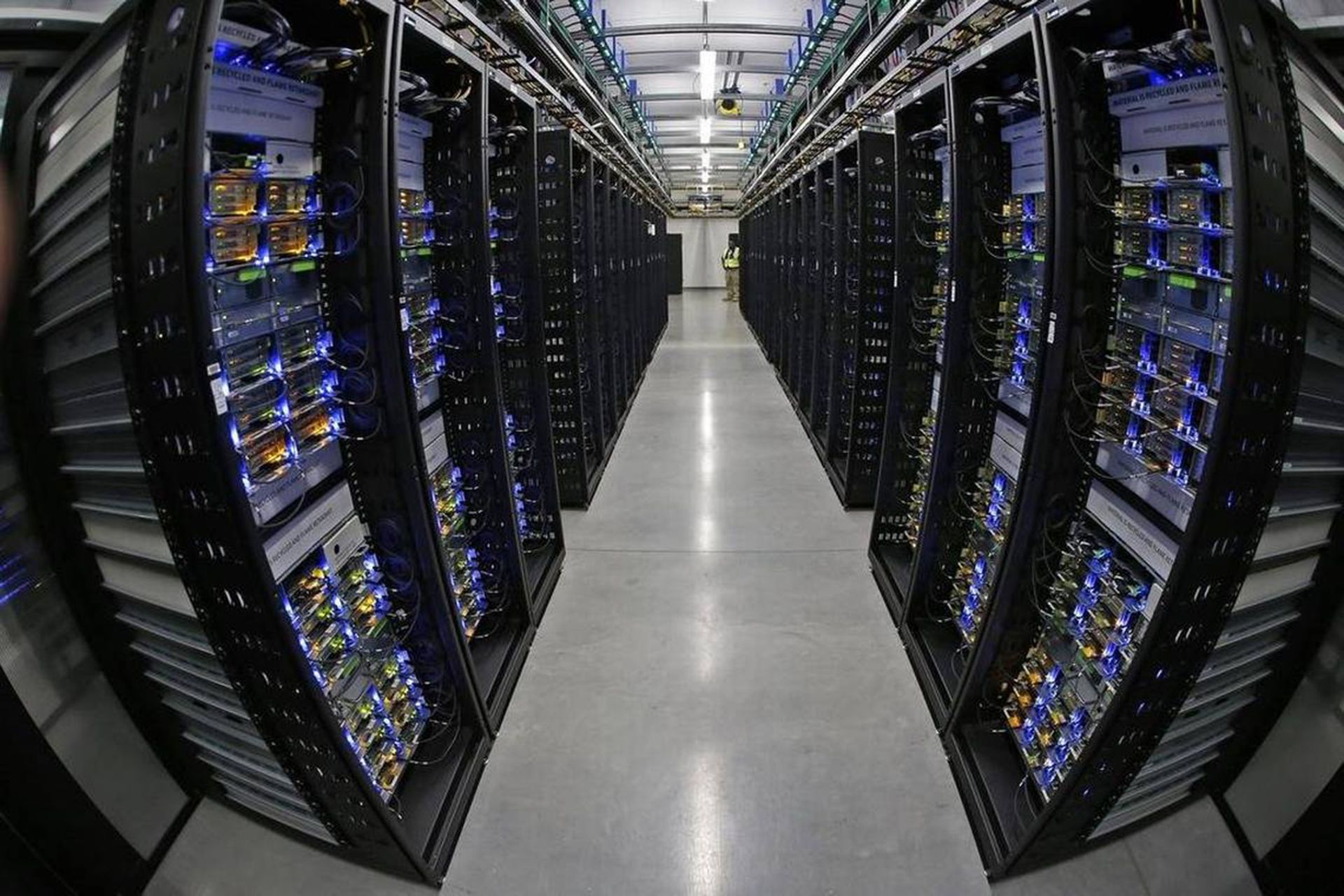
Those trillions are being used to develop AI products and also to buy land, build data centers, purchase chips, and hook up all the electrical infrastructure to run the centers. These are physical assets whose economic life has never been tested at this scale and whose residual value most analysts are reluctant to price in any precise way. But people often misread the overall credit situation because they assume this collateral is primarily important when it’s not really.
When hyperscaler credit is graded, what’s really being graded are the tremendous, long-established, and growing cash flows the hyperscalers already produce. Those are likely to grow over time whether AI realizes its proponents’ most outlandish fever dreams or not. Also in the mix? The quality and airtightness of contracts that will keep hyperscalers paying leases on data centers whether big AI payoffs come or not.
Such credit risks are the kind that most bond buyers will take all day long, and for good reason. These are sound bets. And this explains why credit spreads — a measure of the reward investors demand for taking risks beyond treasuries — remain tight. Buyers of these kinds of corporate bonds aren’t getting huge yields beyond the standard.
Put differently, the market is paying lenders less to fund Corporate America than at almost any point in a generation, and at exactly the moment Corporate America is borrowing to build something that has never been underwritten at this scale before.
You also have a tightening market beyond just credit: The prices for land, data center equipment, and more are all rising because of the intense competition for them, which is one reason capex projections keep rising: note how building a single data center in Michigan was projected to cost $10 billion last fall, but will now cost more like $16 billion.
Of course, not all hyperscalers are created equal — Oracle being the notable edge case — and some of the bond issuance is not coming from hyperscalers at all, but instead from different AI players, the “neoclouds” like CoreWeave (companies with infrastructure-as-a-service business models) that sometimes use arguably much riskier financing structures.
The AI buildout bears tend to question that part of the stack, the neocloud one that uses GPU-collateralized debt structures. These skeptics are somewhat difficult to find within major institutions — or reluctant to voice doubts on the record. AI founders and proponents want to raise money. Investment bankers want to write the business. Fund managers read market opportunities in complex ways and seek to take advantage of mispricings, seeing a chance for active management to outperform benchmarks.
Dave Friedman is an independent analyst, which puts him outside the usual incentive structures. His summary: “The bear case isn't ‘AI is a bubble’ or ‘the technology doesn't work.’ The technology works," Friedman said. "The demand is real. The bear case is narrower and more technical: The financing structures being used to build the infrastructure embed assumptions about residual values, utilization rates, and counterparty stability that are not well-supported by the data we have.”
“You can be bullish on AI and bearish on the specific debt instrument financing its buildout. Those aren't contradictory positions,” he said. “Most of the people I talk to who actually underwrite this paper for a living understand that distinction. Most of the public commentary collapses it.”
Still, there are implications for retail investors, and for anyone with a 401(k). All these changes in the bond market ripple out. “Some of this paper,” Friedman said, “ends up in broad-based corporate bond funds that sit in target-date retirement products. The retail holder has no idea why they own it, no framework for evaluating it, and no ability to exit it independently of the fund.”
That's not inherently a scandal, Friedman added, pointing out that diversified bond funds own lots of things individual holders don't track. “But the specific risk profile of GPU-collateralized debt is different enough from traditional corporate credit that I think the disclosure regime hasn't caught up,” he said. “An ordinary investor looking at their bond fund’s fact sheet sees ‘investment grade corporate’ or ‘high yield’ and assumes that means something stable. They're not told that a growing share of new issuance in those buckets is financing a specific asset class with untested residual economics.”
“Whether that rises to the level of inadequate disclosure is a legal question I can't answer,” Friedman said. “Whether it's being adequately discussed, publicly, in plain language: clearly not.”
So he’s not sounding the alarm. He’s saying that yes, one’s internal map needs updating.
Finally, what about the scary headlines about private credit? Are analysts indicating concerns about AI buildout debt — some of which is private credit — or something else?
The concerns are related, but not the same. For instance, some concerns about private credit are related to loans made to software companies and other businesses whose cash flows are now being squeezed by AI disruption. The fear, essentially, is that AI is eroding the value of those loans. Worries about AI buildout debt, and the way some of the financing is structured, are distinct yet connected: a cousin, not a sibling.
It's worth clearing up the conflation. The last time ordinary people got a nasty surprise from credit markets, it crashed the whole financial system — every corner, from bonds to stocks — and that muscle memory gets reactivated every time credit problems make headlines. This memory is useful, too, because it’s genuinely true and historically accurate to say that big, systemic problems often show up in credit markets before equity markets.
This time out, we have the chance to update our understanding before the fact. That’s not to say a nasty surprise is on the way. But don’t you want to know enough to see one coming?
