
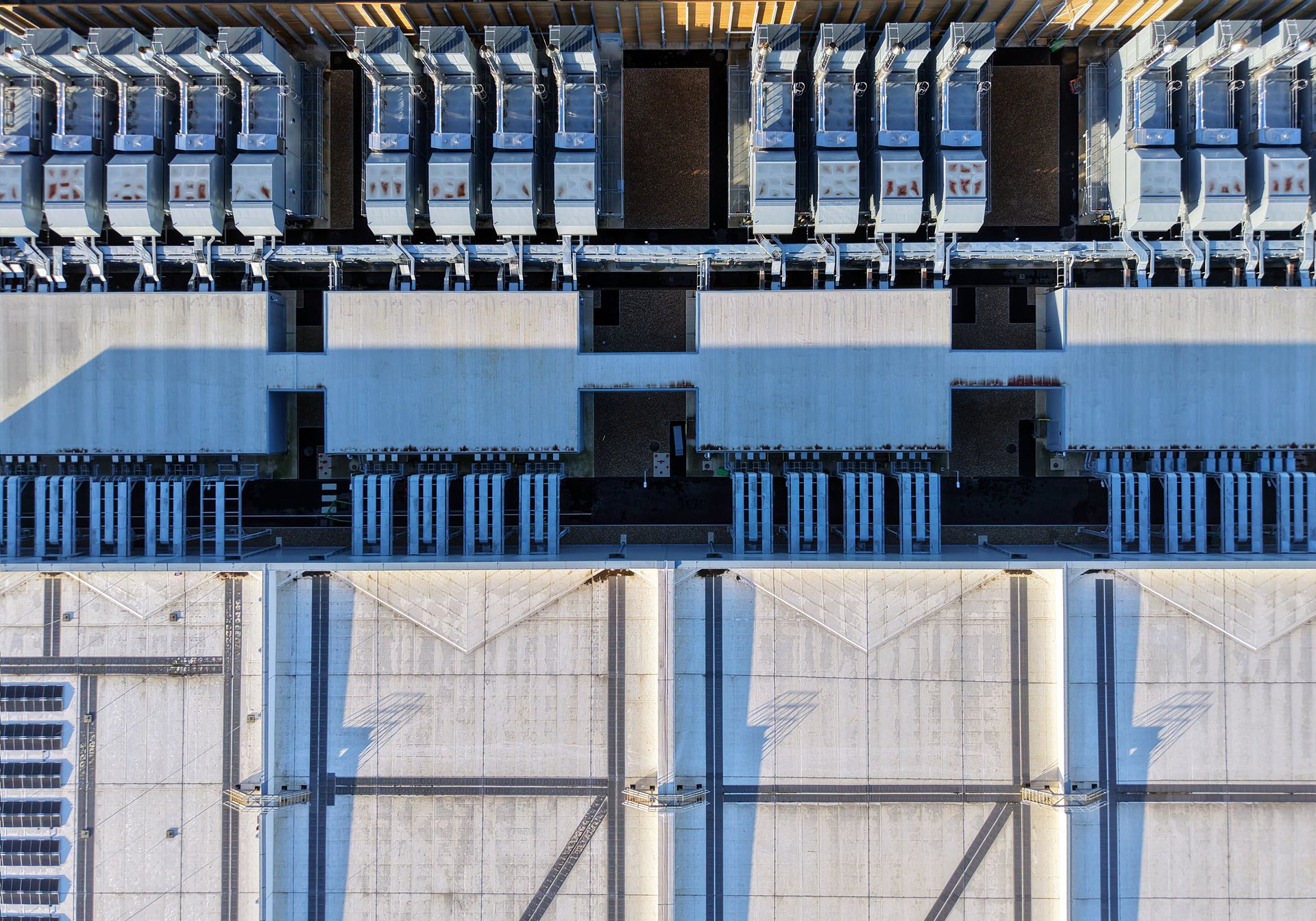
When Related Digital announced in April that it had secured financing for its Oracle $ORCL data center campus in Saline Township, Michigan, the price tag was $16 billion. The figure was more than double the $7 billion estimate originally given when the project was announced in 2025. A spokesperson for the developer did not respond to questions about the discrepancy.
The Michigan project is one campus. But the pattern it illustrates is industry-wide. The cost of building data centers is climbing on multiple fronts at once, and the forces behind the increase are structural, not temporary.
That matters for the broader story of how AI infrastructure is being financed, because every dollar of cost inflation becomes a dollar that must be borrowed, repaid, and carried on someone's balance sheet.
Everything costs more, all at once
Start with the physical buildings. Turner & Townsend's 2025 data center construction cost index shows a 5.5% increase in the cost per watt of building a traditional cloud-based, air-cooled data center. AI-optimized facilities cost more.
Facilities designed for AI density can reach $20 million per megawatt or more, due to advanced liquid cooling requirements and higher power densities, compared with $10 to $12 million per megawatt for standard builds. Almost half of the survey respondents reported bid or tender price increases between 6% and 15% over the past year, with another 21% saying increases exceeded 15%.
The per-square-foot figures tell a similar story. In the 12 months through November 2025, the average data center cost $597 million at $960 per square foot, according to ConstructConnect. A year earlier, those figures were $374 million and $534 per square foot.
Land is another input under pressure. According to Cushman & Wakefield's U.S. Data Center Development Cost Guide, the weighted average cost of data center land reached $5.59 per square foot ($244,000 per acre) in 2024, with prices for parcels of 50 acres or larger up 23% from 2023. In the most sought-after corridors, the increases are far steeper.
In Northern Virginia's Loudoun and Prince William counties, parcels that once sold for $300,000 per acre now command $2 to $3 million or more, according to Datacenters.com. In Salt Lake County, parcels once valued at $50,000 per acre are approaching $400,000, driven almost entirely by data center demand.
The transformer bottleneck
Among the less visible cost pressures is electrical equipment, above all transformers. Every data center needs them, and the country does not have enough. According to a report from Wood Mackenzie titled "Untangling the US transformer supply chain crisis," power transformer demand has risen 116% since 2019, while distribution transformer demand is up 41%. The resulting supply shortage reached 30% for power transformers and 10% for distribution transformers in 2025.
That deficit translates directly into delays and costs. Since 2019, unit costs have risen 77% for power transformers and up to 95% for distribution transformers, depending on the specification, according to Wood Mackenzie. Lead times have lengthened in parallel. Power transformers averaged 128-week lead times, and generator step-up units averaged 144 weeks, in Wood Mackenzie's second quarter 2025 survey.
That is roughly two and a half to three years from order to delivery. Current trade policy and the ongoing supply shortfall are expected to push transformer prices an additional 20% to 30% in the coming years, according to the same Wood Mackenzie analysis. For a hyperscale campus requiring dozens of large transformers, those increases compound into tens of millions of dollars per project.
Labor and permitting add to the squeeze
Workers are scarce, too. According to the Information Technology and Innovation Foundation, the construction industry faced a shortage of about 439,000 workers as of November 2025, most in skilled positions such as electricians and pipe layers. Data center construction jobs pay up to 30% more than typical construction jobs, a premium that reflects the competition for specialized labor.
The scale of individual projects has changed the math for field staffing. According to DataBank, where peak crew sizes once reached 750 workers, sites like DataBank's Red Oak campus will require 4,000 to 5,000 workers by early 2026. Workers are relocating from markets where power constraints have slowed construction, like Arizona, to booming regions like Dallas, with increased wages, per diem expenses, and relocation costs adding up.
Permitting adds another layer of time and cost. In the U.S., securing permits for a new data center typically takes six to 18 months, according to Data Center Knowledge, with some projects stretching beyond two years. Community opposition has become a material factor: a report from research firm Data Center Watch found that $64 billion in U.S. data center projects have been blocked or delayed by local opposition.
Cushman & Wakefield noted in its second-half 2025 Americas report that new regulatory frameworks, infrastructure cost-sharing requirements, and zoning changes are lengthening development timelines in several established markets.
What this means for the financing story
The cost inflation matters beyond the construction sites because it compounds the credit picture. According to CBRE, construction activity in primary North American data center markets declined for the first time since 2020, due to longer timelines tied to permitting, zoning approvals, and securing adequate power. Capacity under construction fell to 5,994 megawatts at year-end 2025 from 6,350 megawatts at the close of 2024.
Yet demand continues to run ahead: the vacancy rate fell to a historic low of 1.4%, even amid a 36% increase in total capacity. That gap between demand and the ability to build suggests costs will not ease soon. JLL forecasts the average global data center construction cost will increase 6% to $11.3 million per megawatt in 2026. The firm describes the current environment as "an infrastructure investment supercycle requiring up to $3 trillion by 2030."
When the assets being financed get more expensive to build, the debt packages financing them get larger. The Michigan campus is a case study: a $16 billion financing that required months of stop-and-start negotiations with investors, according to Bloomberg, with Bank of America $BAC selling $14 billion of bonds tied to the project. That project is now one of the largest single data center financing packages in U.S. history. It will not be the last one to exceed its original budget.
