At a closed-door G7 lunch on Wednesday, Dario Amodei of Anthropic and Demis Hassabis of Google $GOOGL DeepMind jointly urged world leaders to back a U.S.-led effort to govern artificial intelligence through shared international rules.

Dario Amodei and Demis Hassabis addressed a closed-door lunch with G7 leaders, including President Trump, calling for coordinated global AI governance
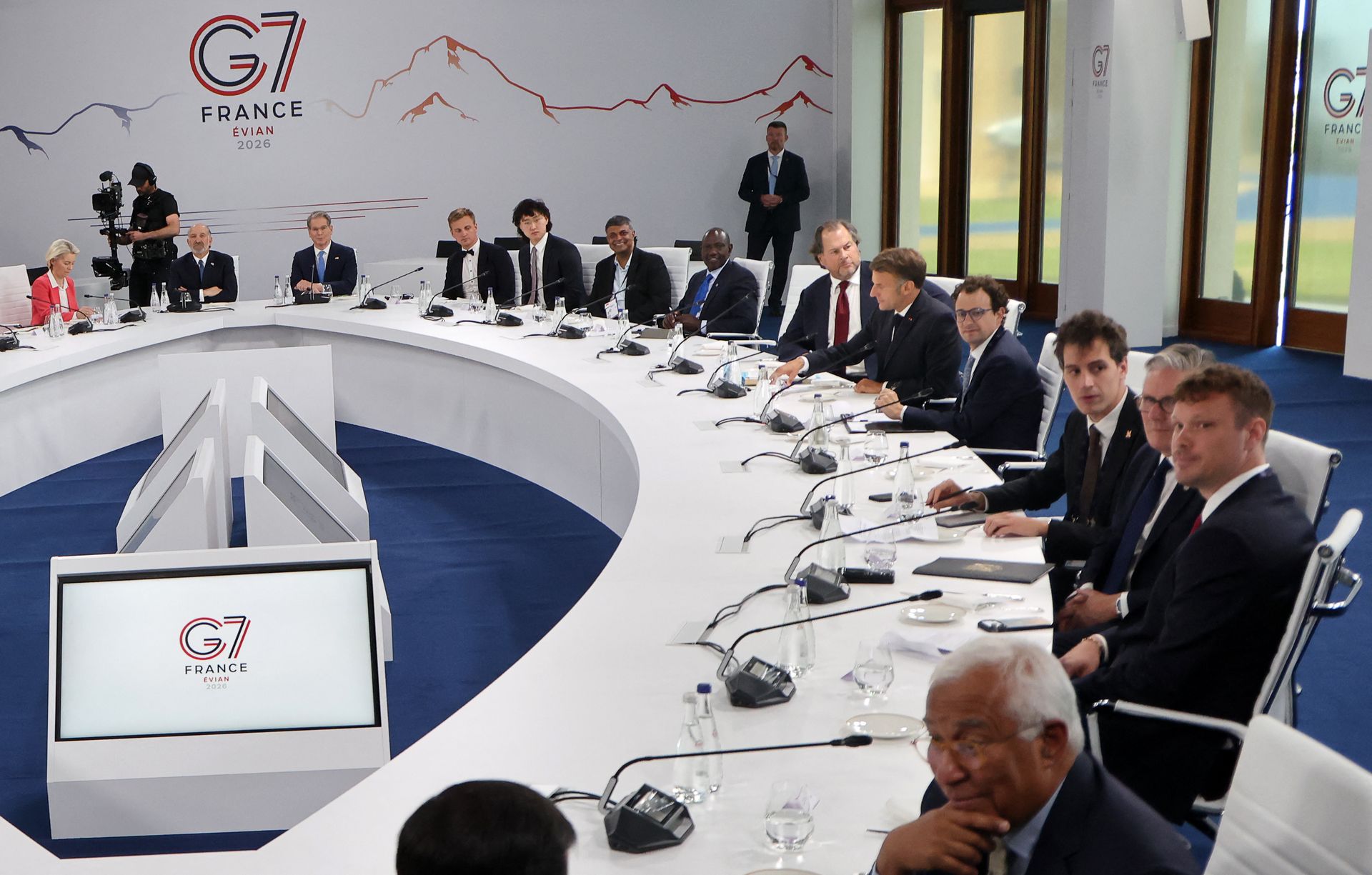
LUDOVIC MARIN / Getty Images
At a closed-door G7 lunch on Wednesday, Dario Amodei of Anthropic and Demis Hassabis of Google $GOOGL DeepMind jointly urged world leaders to back a U.S.-led effort to govern artificial intelligence through shared international rules.
The meeting took place in Évian-les-Bains, France, and included about a dozen tech executives alongside heads of state from G7 nations, including President Donald Trump. Treasury Secretary Scott Bessent, Commerce Secretary Howard Lutnick, and Secretary of State Marco Rubio also represented the U.S. at the gathering.
Among the specific priorities Amodei outlined were coordinated limits on chip exports to China and a shared framework for controlling access to the most powerful frontier AI models, citing people familiar with the discussions who declined to be named. Amodei also raised the dangers of AI being exploited in cyberattacks, bioterrorism, and intelligence operations as areas requiring multilateral action.
Sam Altman, who was also present, put forward a vision of a standing international body dedicated to AI oversight — one that would, in his words, establish "globally accepted standards for testing, provides expert and impartial analysis of capabilities and risks, and serves as a venue for cooperation among nations," a description drawn from an OpenAI briefing cited by CNBC. Chris Lehane, who oversees global affairs at OpenAI, noted that leaders from outside the United States did not dispute American primacy, with attendees conceding Washington "certainly could play the lead role in working to establish" AI standards.
Among those receptive to the idea was Canadian Prime Minister Mark Carney, who signaled openness to Washington taking the helm of such an effort.
Nothing concrete emerged from the session. Sources who described the event to The Next Web characterized it as an exchange of views rather than any kind of formal negotiating process.
The push for U.S. leadership at the G7 came against a backdrop of tension between the AI industry and Washington. As Quartz has reported on competing AI governance visions at the summit, export controls targeting Anthropic's Fable 5 and Mythos 5 models took effect June 12 after the U.S. government flagged national security risks. Anthropic pulled both models from service worldwide in response, and the company had not yet resolved its standoff with Commerce Department officials by this week.
Meanwhile, Chinese Foreign Minister Wang Yi called separately on Wednesday for a global AI cooperation organization open to all countries, presenting a competing framework to the U.S.-led model Amodei and Hassabis described inside the G7 summit.
Participants at the lunch went well beyond the headline names, with executives from Mistral, Cohere, Salesforce $CRM, and Meta $META joining the gathering alongside representatives of AI firms headquartered in India, Italy, and Japan.
Join 500,000+ readers who start their day with Quartz.
By subscribing, you agree to our Terms of Service and Privacy Policy.