Our crisis tracker boils the flood of euro-zone news down to the handful of questions that, each week, will most determine the fate of the European currency union.

Our crisis tracker boils the flood of euro-zone news down to the handful of questions that, each week, will most determine the fate of the European currency union.

A link from Eurasianet

A link from Finfacts

David Harding, the UK’s highest earner, announced to the world this weekend that he pays all of his taxes. The founder of Winton Capital Management, opened his books to prove he paid £34 million (39%) in taxes on income of £87 million in 2011.

A link from BBC

A link from Financial Times

France’s proposed 75% tax on millionaires affects only a few thousand people, at most.

France’s proposed 75% tax on millionaires affects only a few thousand people, at most.

A link from BBC

Spanish government officials outlined a new austerity budget today, aimed at shaving some €40 billion—8.9% of the budget and 0.77% of GDP—in 2013. The announcement comes amid a deepening recession in Europe’s fourth largest economy, calls from protestors outside parliament for Prime Minister Mariano Rajoy’s resignation, and pressure for Spanish officials to request a full international bailout. The aggressive budget is an attempt by the Spaniards to set their own austerity terms rather than having Brussels dictate conditions for them.

Standard & Poor’s (S&P) forecast a gloomy outlook for Europe this week. The global ratings service predicts that GDP growth will decline by 0.8% in the euro zone in 2012 and remain flat in 2013. The estimates are slightly worse than projections from a month ago showing a 0.7% drop for 2012.

Standard & Poor’s (S&P) forecast a gloomy outlook for Europe this week. The global ratings service predicts that GDP growth will decline by 0.8% in the euro zone in 2012 and remain flat in 2013. The estimates are slightly worse than projections from a month ago showing a 0.7% drop for 2012.

Celebrity chef Clarissa Dickson Wright stirred the British press into a flap (translation: frenzy) by suggesting that we cook and serve badgers for supper as an answer to a controversial badger cull in England. Badgers carry tuberculosis and are said to pass it on to cattle—thousands of which were sick and culled last year.

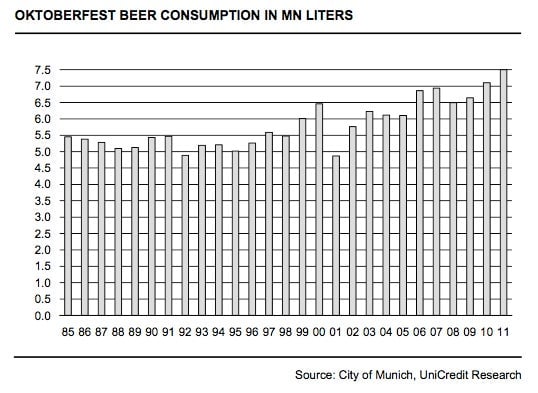
And now for a little light reading: UniCredit, in a recent Economic Flash analyst report, details beer consumption, sales, and demand in light of Oktoberfest, which gets underway this Saturday. Sales of beer have boomed for the past four years, and should boom some more. “The prospects of glittering sales this year are also excellent,” says the report’s author, Alexander Koch. There are price index charts on barley and wheat. And also on transport, beer, and chicken. (Transportation and beer prices have outpaced the price of chicken, in case you were curious). And plenty of useful facts about breweries, inflation risks, and visitor turnout. Cheers to Koch for injecting a little levity in an otherwise gloomy economic news week.

And now for a little light reading: UniCredit, in a recent Economic Flash analyst report, details beer consumption, sales, and demand in light of Oktoberfest, which gets underway this Saturday. Sales of beer have boomed for the past four years, and should boom some more. “The prospects of glittering sales this year are also excellent,” says the report’s author, Alexander Koch. There are price index charts on barley and wheat. And also on transport, beer, and chicken. (Transportation and beer prices have outpaced the price of chicken, in case you were curious). And plenty of useful facts about breweries, inflation risks, and visitor turnout. Cheers to Koch for injecting a little levity in an otherwise gloomy economic news week.

It’s a bad day to be Angela Merkel, or rather a bad week. The German chancellor is facing trouble on all fronts. Business sentiment is at its lowest point since early 2010, there’s renewed talk of recession, and German papers are reporting a Greek funding gap of €30 billion ($38.8 billion), more than twice previous estimates, and news that the German Bundesbank is looking into the legality of the European Central Bank (ECB)’s new bond-buying scheme.

It’s a bad day to be Angela Merkel, or rather a bad week. The German chancellor is facing trouble on all fronts. Business sentiment is at its lowest point since early 2010, there’s renewed talk of recession, and German papers are reporting a Greek funding gap of €30 billion ($38.8 billion), more than twice previous estimates, and news that the German Bundesbank is looking into the legality of the European Central Bank (ECB)’s new bond-buying scheme.

Our crisis tracker boils the flood of euro-zone news down to the handful of questions that, each week, will most determine the fate of the European currency union.

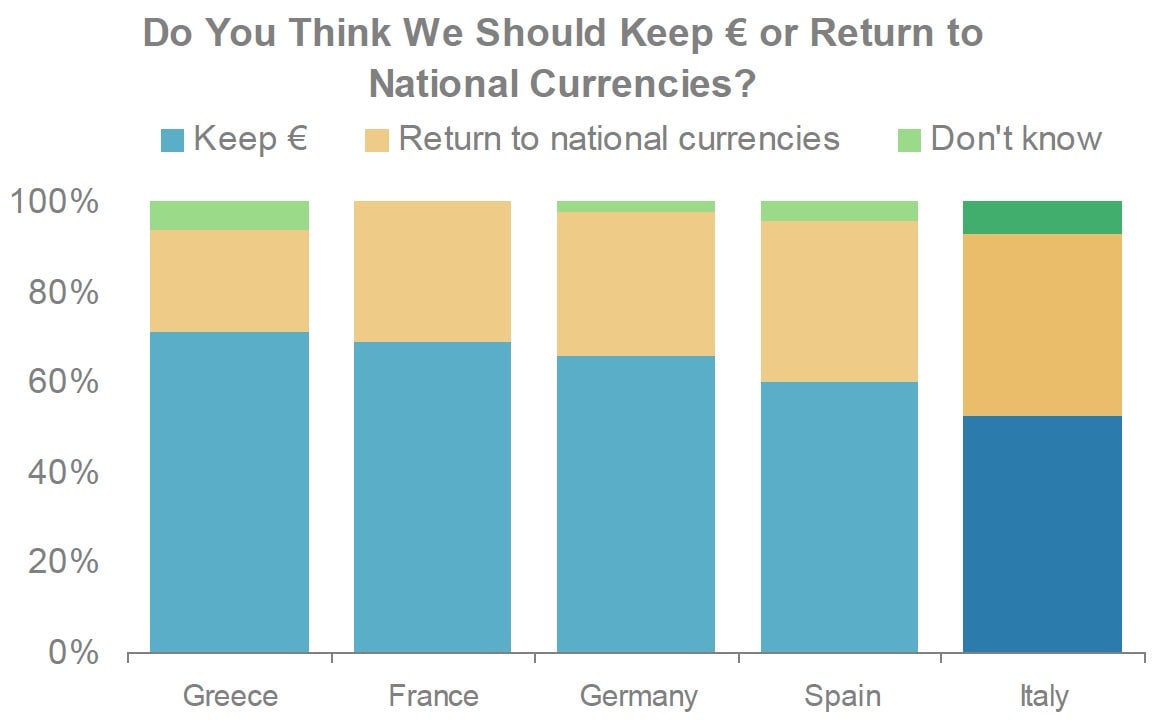
Confidence in the euro is slipping: a startling number of Europeans are saying they would prefer to return to their old currencies. Italians and Spaniards yearn the most for the lira and peseta, which you might conclude is a tad ungrateful given how kind the markets have been to these countries lately. Funny enough, it’s the Greeks—the Europeans most likely to see the return of the drachma—who are least keen on having it back.

It’s no longer oligarchs, footballers and shady business people under tax scrutiny in Britain. This weekend it emerged that the authorities will target anyone with homes and assets worth more than £1 million ($1.6 million).

Recent news that a single family home overlooking Hyde Park is on sale for £300 million ($487 million) makes you wonder how long London’s luxury property boom can last.

Recent news that a single family home overlooking Hyde Park is on sale for £300 million ($487 million) makes you wonder how long London’s luxury property boom can last.

Bucking the austerity trend, Starbucks announced that it will sell high-end single-serving espresso machines for use at home.

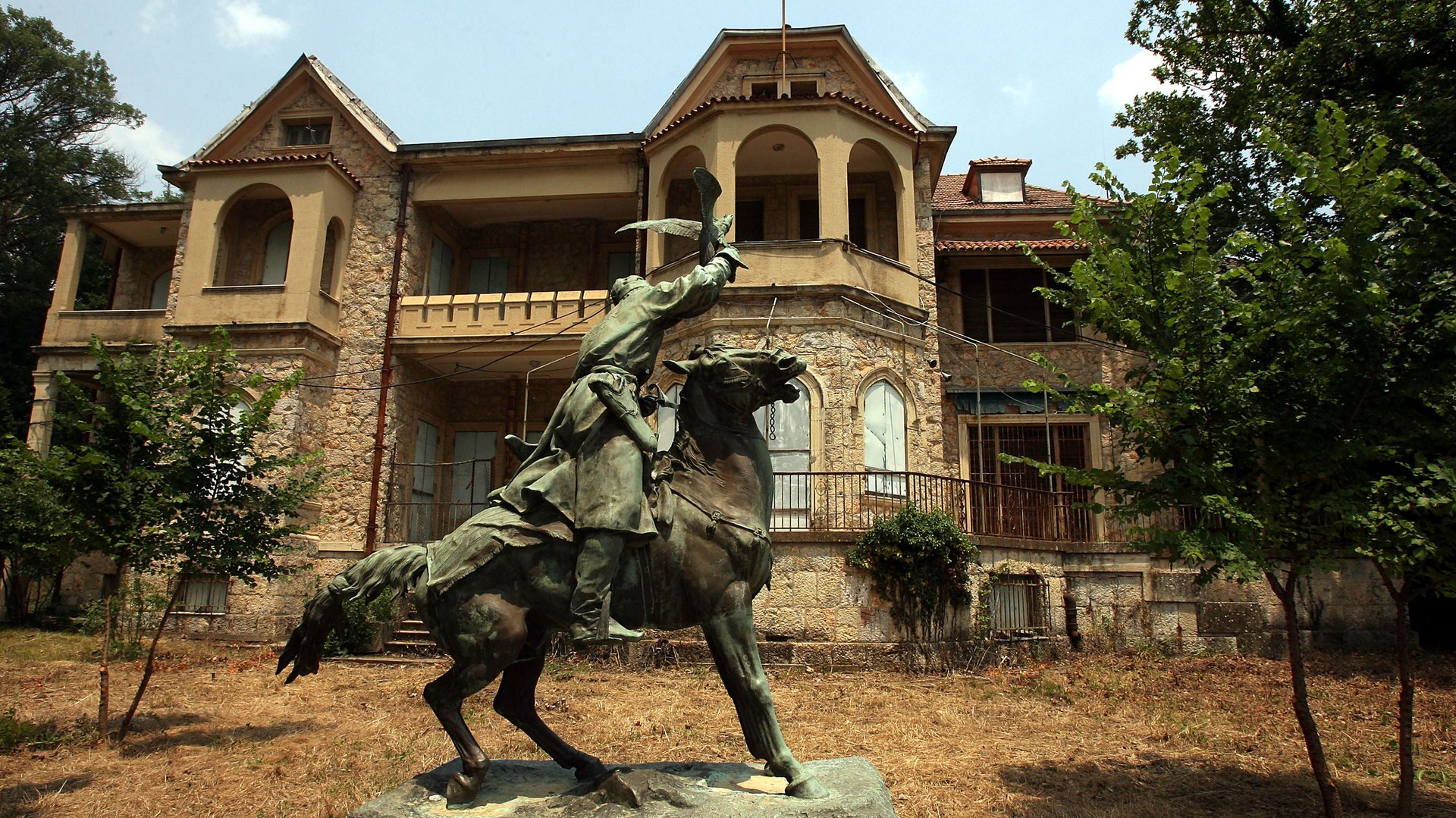
Greece’s latest austerity measures could bring a smile to the faces of anti-austerity protestors in Athens. Greek authorities reportedly plan to sell off diplomatic homes across Europe to meet a €50 billion ($65.3 billion) pledge on the sale of state assets.