
Quartz
Subscribe
Quartz
Subscribe
Edition
Business News
A.I.
Technology
Money & Markets
Leadership
Lifestyle
Latest

Get Quartz in your inbox

Free daily briefing on global business news.

Business News
AirlinesAutomobilesFoodPharmaceuticalsPolitics & GovernmentRetail & EcommerceSpace & AerospaceEarnings
Technology
A.I.ComputingConsumer TechSpace & AerospaceEarnings
Money & Markets
Economic IndicatorsMarketsPersonal FinanceEarnings
Lifestyle
Cars & BikesCollectingEntertainmentFood & Fine DiningHealth and FitnessReal EstateTravel
Quartz

Global business news for a smarter world

Topics

  • Business News
  • Money & Markets
  • Tech & Innovation
  • Generation A.I.
  • Lifestyle
  • Leadership

Products

  • Daily Brief
  • Weekly Digest
  • Member Benefits
  • Quartz Pro

Legal

  • Sitemap
  • About
  • Accessibility
  • Privacy
  • Terms of Service
  • Advertising

© 2026 Quartz Media, Inc. All rights reserved.

Markets

Bots make 90% of stablecoin transactions

Visa and blockchain data provider Allium said most stablecoin transactions occur without the involvement of humans

By Vinamrata Chaturvedi·1 min read·Updated August 6, 2024
Add QZ to Google

Nearly 90% of tracked stablecoin transactions are not human-involved. According to recent data published by Visa $V and blockchain data provider Allium, less than 10% of transactions are initiated by actual users, and most are done by bots. This means that only $149 billion out of the total of $2.2 trillion in stablecoin transactions recorded last month can be attributed to “organic” payments activity, per the analysis.


The report cites May 5 as an example, when $51.6 billion worth of stablecoin transactions were processed, but only $4.6 billion was actual activity after removing inorganic transactions.

Stablecoins are cryptocurrencies whose value is tied to that of another currency, or commodities like gold, or any financial instrument. With the new data dashboard, both companies are tracking transactions of major stablecoins, such as Tether, Circle’s USDC, Paxo’s USDP, and PayPal $PYPL’s PYUSD. All these stablecoins are pegged to the U.S. dollar.

Visa’s head of crypto, Cuy Sheffield, responded to a Coin Metrics chart that suggested stablecoins were catching up with established settlement networks. Sheffield said that transactions initiated by smart contracts, without human involvement, cannot be directly compared to traditional payment processor transactions.


Stablecoins have been developed to address the high volatility associated with the most widely used cryptocurrencies. A currency must remain relatively stable to be used as a medium of exchange, thereby guaranteeing the parties involved that it will retain its purchasing power in the short term.

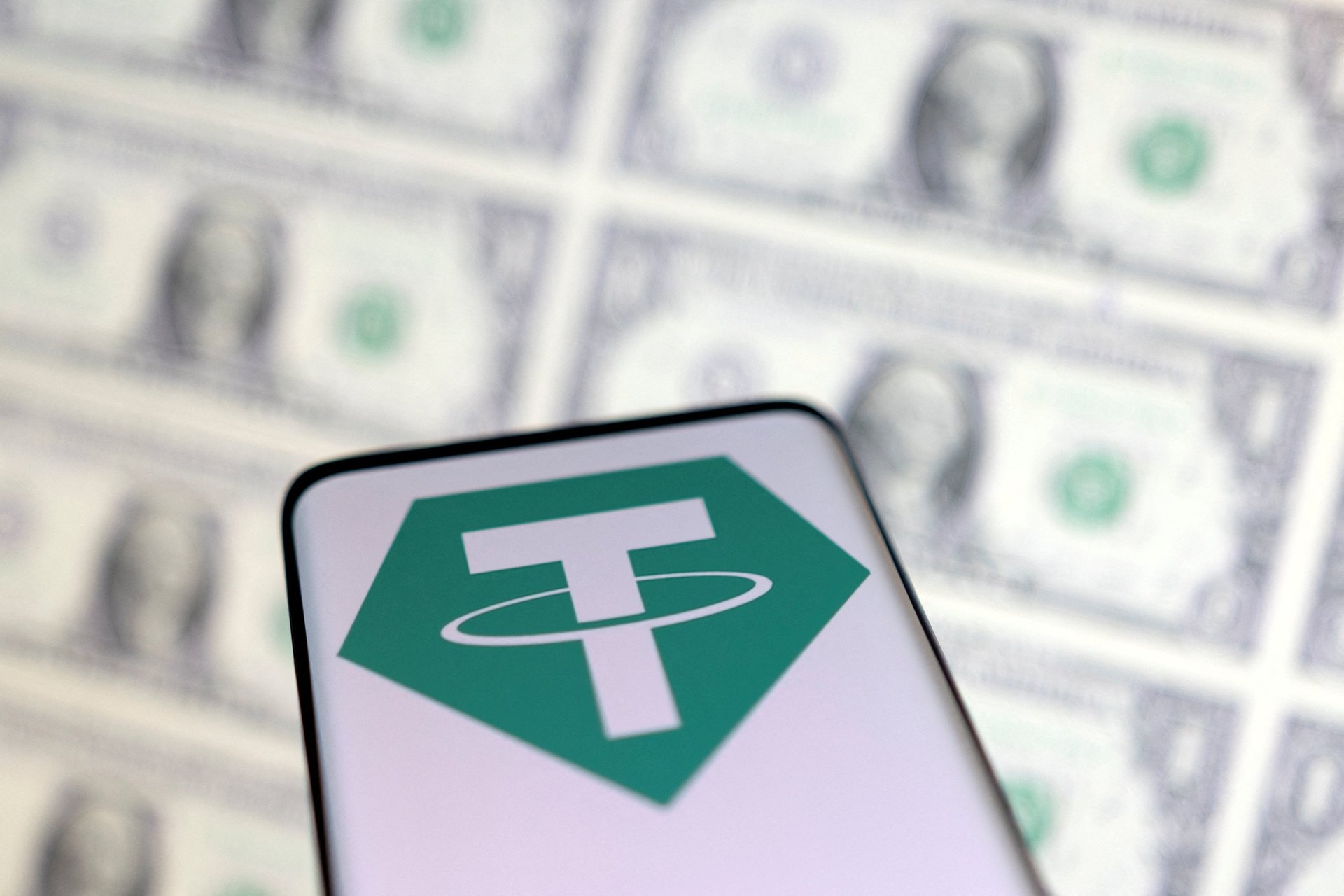
For instance, Tether (USDT) is the top stablecoin that acts as a medium for investors to trade Bitcoin and other cryptocurrencies. Tether accounts for over 50% of the daily trading volume of Bitcoin and up to 70% of some other major cryptocurrencies.

Daily Brief

The essential business news, delivered fresh every morning.

Join 500,000+ readers who start their day with Quartz.

By subscribing, you agree to our Terms of Service and Privacy Policy.

Related

A.I.What happens when 12,000 tech employees become millionaires overnight
AutosTesla revenue climbed 26% but profit fell short of Wall Street expectations
Business NewsAlphabet posted 24% revenue growth as Google Cloud surged 82% in the second quarter
A.I.San Francisco's housing market is overheating. Tech buyers will make the situation worse
A.I.History suggests San Francisco homeowners will win big from the AI gold rush