The tech that everyone is talking about showed its immaturity at the Consumer Electronics Show, making its coming out party awkward at times
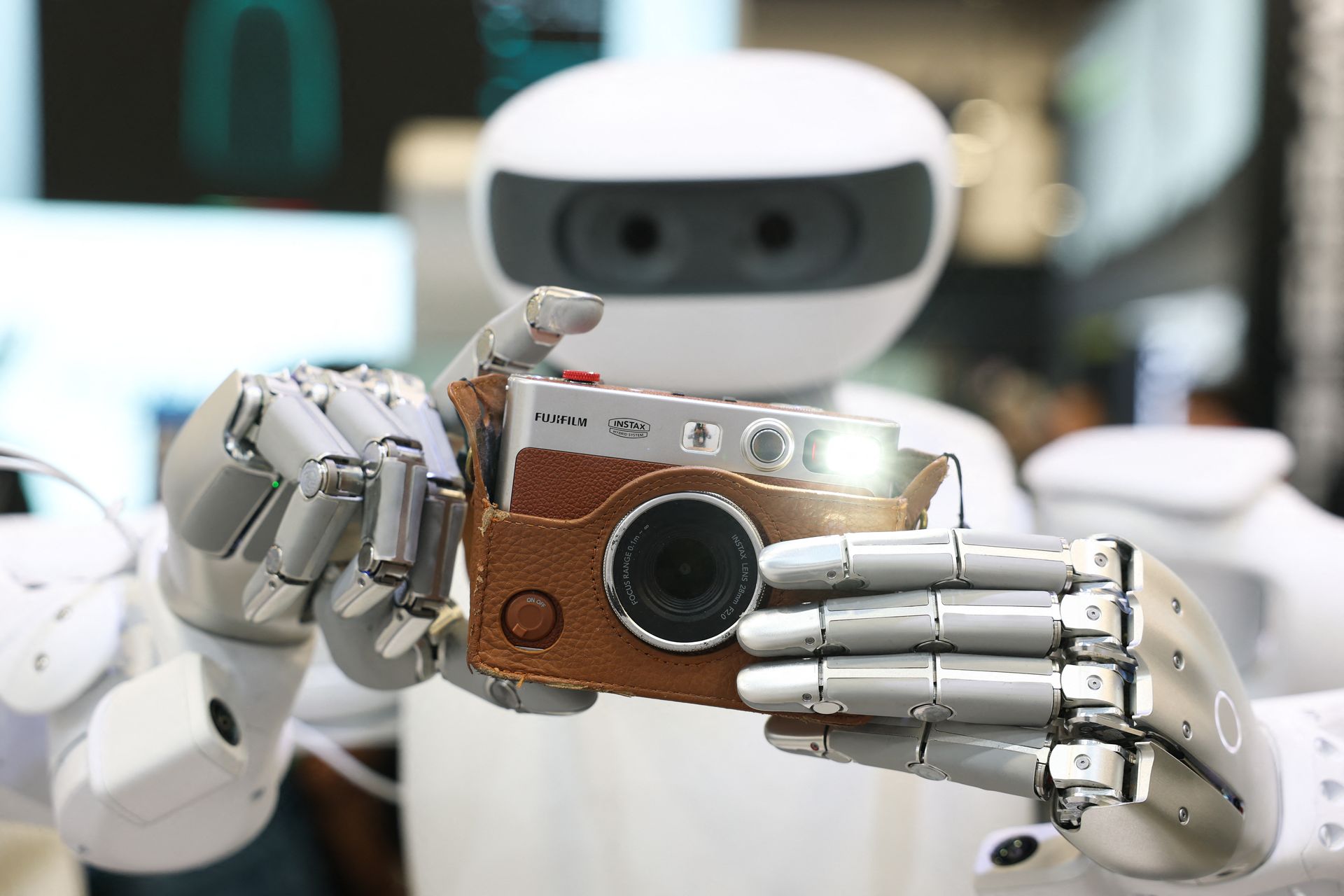
PATRICK T. FALLON
LAS VEGAS — As I walked along the show floor at CES this week, a fellow attendee, walking a few feet in front of me, was on the phone with an associate. "I mean, I love AI," he said, "but it's not there yet."
That offhand comment could sum up the annual Consumer Electronics Show better than any analyst's note.
This was supposed to be AI's coming out party to the mass market. It was everywhere at CES 2026, often in places where it didn't seem especially necessary (including dishwashers, hair clippers, and even ). But it didn't always go as planned.
Join 500,000+ readers who start their day with Quartz.
By subscribing, you agree to our Terms of Service and Privacy Policy.
At the Nvidia $NVDA showcase, for instance, one company was showing off a robot (which wore a dapper cowboy hat) that would hand either a soda or a small present to the person it was interacting with. Simply pick the item you wanted from the iPad screen and "Luka" would grab it and offer it to you.
The first handoff went fine. It was a bit slow, but that's the norm with robots these days, and at least the device (seemingly) wasn't being handled by someone with a controller. The company representative, in an attempt to show off the robot's abilities, said you could move the package from its placed position and the robot would still be able to locate it.
Unfortunately, the robot lost track of the package with that movement, freezing for a moment, then (in what I can only imagine was the robotic equivalent of a sigh) grabbed the soda and offered it once again.
Ten minutes later, I walked by that demo again. The option to choose either a soda or a package was gone. You could only choose the soda.
Meanwhile, the sizzle reel for Razer's Project Motoko, which puts wearable AI in headphones (rather than glasses) raised eyebrows when it showed the AI suggesting the wearer use a socket wrench to fix pipes. That's not something a plumber is likely to advise.
These are limited examples, of course — and there were plenty of AI and robotic demos that went off without a hitch.
The tsunami of AI at this year's CES is part of a pattern in the tech industry. As one technology gathers buzz, companies rush to embrace it. It has happened before with everything from eReaders to 3D to virtual reality. AI is a different beast, of course, because of the technology's impact on the stock market. Right now, for better or worse, mentioning AI in your product lineup can excite investors and give your stock a bump. Or, if you're a startup, it can make potential investors turn their head.
But the reality is that — from a consumer perspective — adding AI opens the door to privacy concerns (in a way social media can only dream about), an area that companies showcasing their products were quick to pivot from after giving canned answers.
Perhaps more important, AI also adds costs.
An AI cooking device called the wan AIChef Ultra, for instance, uses AI to identify and automatically begin cooking whatever you place in the oven. Handy? Perhaps. The price tag for this large countertop gadget, though? $4,000.
Ultimately, robotics and AI could prove to be the societal paradigm shift the technology's evangelists say they will be. But this year's CES showed that such a day is not imminent — and that tech companies still need to learn restraint when incorporating it into daily devices.
