
China's manufacturing sector returned to expansion in June, with the official purchasing managers' index climbing to 50.3 from 50.0 in May, as global demand for artificial-intelligence hardware powered a rebound in high-tech exports.
The official manufacturing PMI rose to 50.3 in June, driven by surging demand for chips and AI-related electronics
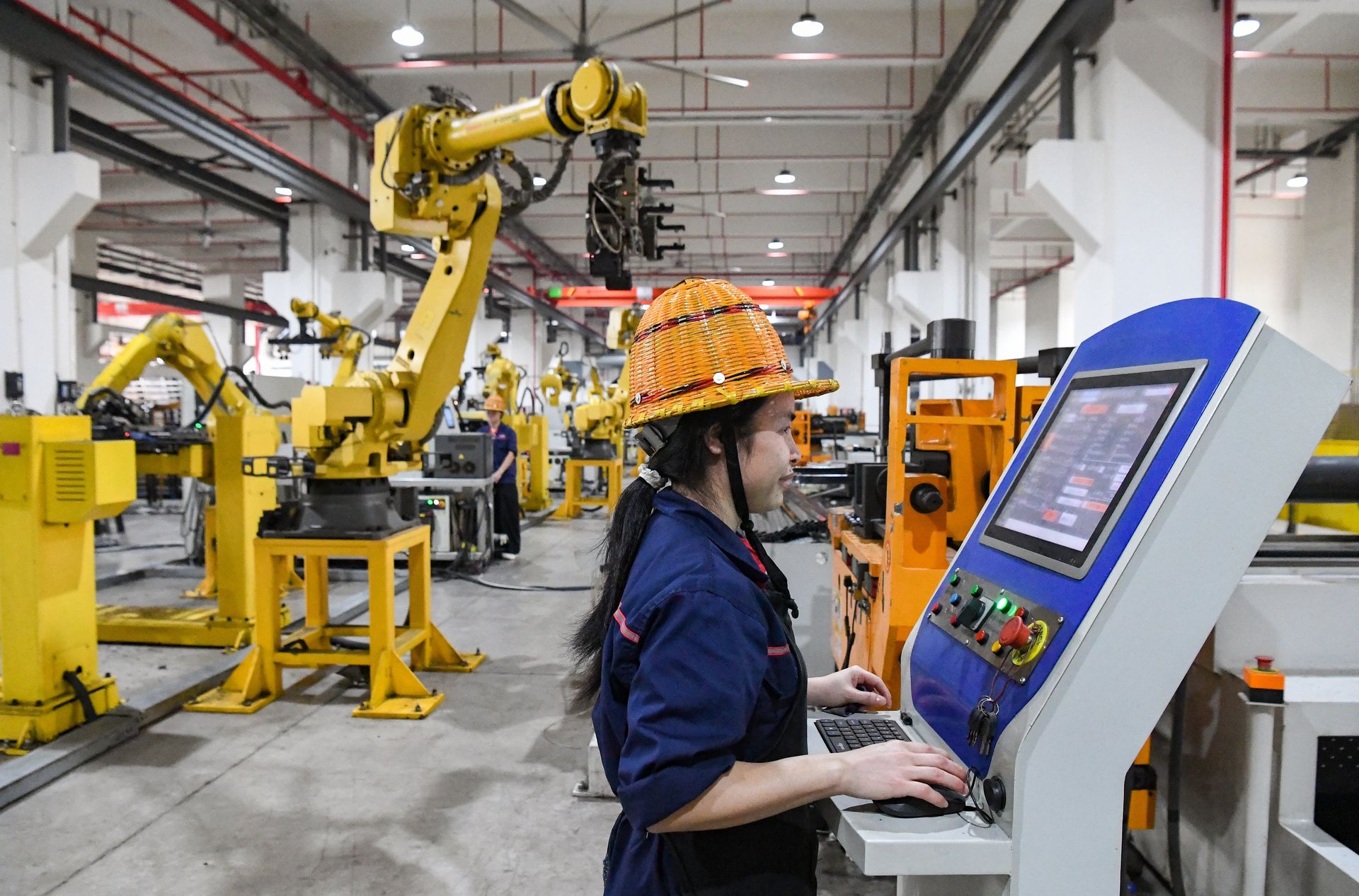
Xinhua News Agency / Getty Images
China's manufacturing sector returned to expansion in June, with the official purchasing managers' index climbing to 50.3 from 50.0 in May, as global demand for artificial-intelligence hardware powered a rebound in high-tech exports.
A reading above 50 indicates that factory activity is growing rather than shrinking. Economists polled by Reuters had forecast a median reading of 50.0. Overseas demand showed signs of revival, with the new export orders sub-index climbing from 48.6 in May to 50.1. Gauges tracking output and total new orders each moved higher, to 51.4 and 51.2.
At 53.5 in June, the PMI for high-tech equipment manufacturing ran well ahead of the headline factory reading, according to CNBC. Separately, profits at manufacturers of computers, communication equipment and other electronic equipment rose 103.9% year on year in the January-to-May period, according to data from China's National Bureau of Statistics. Profits across all industrial enterprises above the designated size grew 18.8% over the same period.
"Exports to meet international demand for chips and other AI-related products, as well as front-loading to get ahead of new U.S. Section 301 tariffs due late July and improved domestic demand due to lower upstream costs underpinned the improvement," Dan Wang, China director of consultancy Eurasia Group, said.
Shipping executives said that American retailers had pulled their Chinese orders forward by as much as four to six weeks, building up stock before anticipated tariff increases hit later in the year. The bilateral mood improved after the two leaders met in May, with the encounter steadying expectations around trade policy even as a 10% Section 122 levy is set to expire in July.
The improvement was uneven, however. The consumer goods segment, whose PMI came in at 50.2, trailed the overall manufacturing index. Prices at the factory gate fell back into contraction territory, dropping to 48.2 after registering 51.9 the previous month, while headcount at manufacturers kept shrinking. Consumer spending data for May showed the steepest deterioration in retail sales in over three years, and the slide in new residential property prices deepened.
Capital Economics' head of China economics, Julian Evans-Pritchard, cautioned that the June pickup was still "remains heavily dependent on exports and AI-related tech" and that pricing pressures mean "the manufacturing sector appears to be slipping back into deflation."
Activity in services and construction, as measured by the non-manufacturing PMI, ticked up one tenth of a point to 50.2. Beijing is aiming for GDP growth of between 4.5% and 5.0% this year, a notch below the 5% rate recorded in 2025, after factory output shrank in May to its weakest in nearly three years as U.S. tariffs escalated.
Join 500,000+ readers who start their day with Quartz.
By subscribing, you agree to our Terms of Service and Privacy Policy.