
Quartz
Subscribe
Quartz
Subscribe
Edition
Business News
A.I.
Technology
Money & Markets
Leadership
Lifestyle
Latest

Get Quartz in your inbox

Free daily briefing on global business news.

Business News
AirlinesAutomobilesFoodPharmaceuticalsPolitics & GovernmentRetail & EcommerceSpace & AerospaceEarnings
Technology
A.I.ComputingConsumer TechSpace & AerospaceEarnings
Money & Markets
Economic IndicatorsMarketsPersonal FinanceEarnings
Lifestyle
Cars & BikesCollectingEntertainmentFood & Fine DiningHealth and FitnessReal EstateTravel
Quartz

Global business news for a smarter world

Topics

  • Business News
  • Money & Markets
  • Tech & Innovation
  • Generation A.I.
  • Lifestyle
  • Leadership

Products

  • Daily Brief
  • Weekly Digest
  • Member Benefits
  • Quartz Pro

Legal

  • Sitemap
  • About
  • Accessibility
  • Privacy
  • Terms of Service
  • Advertising

© 2026 Quartz Media, Inc. All rights reserved.

Politics & Government

China warns Trump on tariff plans and targets supply chain alliances

Beijing is sending a message ahead of a new tariff deadline: Trade pressure won’t just backfire — it might drag other countries into the crossfire

By Shannon Carroll·4 min read·Updated July 8, 2025
Add QZ to Google
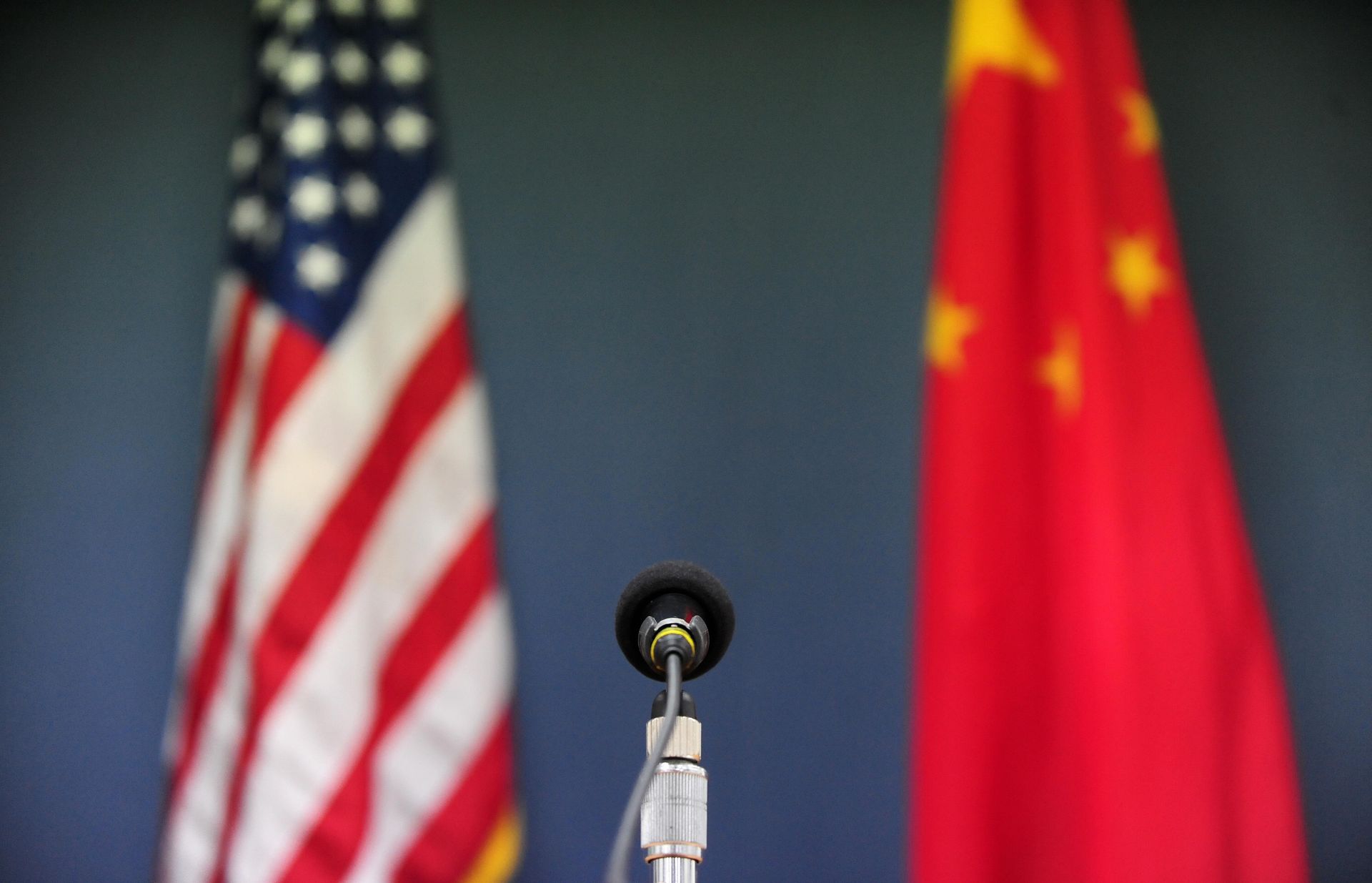
A U.S flag on the left and a Chinese flag on the right sit blurred behind a microphone on a podium in the center

Frederic J. Brown/AFP via Getty Images

Just weeks after Washington and Beijing struck a shaky truce in their long-running trade fight, tensions are heating up again — and not just between the two superpowers. In a sharply worded warning issued Tuesday, China said it would retaliate if President Donald Trump follows through on plans to restore tariffs on Chinese goods starting on August 1.

But the message went further: China also threatened to punish any country that strikes a deal with the U.S. that sidelines Chinese companies or cuts Beijing out of global supply chains.

The remarks, per Reuters, were published in the ruling Communist Party’s People’s Daily under the byline "Zhong Sheng," a pseudonym that’s often used to voice Beijing’s official foreign policy stance. They described U.S. tariffs as “bullying” and emphasized that “dialogue and cooperation are the only correct path.”

The warning comes as the Trump administration has been notifying trade partners via social media that it plans to sharply raise tariffs starting on August 1, a way of trying to pressure China and other countries to come to the table and agree to revised trade terms. Trump had originally announced a July 9 deadline on trade deals, but he has delayed the planned tariff hikes after his “90 deals in 90 days” promise has produced just two partial deals (with the U.K. and Vietnam).

China, initially targeted in the president’s “Liberation Day” announcement with duties of 145%, has until August 12 to strike a deal and avoid additional tariffs.

Beijing is making it clear that it views bilateral tariff relief deals with third-party countries — particularly those that redirect supply chains away from China — as unacceptable. A recent U.S.-Vietnam deal, for example, cut tariffs to 20% from 46% in exchange for applying a 40% levy on goods “transshipped” through Vietnam from China. That drew China’s ire and could be a test case for how the country might respond to similar moves from countries such as Japan, South Korea, or the U.K.

“China firmly opposes any side striking a deal that sacrifices Chinese interests in exchange for tariff concessions,” the newspaper said. “If such a situation arises, China will not accept it and will respond resolutely.”

The comments signal that China is increasingly focused on preventing the fragmentation of global supply chains that once depended heavily on Chinese manufacturing. With the U.S. pushing for “friendshoring” and diversifying its supply base, Beijing appears to be drawing a red line around efforts to exclude Chinese firms from the global production map. 

Tariff threats are already echoing through global markets, though the reaction so far has been muted. Investors in Asia and Europe largely brushed off Trump’s Monday letters to 14 trading partners. For now, the assumption appears to be that diplomacy will prevail — or that Trump might cave. But hedging behavior is creeping in at the margins. Gold prices have edged past $3,300, suggesting that safe-haven demand is growing — and that some traders are quietly preparing for a worst-case scenario. China’s latest warnings only reinforce the concern that markets may be underpricing the risk. 

The tone from Washington, at least publicly, has been somewhat softer. Treasury Secretary Scott Bessent said on CNBC on Monday that he expects to meet with his Chinese counterpart in the “next few weeks” and hinted that the conversation could extend beyond tariffs to cover broader cooperation.

Meanwhile, the trade slowdown is already material. U.S. imports of containerized goods from China plunged 28.3% in June, according to new data from supply chain provider Descartes, reflecting both higher effective tariff rates and softening demand. While that drop partly reflects global macroeconomic conditions, it also underscores how quickly the tariff issue is reshaping trade flows and giving importers incentives to look elsewhere.

The June framework agreement between the U.S. and China was supposed to offer a reprieve — a pause button after a spring marked by escalating trade threats. China called the deal “hard-won” and urged Washington not to squander any progress. But with Trump’s tariff deadline looming and Beijing’s red lines clearly drawn, the two sides appear to be heading toward another cliff.

Whether they stop short or go over the edge may come down to how much risk either side is willing to tolerate — and whether smaller economies get caught in the crossfire.

Daily Brief

The essential business news, delivered fresh every morning.

Join 500,000+ readers who start their day with Quartz.

By subscribing, you agree to our Terms of Service and Privacy Policy.

Related

Business NewsWalmart is replacing its U.S. operations chief as leadership overhaul continues
Politics & GovernmentEpstein victims called acting attorney general "abrasive" after DOJ meeting
FoodKopi Kenangan, backed by Serena Williams and Jay-Z, is meeting with banks as Indonesia's biggest coffee chain eyes an IPO
AutosZoox is recalling its entire robotaxi fleet after one drove into a smoke-filled fire scene
Cloud ComputingAnthropic is in talks to lease AI computing power from Meta in a $10 billion deal