Quartz
Subscribe
Quartz
Subscribe
Edition
Business News
A.I.
Technology
Money & Markets
Leadership
Lifestyle
Latest

Get Quartz in your inbox

Free daily briefing on global business news.

Business News
AirlinesAutomobilesFoodPharmaceuticalsPolitics & GovernmentRetail & EcommerceSpace & AerospaceEarnings
Technology
A.I.ComputingConsumer TechSpace & AerospaceEarnings
Money & Markets
Economic IndicatorsMarketsPersonal FinanceEarnings
Lifestyle
Cars & BikesCollectingEntertainmentFood & Fine DiningHealth and FitnessReal EstateTravel
Quartz

Global business news for a smarter world

Topics

  • Business News
  • Money & Markets
  • Tech & Innovation
  • Generation A.I.
  • Lifestyle
  • Leadership

Products

  • Daily Brief
  • Weekly Digest
  • Member Benefits
  • Quartz Pro

Legal

  • Sitemap
  • About
  • Accessibility
  • Privacy
  • Terms of Service
  • Advertising

© 2026 Quartz Media, Inc. All rights reserved.

News

Chinese automaker BYD will create an EV hub in Brazil at an old Ford plant

BYD aims to offer more competitive prices on electric vehicles in the South American market

By Diego Lasarte·2 min read·Updated July 10, 2023
Add QZ to Google

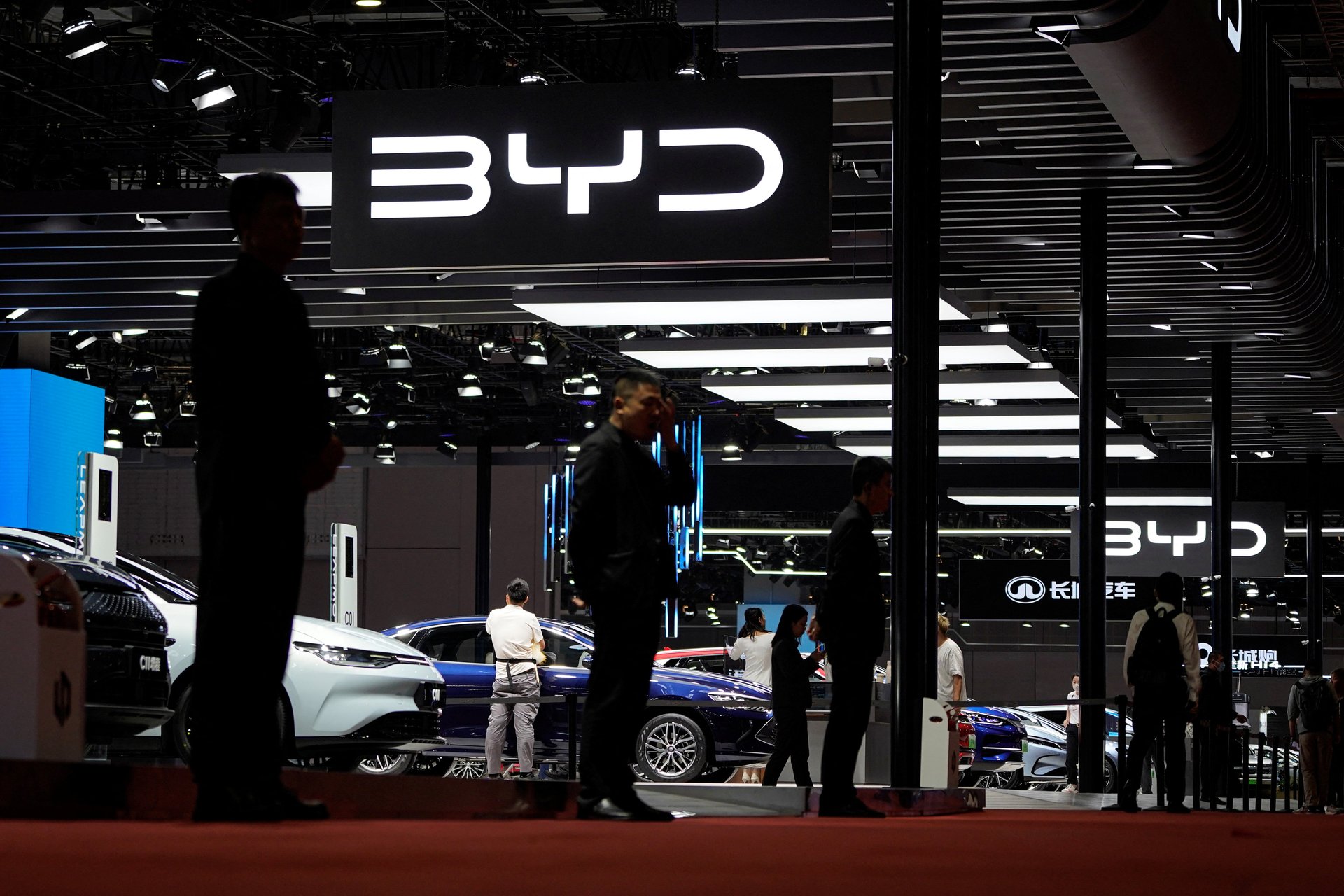
BYD, the popular Chinese EV automaker, plans to invest 3 billion reais ($620 million) in a new Brazilian manufacturing hub, as it looks to build a larger presence in South America The industrial complex will be built in the northeastern state of Bahia, in the town of Camaçari, where BYD bought a Ford $F plant that closed in 2021.

The Chinese company plans to build three factories at the complex. One will process lithium and iron phosphate mined in Brazil, while the other two will produce hybrid and electric cars, trucks, and buses. The operations are expected to create 5,000 domestic jobs.

The BYD plant is part of Lula’s push for closer Sino-Brazilian ties

BYD opens the plant only months after Reuters reported that the Brazilian government had offered financial incentives to the Chinese company in exchange for opening a manufacturing plant in the South American country.

Brazilian president Luiz Inacio Lula da Silva has made it clear that Chinese investment is an important factor in Brazil’s ambitious plans to transition away from fossil fuels. China is Brazil’s largest export partner, reaching roughly $80.7 billion of trade in 2022, mainly in soybeans, cotton, and crude oil. Brazil is also the largest recipient of Chinese foreign investment in South America.

During a high-profile state visit to Beijing in April, Lula signed 20 bilateral trade agreements and said that China was “an essential partner today for Brazil and for Latin America.”

BYD’s price rebounds from a 2022 low


EV’s lagging market in South America, by the digits

25,000: Number of EVs sold in Latin America in 2022. For comparison, more than 2.6 million new EVs hit the road in Europe in the same time span.

13,000: Number of EVs sold in Brazil (i.e. more than half of EV sales in Latin America last year)

5%: Estimated market share for EVs in Latin America in 2030, as predicted by Masahiro Inoue, CEO of Latin American operations for Toyota $TM. Inoue blamed a lack of government guidelines for slow EV adoption in the market.

Related stories:

🔌 People are starting to buy electric cars for the same reason they buy any other car

🚗 BYD profit surged by 400% last year as the electric vehicle market keeps going in China

🇨🇳 Inside BYD—the world’s largest maker of electric vehicles

Daily Brief

The essential business news, delivered fresh every morning.

Join 500,000+ readers who start their day with Quartz.

By subscribing, you agree to our Terms of Service and Privacy Policy.

Related

Cloud ComputingVerizon lands a $1 billion-plus dark fiber deal with Google for AI data centers
Politics & GovernmentTrump vows new tariffs on the E.U. after Brussels fines Google $1 billion
Politics & GovernmentTrump rolls out new forced-labor tariffs on 60 countries as trading partners push back
A.I.Samsung and SK Hynix are set to announce major memory chip deals with U.S. tech firms
A.I.Meta is upgrading its AI assistant to automate recurring tasks and daily briefings