Baiju Bhatt, co-founder of online stock platform Robinhood, announced Monday that his space startup has closed a $275 million Series B round and rebranded as Cowboy Space Corporation, with plans to build orbital data centers powered by its own rockets.

At a post-money valuation of $2 billion, the round was led by Index Ventures, with participation from Breakthrough Energy Ventures, Construct Capital, IVP, and SAIC, the company said. Prior to this round, Cowboy Space had secured $80 million backed by Index, Breakthrough Energy Ventures, Andreessen Horowitz, and New Enterprise Associates, among others.
Originally founded in 2024 as Aetherflux, the startup set out to harvest solar energy in space and send it back to Earth. A subsequent pivot toward orbital data centers followed, and once Bhatt confronted the challenge of actually scaling that model, he determined that building rockets was the only way to make the economics work.
"There's a lot of new rockets that are coming online, but as we look three, four years out, it's still very, very scarce," Bhatt told TechCrunch. "I think that you're going to see a lot of the first-party rocket providers actually specialize into their own payloads."
Cowboy Space is targeting its first rocket launch before the end of 2028, according to Bloomberg. Rather than treating the payload as a separate object, Cowboy Space intends to integrate its data centers into the rocket's second stage itself, meaning that once in orbit the upper stage functions as the satellite. On a per-unit basis, each of those satellites would weigh between 20,000 and 25,000 kilograms and deliver 1 MW of power to support nearly 800 GPUs.
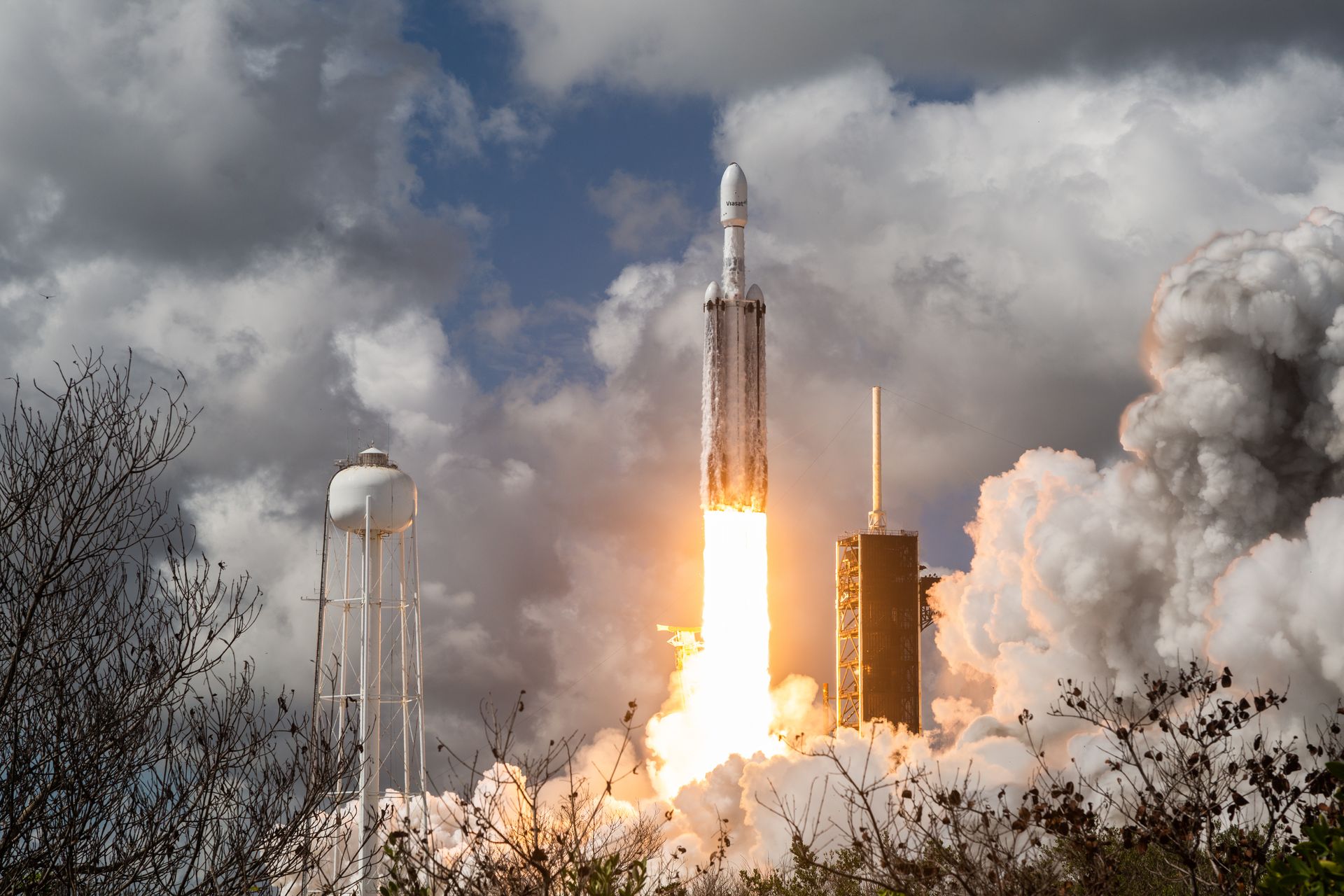
The strategy puts Cowboy Space in direct competition with SpaceX and Blue Origin. Bhatt said the size of the market justifies the effort. "The prize here, and the size of this market, is big enough that there's room for many players to succeed," he told TechCrunch. "I see the demand for AI getting more and more acute, and I see the options on Earth getting more and more limited."
Among its engineering hires are Warren Lamont, who previously worked on propulsion at Blue Origin, and Tyler Grinnell, a former launch director at SpaceX; the company is also pursuing development of its own rocket engine. On the infrastructure side, Cowboy Space has yet to secure the sites it will need for manufacturing, testing, and launching vehicles. Bhatt said he expects the booster eventually to be reusable.
Despite the pivot, Cowboy Space still plans to proceed with a previously announced satellite launch aboard a SpaceX rocket later this year, Bhatt said.
