
A spent SpaceX Falcon 9 upper stage is on course to strike the moon on Aug. 5 at around 2:34 a.m. ET, more than a year after it delivered two lunar landers and was left in an orbit that crossed the moon's path, according to ABC News.
The upper stage will strike near Einstein crater at 5,400 mph, carving a crater and sending up a plume scientists hope to study
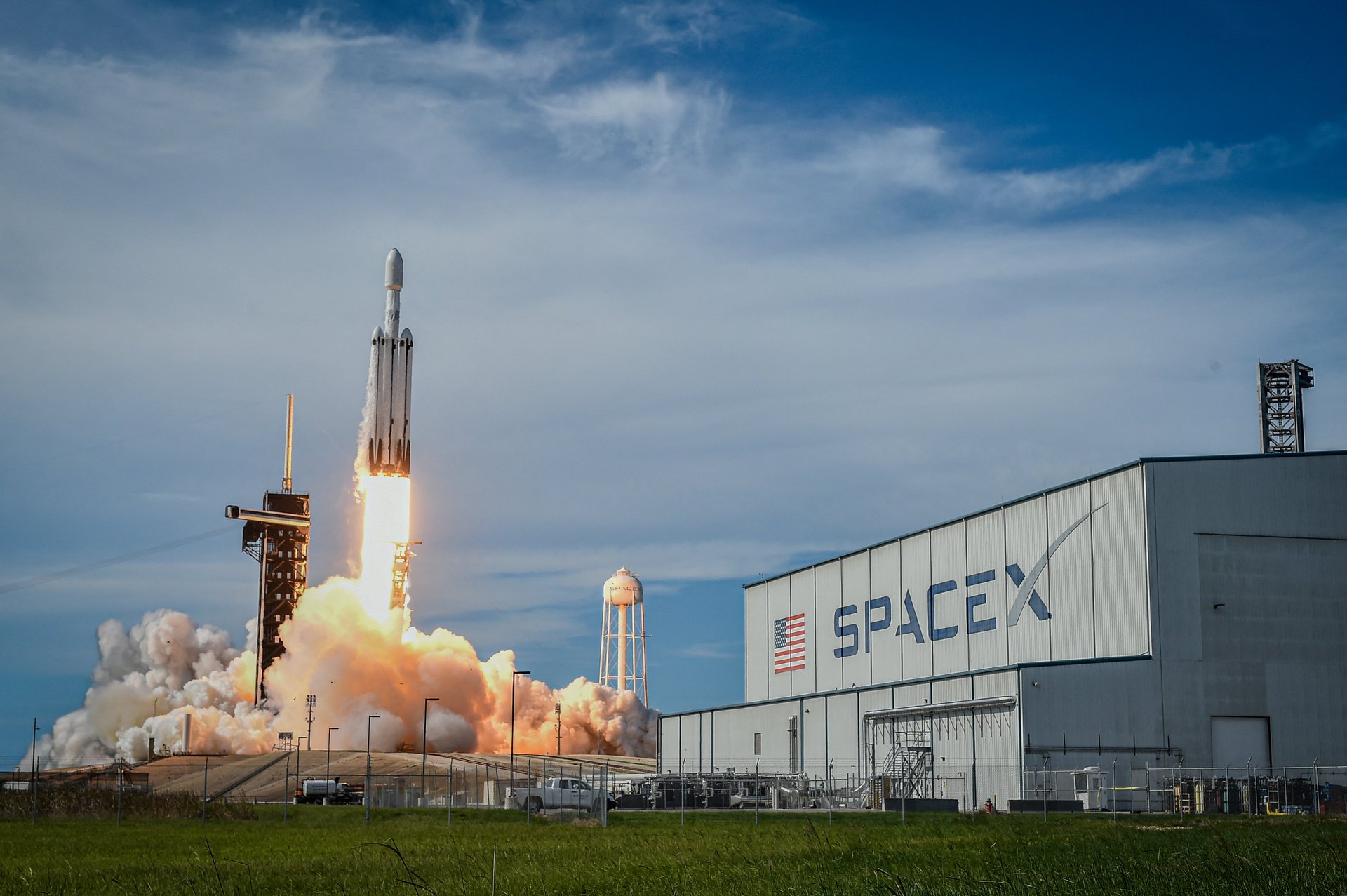
A spent SpaceX Falcon 9 upper stage is on course to strike the moon on Aug. 5 at around 2:34 a.m. ET, more than a year after it delivered two lunar landers and was left in an orbit that crossed the moon's path, according to ABC News.
Bill Gray, who runs Project Pluto and develops software for tracking astronomical objects, worked out that the stage will strike near Einstein crater on the moon's western limb at approximately 5,400 miles per hour — a velocity roughly seven times that of sound. This will mark only the second documented instance of an uncontrolled rocket crashing into the moon; a Chinese booster left twin craters on the lunar far side in 2022, according to CNBC.
The upper stage, which launched on Jan. 15, 2025, carrying Firefly Aerospace's Blue Ghost lander and ispace's Resilience lander, stands roughly 40 feet tall and weighs around 10,000 pounds. After the mission, the stage was left in a high Earth orbit that periodically crossed the region where the moon travels, eventually putting it on a collision course. Blue Ghost landed on the moon on March 2, 2025. Resilience crashed after communications were lost 90 seconds before touchdown, according to ABC News.
Benjamin Fernando, a postdoctoral researcher at Los Alamos National Laboratory and lead author of a study on the impact, anticipates the strike will gouge out a hole approximately 90 feet in diameter and 16 feet deep — large enough for orbiting spacecraft to detect but far too small to resolve from Earth. The impact will carry energy equivalent to three tons of TNT, according to CNBC.
Both NASA's Lunar Reconnaissance Orbiter and South Korea's Danuri will photograph the site before and after the collision. Danuri's trajectory is projected to bring it within a mile or two of the incoming stage approximately two minutes prior to impact.
Although the flash at the moment of impact will be over in under a second and far too dim to observe without equipment, the resulting debris plume could extend several miles above the surface and linger in telescopic view for tens of minutes. Gray noted that because of the pre-dawn timing, skywatchers across the eastern U.S., Canada, and much of South America are positioned most favorably to observe the event.
Researchers said the event offers a chance to study impact risks to future lunar infrastructure. "Part of the reason for our interest in this event is to figure out how much of a hazard debris impacts pose to future astronauts," Benjamin Fernando said.
Retired astrophysicist Jonathan McDowell noted the broader concern. "In a future where there are long-term bases on the moon, similar impacts would be an issue and we need not to leave rocket stages in chaotic orbits of this kind," McDowell said.
Join 500,000+ readers who start their day with Quartz.
By subscribing, you agree to our Terms of Service and Privacy Policy.