
Quartz
Subscribe
Quartz
Subscribe
Edition
Business News
A.I.
Technology
Money & Markets
Leadership
Lifestyle
Latest

Get Quartz in your inbox

Free daily briefing on global business news.

Business News
AirlinesAutomobilesFoodPharmaceuticalsPolitics & GovernmentRetail & EcommerceSpace & AerospaceEarnings
Technology
A.I.ComputingConsumer TechSpace & AerospaceEarnings
Money & Markets
Economic IndicatorsMarketsPersonal FinanceEarnings
Lifestyle
Cars & BikesCollectingEntertainmentFood & Fine DiningHealth and FitnessReal EstateTravel
Quartz

Global business news for a smarter world

Topics

  • Business News
  • Money & Markets
  • Tech & Innovation
  • Generation A.I.
  • Lifestyle
  • Leadership

Products

  • Daily Brief
  • Weekly Digest
  • Member Benefits
  • Quartz Pro

Legal

  • Sitemap
  • About
  • Accessibility
  • Privacy
  • Terms of Service
  • Advertising

© 2026 Quartz Media, Inc. All rights reserved.

Economic Indicators

U.S. economy slowed in the spring as Iran war weighed on growth — but consumers held up

Consumer spending rose at a 3.2% pace and business investment stayed strong, cushioning the drag from higher energy prices and rising imports

By Cris Tolomia·2 min read·Updated July 31, 2026
Add QZ to Google
U.S. economy slowed in the spring as Iran war weighed on growth — but consumers held up

Michael Nagle/Bloomberg via Getty Images

The U.S. economy grew at an annualized rate of 1.5% in the second quarter of 2026, according to the Bureau of Economic Analysis, slowing from 2.1% growth in the first quarter and coming in below what economists had forecast. The Reuters poll of economists had placed the consensus forecast at 2.1% for the second quarter, according to CBS News.

The deceleration reflected pressure from the ongoing conflict with Iran, which disrupted shipping through the Strait of Hormuz and pushed global energy costs higher. At the pump, Americans saw prices jump from a pre-war average of $2.98 a gallon to well above $4 over the course of the second quarter.

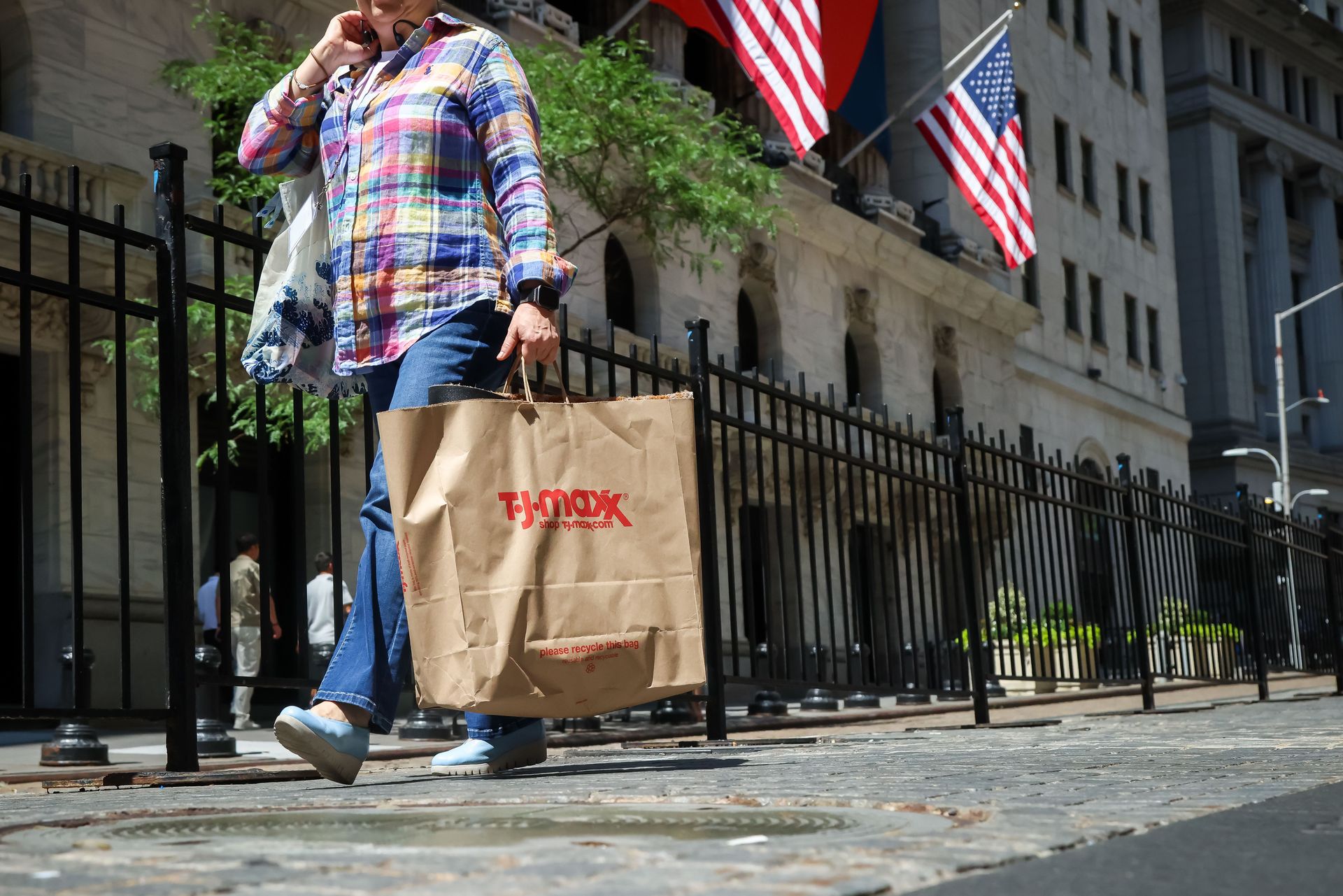
Household spending, the largest single driver of U.S. output at around two-thirds of the total, accelerated to a 3.2% annualized clip after barely registering at 0.5% in the first quarter. Fixed investment by businesses expanded at an 8.4% annualized rate, with outlays on equipment and intellectual property reflecting heavy corporate commitment to artificial intelligence buildout, according to the Boston Globe.

Real final sales to private domestic purchasers — a gauge of core demand that excludes the distortions of trade flows and inventory changes — came in at a 3.9% annualized rate, more than doubling its 1.7% reading from the January-March period.

A sharp 11.5% increase in imports — driven in part by heavy purchases of semiconductors and other goods feeding the AI buildout — cut 1.5 percentage points from the quarter's headline GDP reading, according to the Boston Globe. A decrease in government spending also dragged on growth, driven in part by sales of crude oil from the Strategic Petroleum Reserve.

"The consumer rescued the quarter," Olu Sonola, head of U.S. economics at Fitch Ratings, said.

Thomas Ryan, senior North America economist at Capital Economics, characterized consumers as largely managing the strain of elevated gas prices while warning in a note to investors that "it remains unclear whether they can absorb another hit now that retail gasoline prices have risen back above $4 a gallon," according to CBS News.

Also released Thursday, the personal consumption expenditures price index — the Federal Reserve's preferred inflation gauge — registered a 3.7% gain in June compared with the same month a year ago, easing from the 4.1% annual rise recorded in May. Core PCE, which excludes food and energy, rose 3.3%. While neither figure surprised forecasters, the persistence of above-target inflation — now stretching beyond five consecutive years — has increasingly tested the patience of some Federal Reserve policymakers.

The Fed held its benchmark interest rate steady at its meeting on Wednesday, though three members of the Federal Open Market Committee dissented in favor of a rate increase. Federal Reserve Chairman Kevin Warsh said the economy was showing resilience and called strong business investment its "most striking feature," according to Axios.

Daily Brief

The essential business news, delivered fresh every morning.

Join 500,000+ readers who start their day with Quartz.

By subscribing, you agree to our Terms of Service and Privacy Policy.

Related

MarketsRoblox stock posted its worst day ever after pulling its full-year outlook
SpaceA discarded SpaceX rocket is about to slam into the moon at 5,400 mph
Cloud ComputingSpaceX will take another year to remove xAI's unpermitted gas turbines near Memphis
PharmaRohto is recalling nearly 12 million eye drop bottles over sterility concerns
MarketsAn ex-OpenAI researcher's AI hedge fund collapsed from $45 billion to $10 billion in a week