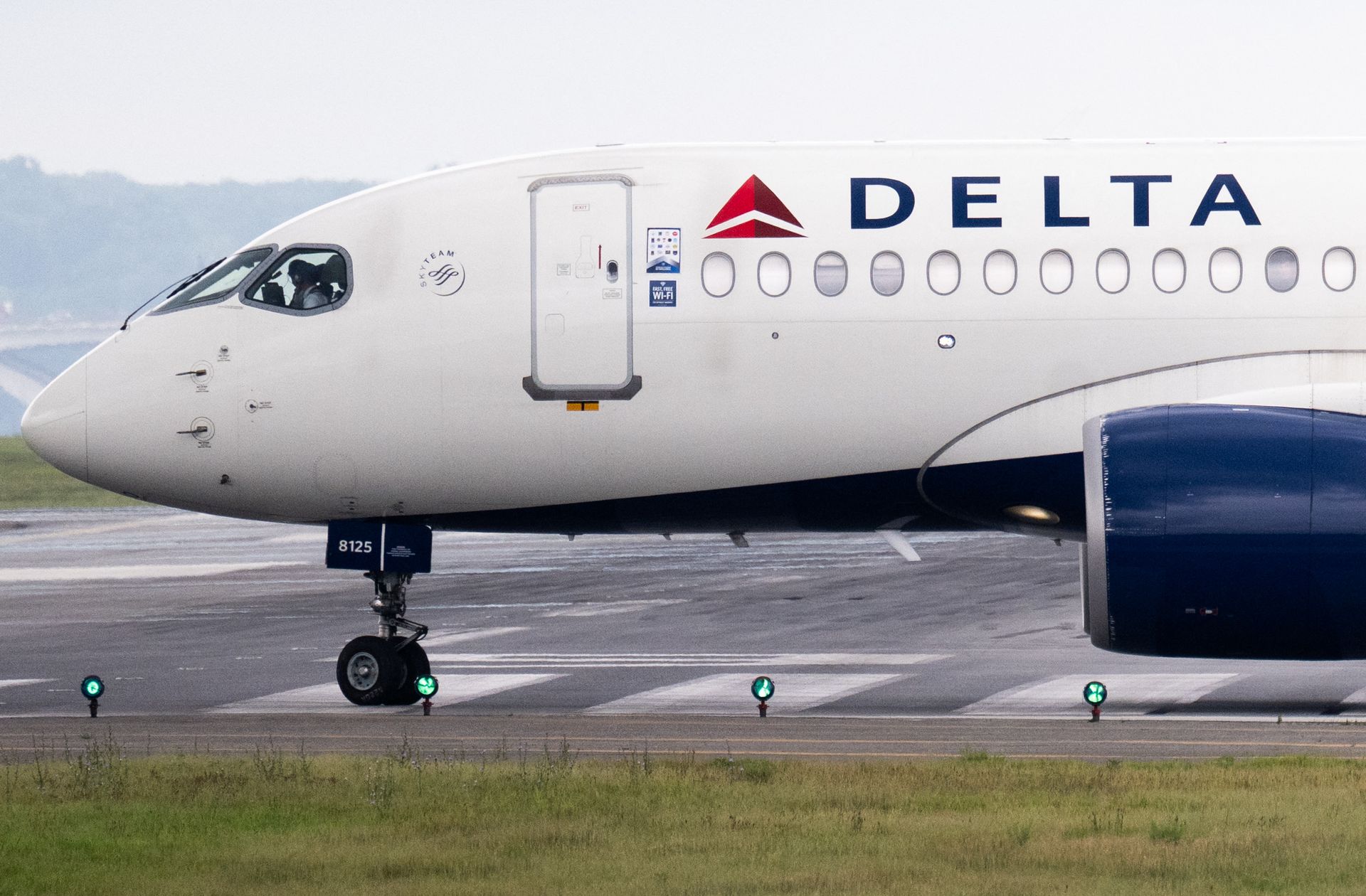
Delta Air Lines is reportedly yanking engines off of its new European Airbus SE jets and sending them back to the U.S. to power old, grounded planes.

Delta is removing engines intended for its new European jets to put on grounded U.S. planes in a move to avoid tariffs, a report found
SAUL LOEB/AFP via Getty Images
Delta Air Lines is reportedly yanking engines off of its new European Airbus SE jets and sending them back to the U.S. to power old, grounded planes.
This tactic may allow Delta to avoid tariffs as it navigates a supply shortage, Bloomberg reported on Friday.
The airline is sending back the American-made engines by Pratt & Whitney duty free to be fitted into older, grounded A320neo-family jets in the U.S., sources familiar with the matter told Bloomberg. Meanwhile, the new A321neos will stay in Europe, the outlet reported.
Delta CEO Ed Bastian confirmed to Bloomberg that the airline is in fact sending a small number of new engines back to the U.S., adding that Delta will keep removing engines from the European jets. “We are not planning to pay tariffs on aircraft deliveries,” Bastian said.
In an April statement, Bastian said, “In this slower-growth environment, we are protecting margins and cash flow by focusing on what we can control.”
He later appeared on CNBC to warn that a recession is likely. “I think we’re acting as if we’re going into a recession,” Bastian said. “I think everyone is going into a defensive posture. As a result of that, if that continues and we don’t get resolution soon, we’ll probably end up in a recession.”
The European Union did not receive a letter from President Donald Trump detailing higher tariff rates this week when the president announced a flurry of letters declaring new tariffs on countries around the world.
The EU is reportedly looking into exemptions to President Trump’s starting rate of 10%, and some EU sources told Reuters that the European Commission is close to an agreement with the U.S.
The agreement may include exemptions to the tariff threshold rate of 10% for aircrafts and aircraft parts, among other goods, sources familiar with the matter told Reuters.
Bloomberg added that Delta could eventually ship its new European jets to the U.S. and avoid tariffs, once the U.S. and E.U. come to an agreement.
Back in January, Delta predicted 2025 would be the “best financial year” in the company’s 100-year history, forecasting earnings per share above $7.35 and free cash flow greater than $4 billion. That outlook reflected both strong demand for premium travel and a confident, overtly bullish read on the macro environment.
But after pulling that forecast in April amid tariff chaos and economic murk, Delta’s newly reinstated guidance is far more modest. Full-year EPS is now expected to land between $5.25 and $6.25, with free cash flow of $3 to $4 billion. In other words, even the high end of the new range falls short of January’s bullish target. In tone, too, a shift is clear — what was once framed as a year of historic outperformance is now being presented as disciplined execution amid less-than-favorable conditions.
- Catherine Baab and Shannon Carroll contributed to this article.
Join 500,000+ readers who start their day with Quartz.
By subscribing, you agree to our Terms of Service and Privacy Policy.