
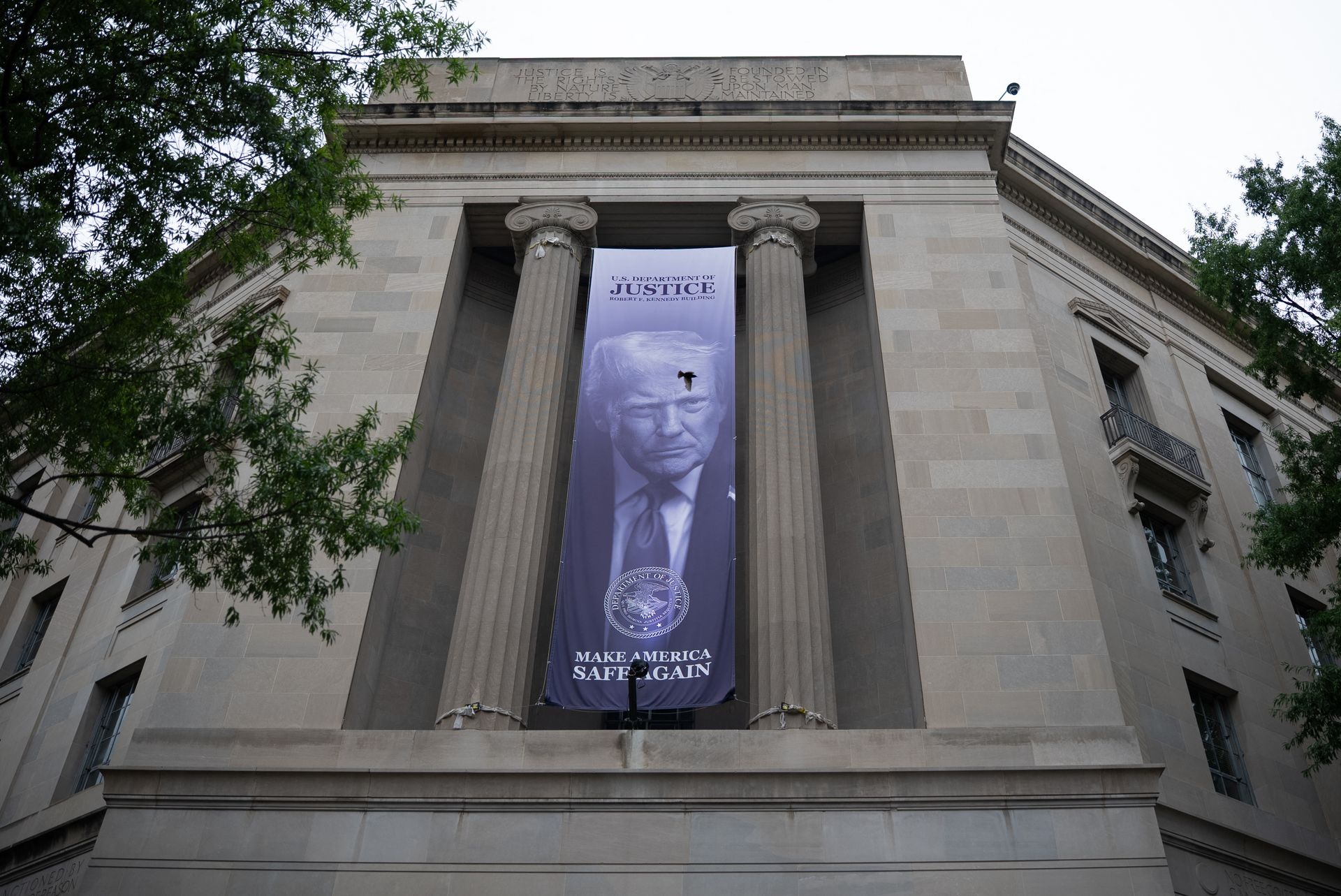
The Justice Department's $1.8 billion "anti-weaponization fund" faces continued court scrutiny after a federal judge on Thursday declined to dismiss a lawsuit targeting it, pointing to the DOJ's unwillingness to put in writing what it has only said out loud — that the program no longer exists.
Judge Leonie Brinkema — who presides over U.S. District Court in Alexandria, Virginia — indicated that obtaining a "short, written declaration under the penalty of perjury" attesting to the fund's demise would have given her grounds to treat the suit as moot. The judge ordered the DOJ to file its answer to the lawsuit by July 17, according to Newsweek.
In her order, Brinkema pointed to several factors weighing against mootness: Acting Attorney General Todd Blanche has not withdrawn the May 18 memo that gave the fund its framework, and both he and President Trump have expressed ongoing interest in directing money to people who say they were targeted by the government, according to CNBC. Taken together, she wrote, those facts "all support this conclusion" that the case remains alive.
In court filings, DOJ lawyers contended that sworn written statements were not needed and that asking Blanche and Treasury Secretary Scott Bessent to commit their assurances to paper crossed into territory that "implicates serious separation of powers concerns." The department's lawyers cited Blanche's June 2 appearance before a House committee, where he declared the fund was "not going forward, period," as adequate evidence the controversy was resolved. Brinkema was unpersuaded, noting a telling exchange from that same hearing: pressed on whether he would formally withdraw the May 18 memo, Blanche told lawmakers, "I'm not committing to putting anything in writing."
Brinkema wrote that she found it especially troubling that the government had declined to provide any formal, verifiable confirmation of its representations, given Trump's track record of championing the fund and Blanche's own admission that the program's underlying purpose "remains 'important."
The fund drew bipartisan opposition after the DOJ announced it in May as a byproduct of settling Trump's suit against the IRS over the leak of his tax returns. Pegged at $1.776 billion — an amount chosen to echo the year of American independence — the program was intended to compensate people alleging they had been singled out by the government for political reasons. Controversy followed immediately, partly because Blanche would not rule out payments to participants in the January 6, 2021 Capitol attack, even those convicted of beating police officers.
The DOJ last week characterized Brinkema's declaration request as judicial overreach into prosecutorial discretion, arguing the judge was attempting to require personal sign-off on future settlements. Three parties are bringing the suit: Andrew Floyd, who worked as a federal prosecutor before his dismissal; Jonathan Caravello, who teaches at California State University Channel Islands; and New Haven, Connecticut.