
Egg producers are caught in a deepening margin squeeze as a surge in supply drives down farmgate prices faster than input costs can fall, according to CNBC.
Farmgate prices for shell eggs have fallen to as low as 25 cents a dozen, well below the cost of production, as feed and fuel costs stay elevated
Brandon Bell / Getty Images
Egg producers are caught in a deepening margin squeeze as a surge in supply drives down farmgate prices faster than input costs can fall, according to CNBC.
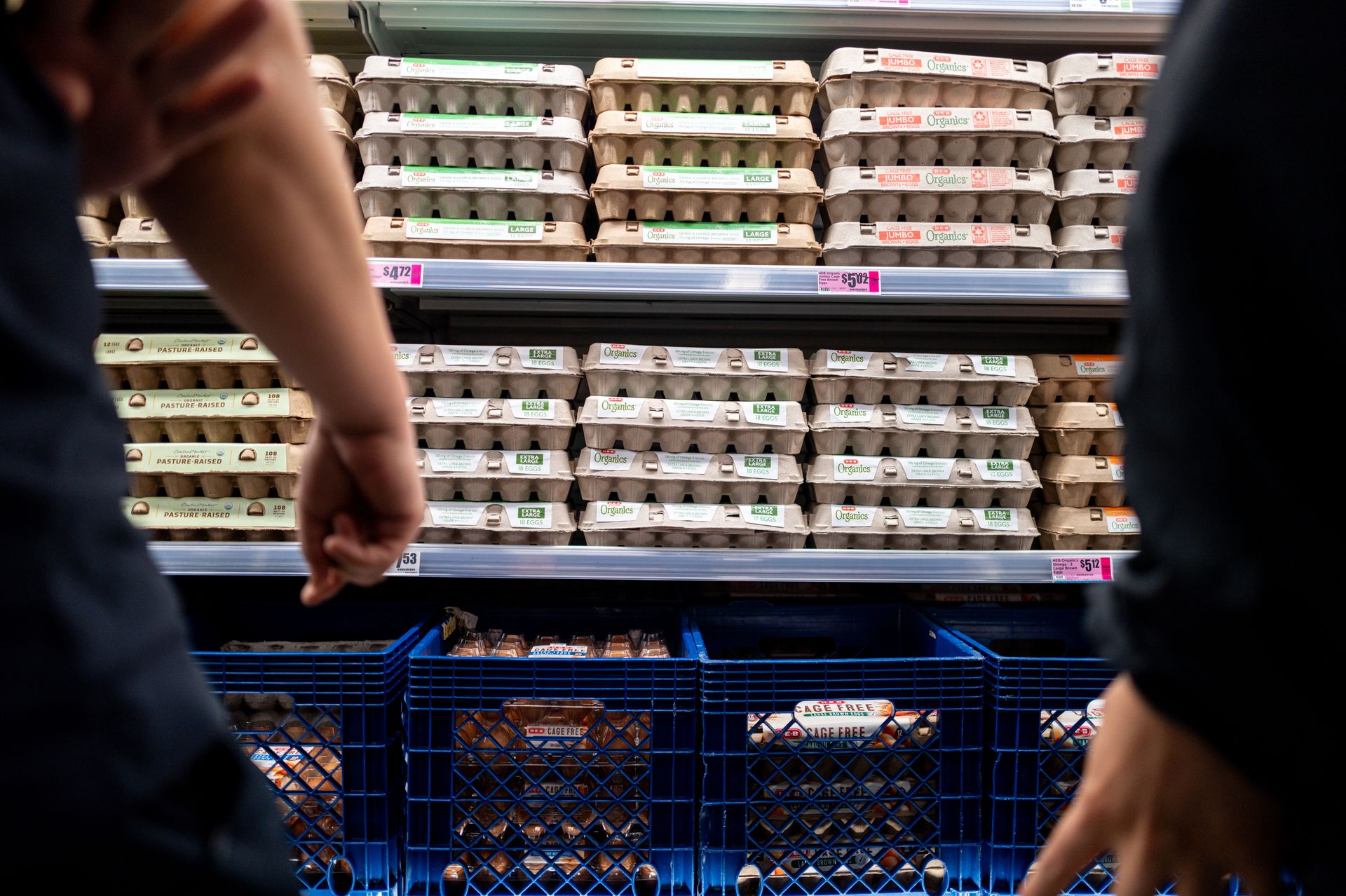
A year-over-year decline of 44.7% in retail egg prices was recorded in March 2026, with some cartons now available for less than a dollar. But the relief for consumers is arriving at the worst possible moment for the farmers supplying them. The average price paid to Midwestern producers for large white shell eggs stood at just 25 cents per dozen for the week of May 8, according to the U.S. Department of Agriculture's Agricultural Marketing Service — roughly a third of the estimated 79-cent-per-dozen cost of production in April, according to the American Farm Bureau Federation.
"We now have an oversupply situation, which is why you're seeing in some cases a dozen eggs below a dollar," Thomas Flocco, CEO of egg producer Pete & Gerry's, told CNBC.
Behind the glut is an extended push to rebuild flocks in the wake of the highly pathogenic avian influenza outbreaks that began in 2022 and sent egg prices to record highs. Fears of another shortage kept producers expanding capacity even after conditions stabilized, and that accumulated supply has since overtaken demand. American Egg Board President and CEO Emily Metz told CNBC the current price weakness reflects "supply growing faster than demand can absorb, driven by flock recovery following avian influenza, small farm growth and improved productivity."
At the same time, input costs have not retreated. On the cost side, feed alone makes up about half the expense of producing a dozen premium eggs, and diesel has climbed alongside it as the war in Iran pushes energy prices higher, according to CNBC. "All of those cost pressures are finding their way into our cost structure," Thomas Flocco said. "Diesel is an immediate impact. We have to drive to get those eggs." Metz, for her part, said the cost burdens facing producers had not eased, citing feed, fuel, and labor as expenses that, in her words, "did not disappear" simply because wholesale egg prices had softened.
The strain is especially acute for producers in the breaker egg market, where the average national price in April fell to just 8.73 cents per dozen — down 96% from a year earlier — according to the Farm Bureau. The farmer's share of the retail egg dollar dropped to an estimated 37.6 cents for the first quarter of 2026, down from a record 82.8 cents in 2025, the Farm Bureau said.
The broader cost environment facing agricultural producers has been building for months. Grocery prices rose 0.7% in April, the largest one-month increase in nearly four years, driven in part by energy costs linked to the war in Iran. Fuel expenses run through nearly every stage of farm operations, from field work to hauling, compounding the pressure on producers already absorbing steep price declines.
Despite the squeeze, consumer demand for eggs remains strong. A survey commissioned by Pete & Gerry's found that roughly 40% of Americans have placed greater emphasis on protein intake compared with five years ago, and that weekly egg consumption for protein is reported by about two in three respondents. Thomas Flocco acknowledged, however, that robust consumer appetite for eggs has done little to close the gap created by the supply glut.
Join 500,000+ readers who start their day with Quartz.
By subscribing, you agree to our Terms of Service and Privacy Policy.