
Elon Musk is building a political party. President Donald Trump is calling Musk a train wreck. And Tesla $TSLA investors are getting whiplash.
As Tesla struggles with a cratering stock, Musk’s foray into third-party politics is deepening the rift with Trump and unsettling investors
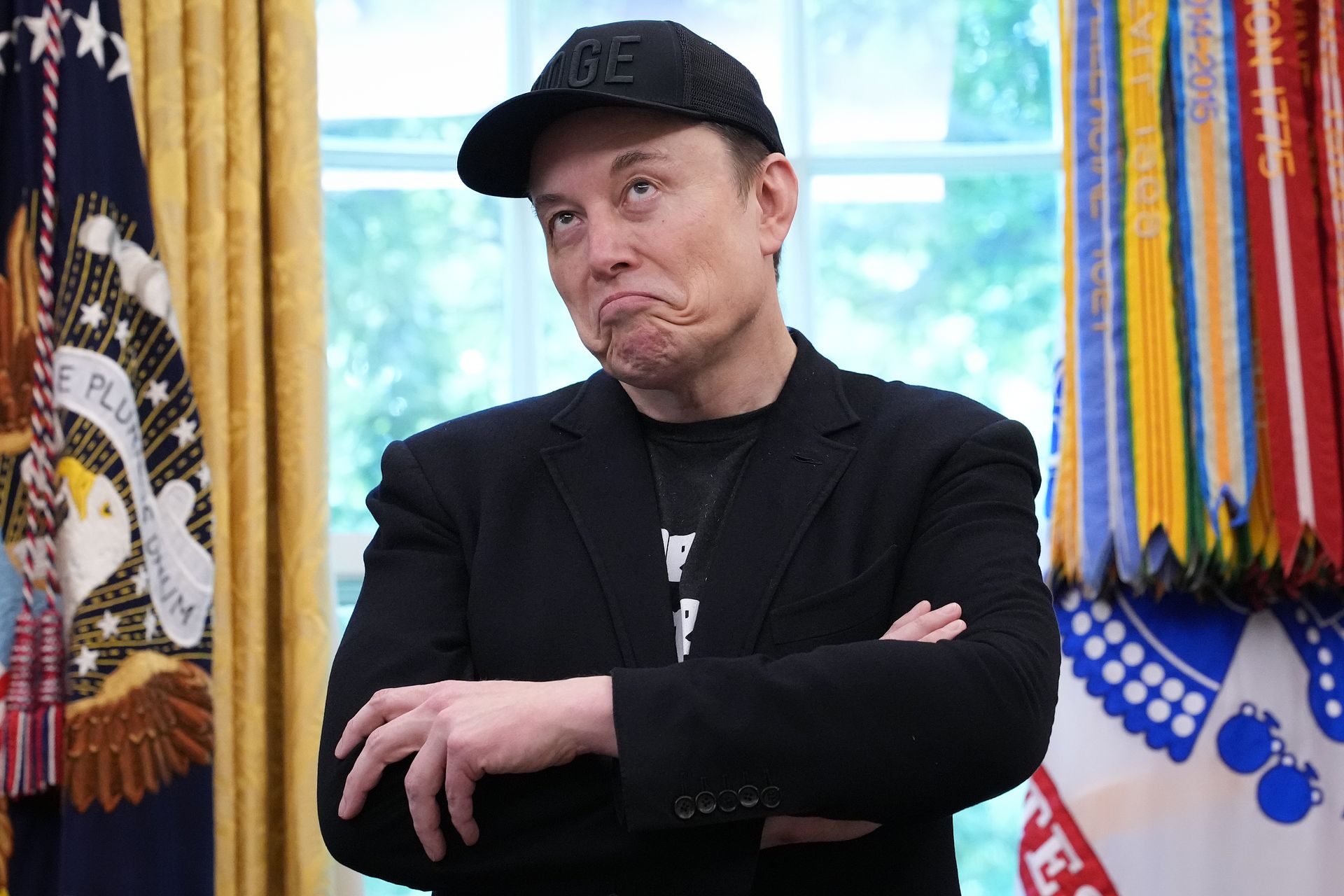
Kevin Dietsch/Getty Images
Elon Musk is building a political party. President Donald Trump is calling Musk a train wreck. And Tesla $TSLA investors are getting whiplash.
On Friday, the Tesla CEO announced the formation of the “America Party,” a third-party effort aimed at flipping a small number of congressional seats to gain outsized influence in Washington. The party, Musk said on X $TWTR, would focus on “just 2 or 3 Senate races and 8 to 10 House districts” — perhaps enough to tip the balance on close votes and gain leverage on key legislation.
The announcement followed a Twitter poll that Musk posted to ask if Americans wanted a new party. “By a factor of 2 to 1, you want a new political party and you shall have it!” he wrote on X, unveiling the party’s mission: “To give you back your freedom.”
Trump, who had happily welcomed Musk (and his money; the Tesla CEO donated almost $300 million to Trump’s campaign) into his political orbit, didn’t mince words in response. “I am saddened to watch Elon Musk go completely ‘off the rails,’ essentially becoming a TRAIN WRECK,” the president wrote on Truth Social. “He even wants to start a Third Political Party, despite the fact that they have never succeeded in the United States - The System seems not designed for them.”
The fallout between the two former self-declared “first buddies” extends beyond politics.
Wedbush analyst Dan Ives, one of Wall Street’s most vocal Tesla bulls, said in a note on Sunday that Musk’s latest move is “exactly the opposite direction that Tesla investors/shareholders want him to take during this crucial period for the Tesla story.” Ives wrote that there’s a “broader sense of exhaustion from many Tesla investors that Musk keeps heading down the political track,” investors who have watched Musk toggle between tech visionary and political agitator — often at the expense of focus.
Tesla is already under pressure. The company reported a nearly 14% year-over-year drop in vehicle deliveries for the second quarter, and the stock is down more than 23% in 2025 (and almost 8% on Monday).
Second-quarter deliveries fell 13% year over year, down to 384,000 vehicles. That was slightly above more pessimistic expectations — including those from JPMorgan $JPM analysts, who wrote Monday that the results came in above their “lower-end 360K forecast” and were enough to “modestly raise” their delivery and earnings estimates. They still warned of broader risk: “Sales remain in a troubling trend,” the team wrote, citing a steep drop from the 444,000 vehicles delivered in Q2 last year and the 510,000 forecast expected earlier this year. JPMorgan maintained its “Underweight” rating and $115 price target, saying it continues to see “risk to the full year outlook and valuation.”
Musk’s political ventures are now seen as another potential overhang — an unpredictable variable that could complicate investor confidence and distract from near-term execution.
Earlier this year, there was a brief reprieve. Musk distanced himself from Trump, publicly stepped back from the Department of Government Efficiency (DOGE) that he created, toned down the crypto commentary, and promised to recenter on Tesla’s core business. That reset didn’t last. Musk’s return to politics — now on his terms — comes as Tesla is pushing ahead on its high-stakes AI, autonomy, and robotics ambitions.
For investors, the concern isn’t only about political optics. Every new initiative outside Tesla’s core business risks further dilution of Musk’s focus and Tesla’s operational bandwidth at a time when the company is drawing plenty of question marks about where it’s heading.
Ives wrote, “After leaving the Trump Administration and DOGE there was initial relief from Tesla shareholders and big supporters of the name that Tesla just got back its biggest asset, Musk. That relief lasted a very short time and now has a taken a turn for the worst with this latest announcement.”
Musk, based on his public posts and retweets, seems unbothered.
Since his announcement, he has reposted support for policies such as reducing federal debt, modernizing the military with AI and robotics, accelerating pro-tech regulation, promoting free speech and pro-natalist policies, and cutting red tape across sectors — especially energy. “The polling for me was very positive a year ago, which is why Trump used me so much,” Musk wrote on Friday. He added on Sunday that “backing a candidate for president is not out of the question, but the focus for the next 12 months is on the House and the Senate.”
Wedbush still maintains an “Outperform” rating and a $500 price target; Ives wrote, “We remain firmly bullish on Tesla's AI future....but clearly this is not the news we want to see as it adds another perceived overhang to the stock.” Ives said it wouldn’t surprise those at Wedbush if the Tesla board gets involved at some point “depending on how far Musk takes” shifting his time and attention toward politics. “Tesla needs Musk as CEO and its biggest asset,” he wrote, “not heading down the political route yet again.”
The bigger risk isn’t that Musk’s political plans fail. It’s that they succeed in distracting him. And investors aren’t voting with likes on social media — they’re watching the stock.
Join 500,000+ readers who start their day with Quartz.
By subscribing, you agree to our Terms of Service and Privacy Policy.