
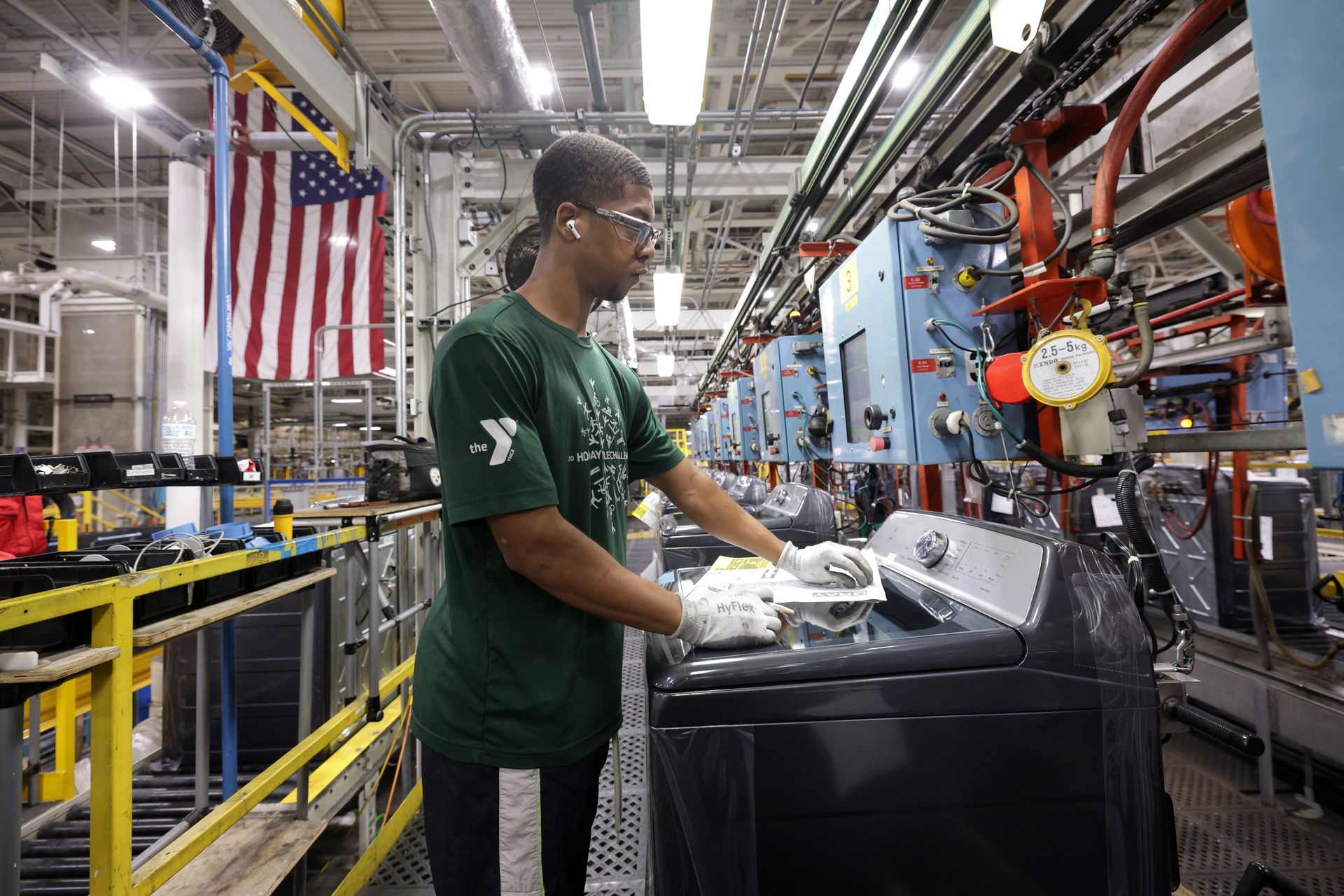
Monday's S&P Global $SPGI release painted a troubling picture for factory workers: headcount reductions in U.S. manufacturing have accelerated to a severity unseen outside of the early-pandemic collapse of 2020 and, setting that episode aside, not matched since the depths of the 2008–2009 financial crisis.
A strong headline number did little to obscure the labor market deterioration. June's flash U.S. Manufacturing PMI came in at 55.7, its highest reading in 49 months, edging up from 55.1 in May. Output expanded at a pace last seen in July 2021, propelled by the sharpest jump in new orders in more than four years. Yet staffing levels declined for the second straight month, with firms prioritizing cost control in the face of still-elevated input prices and an uncertain demand horizon.
"Most worrying was the further fall in employment, notably in the manufacturing sector," said Chris Williamson, chief business economist at S&P Global Market Intelligence, in a statement. "Factory job cuts are running at the highest since 2009 if the pandemic is excluded, reflecting concerns over the sustainability of the recent upturn in demand alongside worries over the escalating cost of raw materials."
Stockpiling, not underlying consumer or business demand, appears to have been the primary engine of June's manufacturing gains, according to the survey. Input inventories were built up at a rate approaching the all-time high for the survey, surpassed only by the stockpiling wave triggered by the 2025 tariff announcements, as manufacturers raced to insulate themselves from supply chain disruptions and cost spikes linked to the Middle East conflict. Vendor lead times extended to their longest since August 2022.
Outside the factory sector, the data offered limited encouragement. June's flash Composite PMI Output Index ticked up to 52.2 from 51.5 in May, a five-month high, while the services reading moved to 51.3 from 50.7. Williamson cautioned that the numbers point to an economy "struggling to grow much faster than a 1% annualized rate in the second quarter."
Input price inflation cooled slightly but remained historically elevated, and selling price inflation held at the same rate as May, which had been the highest since July 2025. Optimism about the twelve-month outlook reached its highest point since February, with some of the improvement attributed to signs that the conflict in the Middle East could be moving toward resolution, although overall confidence remained below historical norms.
The manufacturing surge has come alongside persistent cost pressure across the supply chain. As Quartz has tracked in recent months, ISM data through May showed the Prices Index near its highest level since 2022, with manufacturers citing higher steel and aluminum costs, tariffs, and petroleum-based product inflation tied to the Middle East conflict as the primary drivers.