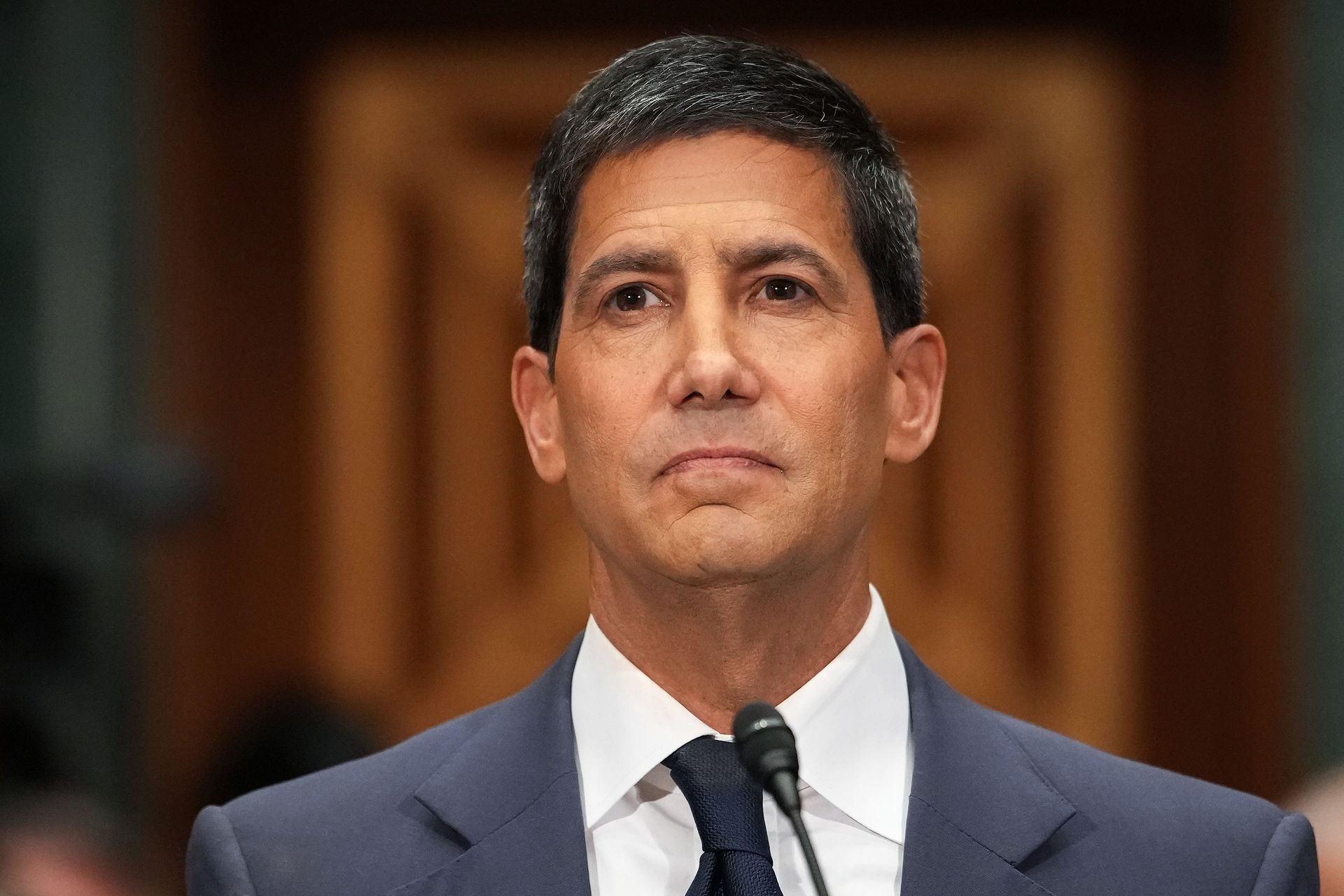
Federal Reserve officials were divided over the future path of interest rates at Fed Chair Kevin Warsh's inaugural meeting last month, with some seeing an immediate case for a hike and the broader committee split between holding steady and tightening further, according to meeting minutes released Wednesday.

The vote during the June 16–17 meeting to leave the benchmark federal funds rate in its existing 3.5% to 3.75% target range was unanimous. Prior to the minutes' release Wednesday, it had not been publicly known that some officials had favored tightening at the June gathering. Those same participants indicated they were willing to go along with the hold for now.
The disagreement extended to the outlook. The minutes captured a committee divided on where rates should stand come December, with one camp favoring a target at or just under the current range and another camp concluding that rates would need to be higher. "Participants noted that their future policy actions would depend on incoming information," the minutes said.
The committee sketched out both directions: one path where cooling price pressures eventually cleared the way for lower rates, and another where persistent inflation driven by factors such as AI-fueled demand, Middle East energy disruptions, or tariff pass-through would leave officials little choice but to tighten, with the minutes indicating "some policy firming would likely be warranted" under those conditions.
Underlying the debate was a deteriorating inflation picture. Total PCE price inflation rose to an estimated 4.1% in May, and core PCE was estimated at 3.4%. Several participants noted that price pressures had broadened, with transportation, airfares, petrochemical products, and agricultural inputs all seeing substantial increases. The majority of participants judged that risks to the inflation outlook remained tilted to the upside.
The meeting also marked a shift in how the Fed communicates. On communications, the committee moved to strip out wording that had pointed toward future rate cuts, and the resulting statement — cut to about a third of its typical length — reflected a broader appetite among officials for more concise public messaging.
Separately, the minutes recorded that Warsh put forward a plan to create five task forces, each charged with reviewing a distinct aspect of how the Fed conducts and explains monetary policy.
Nine of 18 policymakers saw the case during the June meeting for at least one rate hike before year-end, a shift from March projections that had leaned toward a cut. Consumer prices rose 4.2% year-over-year in May, a three-year high driven by an energy shock tied to the conflict in the Middle East. The next FOMC meeting is scheduled for July 28–29.
