
The Federal Reserve left interest rates unchanged Wednesday, and with inflation surging to its highest level in years, central bank officials telegraphed that their next move might be a rate hike, not a cut.
Central bank officials telegraphed that their next move might be a rate hike, not a cut, as inflation has hit its highest level in years
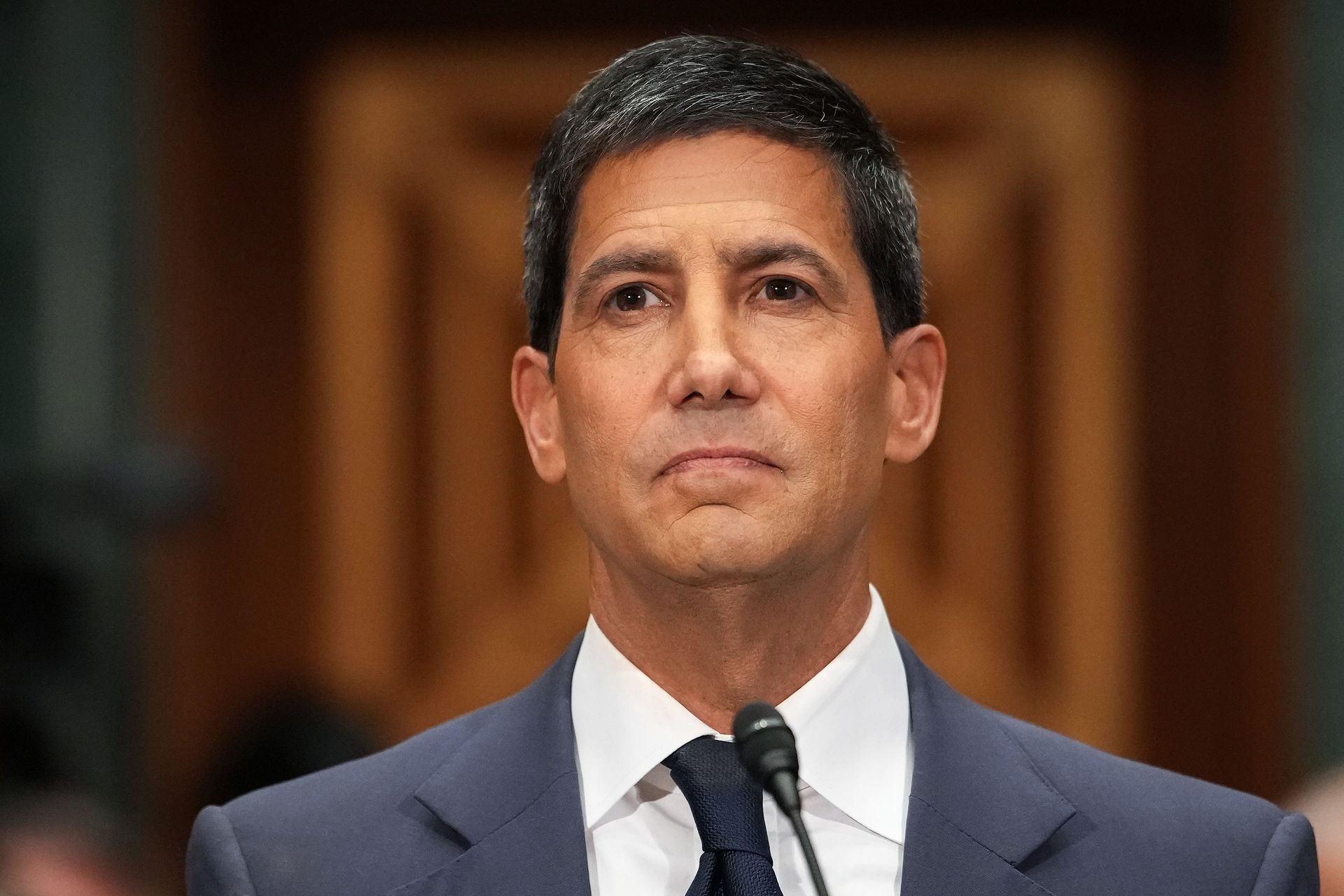
Andrew Harnik / Getty Images
The Federal Reserve left interest rates unchanged Wednesday, and with inflation surging to its highest level in years, central bank officials telegraphed that their next move might be a rate hike, not a cut.
Fed Chair Kevin Warsh led his first Federal Open Market Committee meeting to a unanimous decision, with policymakers voting 12-0 to hold the benchmark federal funds rate steady at a target range of 3.5% to 3.75%. Policymakers have now gone four straight meetings without adjusting borrowing costs. The committee's statement pointed to continued economic growth but flagged persistent uncertainty linked partly to the U.S.-Israeli war against Iran, as well as inflation running above the Fed's 2% target, with energy prices elevated following recent supply disruptions.
"Economic activity is expanding at a solid pace despite elevated uncertainty that owes, in part, to the conflict in the Middle East," the FOMC said in its statement following its two-day meeting. "Productivity growth and capital investment are strong. Job gains have kept pace with the workforce, and the unemployment rate has changed little."
The Fed also released its quarterly Summary of Economic Projections alongside the rate decision. Among the projections, a majority of officials — nine in total — see the case for raising interest rates at least once before year-end, and six of them envision more than one increase. Just a single policymaker still anticipated a reduction in rates this year. When the committee last submitted forecasts in March, the central tendency had leaned toward one cut over the course of 2026.
With inflation having stayed persistently above the Fed's 2% for five years, Warsh reiterated the central bank's commitment to reining in price increases.
“The commitment to deliver is strong, unanimous, and unambiguous, and that’s I think an important message we’ve missed for five years, and we’re going to fix that,” Warsh said during his news conference.
Warsh was confirmed last month to succeed outgoing Fed Chair Jerome Powell, who had served eight years as chair. Rather than departing the institution altogether, Powell opted to stay on in his separate capacity as a sitting governor on the Board.
Consumer prices rose 4.2% year-over-year in May, a three-year high, driven largely by an energy shock from the U.S.-Israeli war with Iran. Employers added 172,000 positions in the most recent monthly report, giving hawkish officials more confidence that the jobs picture is stable enough to allow a tighter monetary stance aimed at bringing prices down.
Warsh entered the meeting facing pressure from opposing directions: A bond market that had been pricing in a rate increase and a president who has publicly called for cuts. Trump, who tapped Warsh for the role, has made no secret of his desire for cheaper borrowing costs and has gone so far as to joke publicly about taking legal action should rates not come down. Rate decisions, however, require a committee vote.
Join 500,000+ readers who start their day with Quartz.
By subscribing, you agree to our Terms of Service and Privacy Policy.