
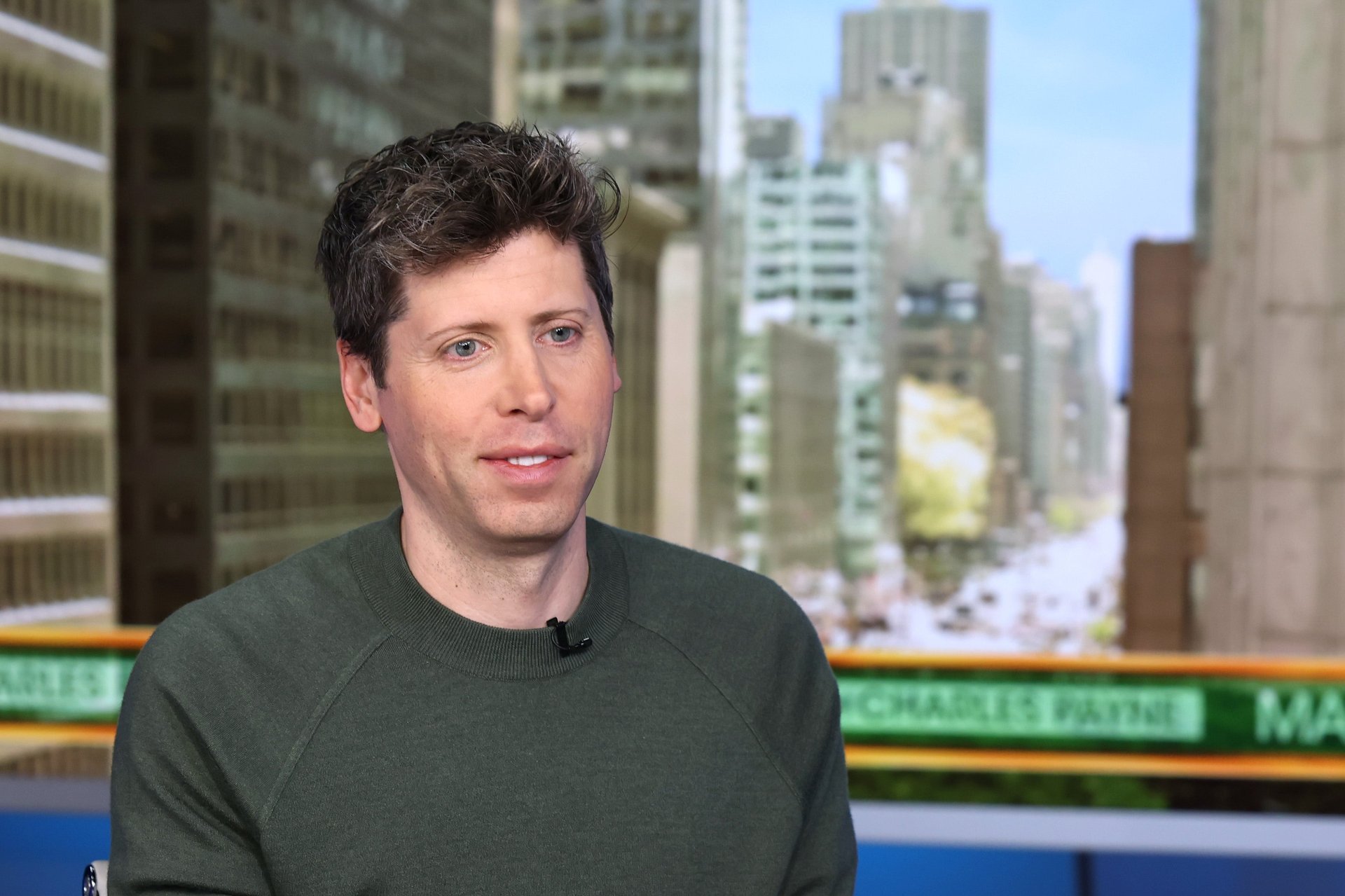
OpenAI unveils o3, its next 'reasoning' model
The AI startup said it plans to launch o3-mini at the end of January
By
The AI startup said it plans to launch o3-mini at the end of January
OpenAI ended its “12 Days of OpenAI” product-launch spree by unveiling the successor to its first “reasoning” model.
The new frontier model family includes o3 and o3-mini, the artificial intelligence startup said Friday. Neither model is being publicly launched yet, but they are now available for public safety testing.
“We view this as sort of the beginning of the next phase of AI, where you can use these models to do increasingly complex tasks that require a lot of reasoning,” OpenAI chief executive Sam Altman said during a livestreamed announcement.
The AI startup is skipping the 02 name, Altman said, “out of respect to our friends at Telefónica (TEF), and in the grand tradition of OpenAI being really, truly bad at names.” O2, a brand of Spain’s Telefónica, is a mobile network operator in the U.K.
For the first time, OpenAI is opening the models for external safety testing. Safety and security researchers can sign up to preview and test the models, Altman said, adding that the startup plans to launch o3-mini around the end of January, followed by the full o3 model shortly after.
Compared to o1 and o1-mini, which launched in September, o3 outperformed o1 by almost 23 percentage points on OpenAI’s own SWE-Bench Verified evaluation, and reached a Codeforces rating of 2727, it said. Meanwhile, OpenAI’s chief scientist scored 2665, according to the startup. The new model also set a record on EpochAI’s Frontier Math evaluation, OpenAI said, and apparently more than tripled o1's score on the ARC-AGI test.
OpenAI launched the full version of its o1 model out of preview during the first day of its “12 Days of OpenAI” promotional scheme. The startup also announced a new, $200-a-month subscription tier for ChatGPT called ChatGPT Pro, which includes a more advanced version of o1 called o1 pro mode.
Former chairs and senior staff from Republican and Democratic administrations filed with the FCC on Tuesday, calling the proceeding unconstitutional
A bipartisan group of former Federal Communications Commission chairs, commissioners, and senior staff filed with the agency Tuesday urging current leadership to end an early license review targeting eight Disney $DIS-owned ABC television stations, calling the proceeding an unconstitutional attack on free speech.
The signatories — who served under Republican and Democratic presidents — included former FCC Chairman Mark Fowler, who served under President Ronald Reagan; former Chairman Alfred Sikes, who served under President George H.W. Bush; former Chairman Tom Wheeler, who served under President Barack Obama; and former Commissioner Rachelle Chong, according to Reuters. High-ranking former agency lawyers and advisers also signed.
The filing contained direct quotes from the group: "This early license renewal proceeding is unprecedented in the history of the Federal Communications Commission and a grave violation of both the Communications Act and the Constitution. Through this proceeding, the FCC seeks to censor Disney's and ABC's speech and send a chilling message to all broadcasters: carry speech we don't like at your peril."
Beyond the direct quotes, the filing's authors characterized the proceeding as "the latest attack in a sustained campaign by Chairman Brendan Carr and the Trump administration of threatening legal sanctions against licensees whose speech President Trump dislikes" and dismissed it as "an assault on free speech disguised as regulatory process," concluding with a demand that the commission "terminate this proceeding."
FCC Chairman Brendan Carr initiated the early review in April, more than two years before the ABC stations' licenses were set to come up for renewal beginning in October 2028, according to Reuters. The agency said the review stemmed from a year-long investigation into whether Disney's diversity, equity and inclusion practices amounted to unlawful employment discrimination. The early review order came one day after President Donald Trump called for ABC late-night host Jimmy Kimmel to be fired. Tuesday's filing marked the first time in over half a century that the agency had compelled a broadcaster into an early license review.
The former officials contended in their filing that Carr "has prejudged the outcome of this proceeding" and warned that the commission "may assert the power to terminate the stations' licenses early."
The FCC proceeding has drawn significant public attention since Disney launched an on-air campaign urging viewers to submit comments. More than 145,000 comments have been filed. The deadline for public comment is Aug. 5.
Disney submitted renewal applications for the eight stations in May under protest, describing the FCC's order as "unlawful, arbitrary, and unconstitutional" and accusing the agency of "unconstitutional retaliation and coercion." Last week, Carr said ABC's decision not to air a Trump speech on July 16 about U.S. election security would factor into the review, according to Variety.
Anna Gomez, the FCC's only Democratic commissioner, pushed back at the same press conference. "This vague public interest standard is being used just to punish speech that this administration doesn't like and to reward speech that it does like," Gomez said. "That's inappropriate, and it's contrary to the law and to the Constitution."
Representatives for the FCC did not respond to requests for comment.
The fast-fashion retailer said the probe's outcome may require significant monetary payments that could hurt its financial condition
Shein disclosed Tuesday that its U.S. business is under investigation by the Federal Trade Commission, revealing the probe in documents filed with the entity that operates the Hong Kong Stock Exchange in connection with its planned initial public offering.
Shein offered no details about the nature of the FTC's inquiry, and the filing appears to mark the probe's first public disclosure. "We are actively cooperating with the FTC … Although it is possible that we may reach a settlement with the FTC in connection with the investigation, we currently cannot predict the probable outcome of the investigation and the timing of such outcome, and we cannot rule out that such outcome could occur in the near term," the company said in the filing. An FTC spokesperson offered no comment, and Shein left a CNBC inquiry for additional details unanswered.
The company also warned that any resolution — whether a settlement or another outcome — could carry a significant financial cost. "The outcome of the investigation, whether in settlement or otherwise, may require us to make significant monetary payments that could have a material adverse effect on our financial condition and results of operations," Shein said.
The FTC serves as the country's primary watchdog against consumer harm, charged with rooting out deceptive and unfair conduct in the marketplace. Past FTC enforcement actions have targeted practices ranging from hidden fees and deceptive pricing to problematic shipping and refund policies and data-privacy violations; the agency has also trained its sights on so-called dark patterns, a category of interface design the FTC says is engineered to nudge people into parting with money or personal information. The agency has previously cited countdown timers as one example of a dark pattern. On its app, Shein deploys tools such as countdown timers, gamified discount mechanics, and limited-time flash sales as pressure tactics designed to accelerate buying decisions.
Shein's Hong Kong listing received approval, though a trading date has not been set. The company previously sought to list in the United States before political opposition over its business practices led it to pursue options in London and ultimately Hong Kong.
The FTC disclosure adds to a difficult period for the Singapore-headquartered company. Shein posted a $99 million net loss in the first quarter of 2026, swinging from a $395 million profit in the same period a year earlier, as the elimination of a U.S. duty exemption hit its largest market. U.S. revenue fell 14.3% to $2.04 billion in the quarter. The company said it is raising prices in the U.S. to offset a portion of the higher costs.
Goldman Sachs $GS, Morgan Stanley $MS, and JPMorgan $JPM Chase are joint sponsors of the Hong Kong listing, which targets a valuation of $40 billion to $50 billion, according to CNBC.
Chip stocks fell for a fourth straight day, dragging the Nasdaq, as investors rotated into consumer staples and financials
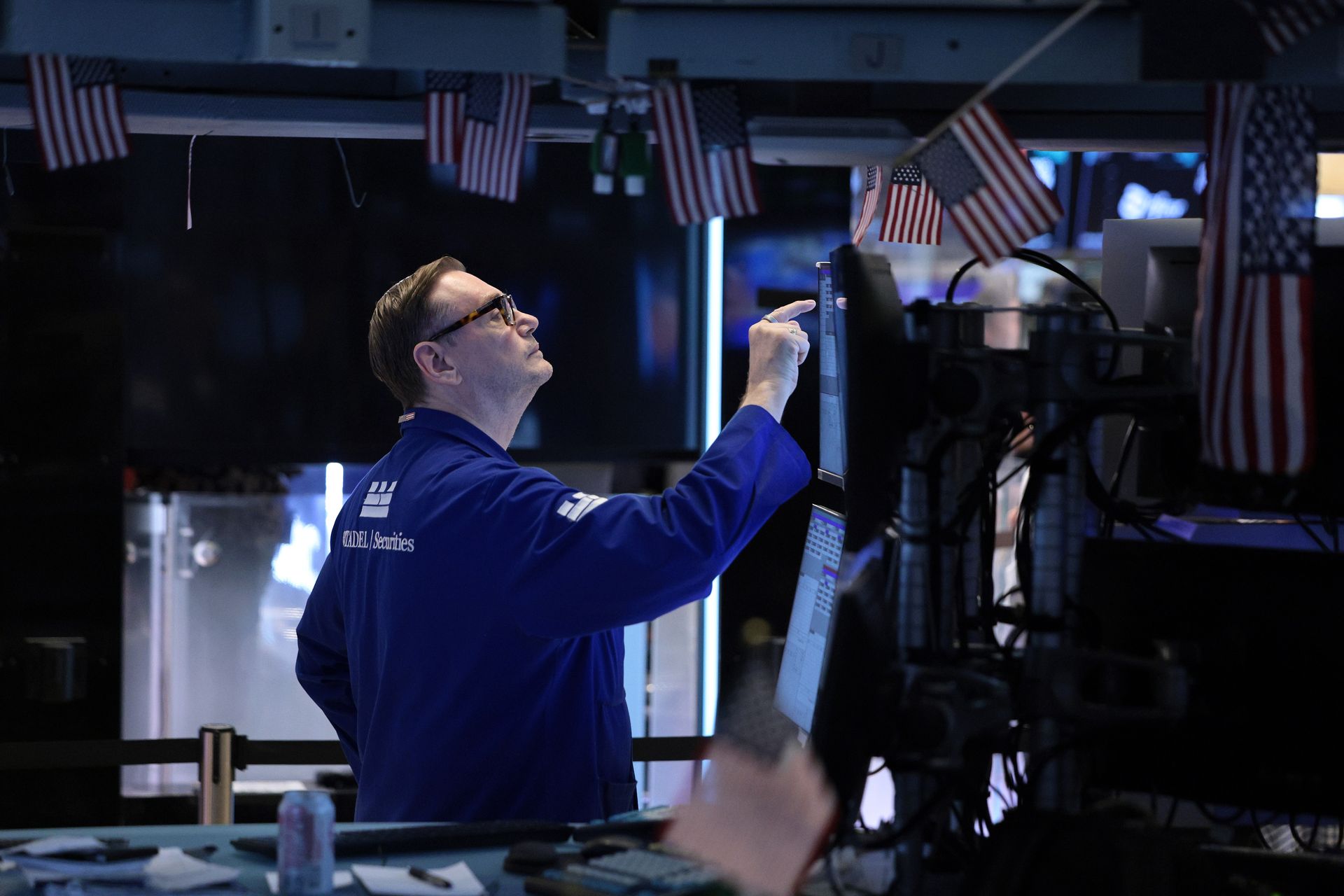
The Dow Jones Industrial Average climbed 659 points, or 1.3%, on Tuesday as strong earnings from Coca-Cola $KO and Sherwin-Williams lifted blue-chip stocks while falling oil prices added support. The S&P 500 rose 0.3%, and the Nasdaq $NDAQ Composite finished little changed.
Sherwin-Williams stock surged 8% to pace the Dow after the paint maker topped second-quarter estimates. Coca-Cola stock climbed 5% after the beverage giant beat on both revenue and earnings and lifted its full-year guidance. Salesforce $CRM stock also gained 5%.
A broad rotation out of technology and into other sectors drove much of the day's action. The Technology Select Sector SPDR Fund hit its lowest level since May 7, while the State Street $STT Health Care Select Sector SPDR ETF and Financials ETF surged to record highs. Consumer-staples stocks led the S&P 500 with a 2.7% gain.
The VanEck Semiconductor ETF dropped more than 3%, marking a fourth straight session of losses for chip stocks. Micron $MU shares declined roughly 8% and AMD $AMD shed 7%. A drop of nearly 6% in the PHLX semiconductor index pushed the Nasdaq-100 into correction territory at its session low, though the index recovered to close above that threshold, according to the Wall Street Journal. Software names provided a partial cushion, as Microsoft $MSFT advanced nearly 2% and the iShares Expanded Tech-Software ETF added close to 2%.
Mounting anxiety over AI spending levels and China's accelerating advances in the sector have pressured chip stocks, according to the Journal. The weakness extended across the Pacific, where South Korea's Kospi finished down 10% and Japan's Nikkei lost 4%.
Crude prices kept falling amid reports that Iran was in talks with Saudi Arabia and Oman over the Strait of Hormuz. West Texas Intermediate crude futures fell 5% to just above $78 per barrel, and Brent crude shed more than 6%.
Ross Mayfield, an investment strategist at Baird, described the trend as a sustained technical shift rather than a fundamental one. "This momentum unwind has been a story that's been playing out for six to eight weeks now, and it has a lot more to do with the technicals of the market than any fundamental changes," Mayfield told CNBC.
The Federal Reserve is set to announce its rate decision on Wednesday. Fed funds futures were pricing in a quarter-point rate increase in September, according to the CME $CME FedWatch Tool.
The payout resolves a 2021 civil lawsuit brought by newsletter publishers David and Ina Steiner over a 2019 campaign to silence their reporting
eBay and three former top executives agreed to pay $55.7 million to settle a civil lawsuit brought by Massachusetts couple David and Ina Steiner, who were subjected to a stalking and harassment campaign carried out by company employees in 2019 in retaliation for their coverage of eBay in their newsletter, EcommerceBytes.
Under the terms of the settlement, eBay will pay the Steiners $46.15 million and fund $6 million in charitable contributions to nonprofit organizations. Former eBay CEO Devin Wenig agreed to pay $2 million to the couple and contribute an additional $1 million to a charity focused on protecting First Amendment rights in the name of Ina Steiner. Former eBay senior vice president of operations Wendy Jones agreed to pay $500,000, and former chief communications officer Steve Wymer agreed to pay $50,000. Separate settlements were also reached with all other former eBay employees named in the civil action, the Steiners' attorneys said.
eBay was also required to issue a public statement as part of the agreement. "As we have long stated, what the Steiners were subjected to by former eBay employees in 2019 was wrong, reprehensible and should never have happened," the company said in a statement. "We condemn, in the strongest terms possible, the employees who perpetrated and pled guilty to criminal charges for the misconduct against Ina and David Steiner."
According to CNBC, the Steiners were targeted with menacing online messages and an escalating series of unsettling packages at their home — including live insects, a funeral wreath, a bloody pig mask, and a book about grieving the death of a partner. Some former eBay employees made the trip from California to Natick, Massachusetts, where they monitored the Steiners and tried to fix a GPS tracking device to their vehicle, according to Reuters.
The harassment operation was set in motion after Wenig sent Wymer a text in August 2019 saying it was time to "take her down," a reference to Ina Steiner. Wenig was not named in any criminal case. According to Reuters, his attorneys have maintained that he was neither aware of nor a participant in the harassment campaign.
In total, seven former eBay employees entered guilty pleas on criminal charges stemming from the scheme; the longest sentence handed down was 57 months. eBay itself was criminally charged and in 2024 agreed to pay a $3 million fine under a deferred prosecution agreement with the U.S. Department of Justice.
The Steiners filed their civil lawsuit in Boston federal court in 2021. The settlement contains no confidentiality provision, allowing the couple to discuss the facts of the case publicly.
"We believe this resolution sends a clear message that corporations and their executives cannot engage in this type of misconduct without facing significant consequences," attorney Christopher Murphy said in a statement.

The Conference Board's Present Situation Index fell for a third consecutive month as views of business and labor conditions softened
The Conference Board's Consumer Confidence Index fell 1.4 points to 90.8 in July, the third consecutive month consumers grew less upbeat about current conditions, the organization said Tuesday.
The Present Situation Index, which tracks consumers' assessments of current business and labor market conditions, dropped 3.6 points to 114.9 — its third straight monthly decline. The Expectations Index, which reflects consumers' six-month outlook for income, business, and labor conditions, held steady at 74.7, remaining in negative territory.
"Consumer confidence moderated slightly in July, continuing a general downward sloping trajectory since late 2021," Dana M. Peterson, chief economist at The Conference Board, said in a statement. "Consumer appraisals of current business conditions and, to a lesser extent, perceptions of the current labor market both softened."
Views of business conditions weakened noticeably. The share of consumers describing conditions as "good" fell to 18.9% from 20.2% in June, while those calling conditions "bad" rose to 17.8% from 16.5%. Net views of business conditions stood at just +1.1%, barely positive.
Labor market perceptions also softened. The share of respondents saying jobs were "plentiful" slipped to 24.6% from 25.5% in June, narrowing the labor market differential — the gap between those describing jobs as plentiful and those calling them hard to find — to +3.1 percentage points. Consumers' write-in responses on economic factors picked up slightly more references to jobs and unemployment during the survey period.
Looking ahead, consumers grew less optimistic about business conditions over the next six months, with net expectations for business conditions dipping to -3.3%. Expectations for labor market conditions improved slightly but remained in negative territory. Peterson noted that consumers anticipate little improvement in business conditions over the next six months, though income expectations stayed optimistic overall.
The survey period ran July 1–22, encompassing ongoing conflict in the Middle East. The Conference Board noted that mentions of war, geopolitics, and conflict eased during the sample period, though recent reacceleration of fighting could lift such references in revised data. References to food and grocery prices increased in frequency.
Consumer confidence ticked up modestly in June to 91.2 as falling oil prices offered some relief from inflation concerns, though that reading fell short of economist forecasts. The Present Situation Index had already dropped 3.0 points that month, reflecting softening views of business and employment conditions even as the Expectations Index climbed. Before June, confidence reversed course in May, when rising energy costs tied to the Middle East conflict weighed on Americans' assessment of current conditions.
The survey, conducted by Toluna, was based on an online sample with a preliminary cutoff date of July 22.
The recall covers 12 levothyroxine sodium tablet packages distributed under the Major and Cardinal brand names since January 2025
Major Pharmaceuticals initiated a voluntary recall of its levothyroxine sodium tablets on July 13 after the Food and Drug Administration determined the pills were subpotent, meaning they deliver less medication than labeled.
The FDA assigned the recall a Class II designation on July 17, a classification that signals the tablets could produce temporary negative health effects. According to the FDA, Major Pharmaceuticals was responsible for packaging and distributing the medication across the country, with Cardinal Health $CAH handling distribution for part of the supply.
Levothyroxine sodium is used to treat hypothyroidism, enlarged thyroid glands, and a type of thyroid cancer, according to the Mayo Clinic.
The recall covers 12 package configurations sold under the Major and Cardinal brand names, according to USA Today. Each package contains either a single 10-tablet blister pack or a carton bundling 10 such packs together for a total of 100 tablets. The recalled tablets span dosage strengths of 25, 50, 75, 88, 112, 125, and 150 micrograms, and their expiration dates fall between July 2026 and January 2027. All recalled packages require a prescription.
In a letter sent to retailers earlier this month, Major Rugby — the pharmaceutical manufacturer behind the products — said taking the recalled medication "is not likely to cause adverse health effects," according to USA Today. The company nonetheless urged consumers to return the tablets to their point of purchase and consult a doctor if they find any affected product.
Distribution of the recalled tablets began in January 2025. The FDA declined to provide a total tablet count for the recall.
Consumers can identify recalled packages by checking the lot numbers listed in the FDA recall notice. Among the affected lots are packages of 25 mcg (lot N02212), 50 mcg (lot N02200), 75 mcg (lots N02172, N02296, and N02288), 88 mcg (lot N02310), 112 mcg (lot N02203), 125 mcg (lot N02266), and 150 mcg (lot N02167).
The hotel company now expects revenue per available room to grow 3% to 3.5% in 2026, up from a prior forecast of 2% to 3%
Hilton Worldwide $HLT Holdings raised its full-year forecast for revenue per available room on Tuesday, citing strong demand trends and an expected boost from the recently concluded FIFA World Cup.
The McLean, Virginia-based hotel company now projects system-wide comparable RevPAR — an industry measure reflecting both occupancy levels and average daily rates — to increase 3% to 3.5% for fiscal 2026 on a currency-neutral basis, an upward revision from its earlier guidance of 2% to 3%, the company said. For the third quarter, Hilton projects RevPAR growth of approximately 4%, reflecting expected benefits from the World Cup held in the U.S., Canada and Mexico.
For the three months ended June 30, system-wide comparable RevPAR rose 3.9% on a currency-neutral basis compared with the same period in 2025, driven by increases in both occupancy and average daily rates. Net income for the quarter was $482 million, up from $442 million a year earlier. Adjusted EBITDA was $1,054 million, compared with $1,008 million in the second quarter of 2025. Total revenue reached $3.34 billion, up from $3.14 billion a year earlier.
Diluted earnings per share came in at $2.10 for the quarter, up from $1.84 a year earlier. Adjusted diluted EPS reached $2.29 for the quarter, up from $2.20 in the second quarter of 2025.
"We delivered strong top and bottom-line results for the second quarter, driven by the continuation of strengthening demand trends and broad-based momentum across our system, which we expect to continue for the remainder of the year and into 2027," President and Chief Executive Officer Christopher J. Nassetta said in a statement.
One drag on results came from the Middle East and Africa region, where RevPAR dropped 29.5% in the second quarter compared with the same period last year, reflecting the impact of ongoing regional conflicts on travel demand.
Looking to the fourth quarter, Hilton said its outlook is tempered by unfavorable calendar shifts and the U.S. midterm elections.
For the full year, the company projects net income between $1,883 million and $1,911 million, and adjusted EBITDA between $4,040 million and $4,080 million. Hilton also expects net unit growth of 6% to 7% in 2026, with the second half of the year expected to outperform the first half. The company's development pipeline stood at 541,300 rooms as of June 30, representing 6% growth from a year earlier.
Hilton repurchased 2.9 million shares of common stock during the second quarter at an average price of $326.99 per share, bringing total capital return including dividends to $966 million for the quarter. Full-year capital return is projected to be approximately $3.5 billion.
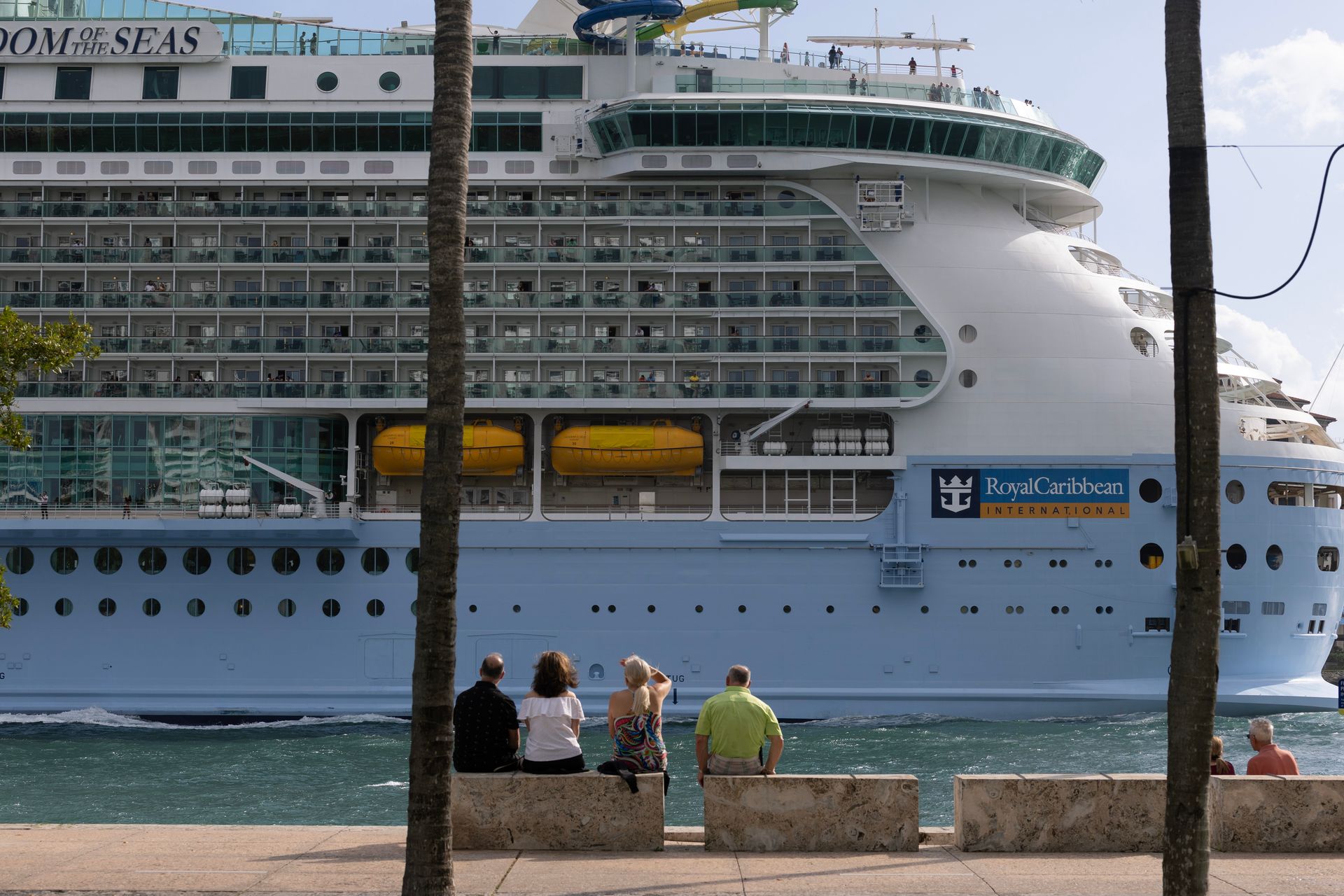
The cruise company raised its full-year adjusted EPS guidance to $17.73–$17.87 but cut its revenue growth forecast from ~10% to ~9%
Royal Caribbean $RCL reported second-quarter adjusted earnings of $4.21 per share on Tuesday, topping analyst expectations of $3.98 per share, according to Reuters. The company also lifted its full-year adjusted earnings outlook to $17.73–$17.87 per share, a step up from the $17.10–$17.50 range it had previously guided to.
Royal Caribbean also pulled back its annual revenue growth target to roughly 9% from roughly 10%, pointing to what it described as a softening in demand for certain sailings as a result of ongoing geopolitical tensions, the company said.
For the three months through June 30, revenue climbed to $4.83 billion, a 6% increase from the prior year period. That result narrowly cleared the $4.82 billion analysts had forecast, according to Reuters. Net income attributable to the company came in at $1.13 billion, or $4.20 per share diluted, compared with $1.21 billion, or $4.41 per share diluted, in the same period a year earlier.
Despite the booking pressure on some itineraries, Royal Caribbean said overall demand remained healthy. The company noted it remained booked at record prices and that booking volumes were above last year's levels.
"Consumer demand for our vacation experiences is strong, and guests continue to demonstrate a desire to spend on memorable experiences with us," Chief Financial Officer Naftali Holtz said in a statement. Holtz added that while it is still early, 2027 booking trends are running ahead of historical levels, including for itineraries where geopolitical developments weighed on demand this year.
Second-quarter fuel costs totaled $355 million, surging 27% compared with the same period last year. On the full-year outlook, the company edged its fuel expense estimate down to about $1.34 billion from the roughly $1.35 billion it had previously projected. Royal Caribbean stock was down about 1% in premarket trading.
Royal Caribbean cut its full-year adjusted profit forecast in April, reducing EPS guidance to $17.10–$17.50 from $17.70–$18.10, as higher fuel costs and geopolitical disruptions to Middle Eastern itineraries weighed on the outlook. At the time, first-quarter adjusted EPS of $3.60 had come in well ahead of analyst expectations, and the company said bookings for affected itineraries had recovered and were running above prior-year levels.
For the third quarter, Royal Caribbean expects adjusted EPS in the range of $6.26 to $6.36, with total revenue growth of approximately 8%, the company said.
The airline beat Wall Street estimates and reinstated its full-year outlook as demand helped it recover more fuel costs than expected
JetBlue Airways posted a net loss of $247 million in the second quarter of 2026, wider than the $74 million loss it recorded in the same period a year earlier, as a surge in fuel costs outpaced stronger revenue.
The New York-based carrier spent $911 million on jet fuel in the quarter, an increase of nearly 81% compared with the same period a year ago. JetBlue paid an average of $4.23 per gallon of jet fuel, up from $2.40 per gallon a year earlier. Despite the spike, the airline recaptured nearly 50% of its higher fuel costs during the quarter, exceeding its previous expectation of 30% to 40%, the company said.
The airline's total operating revenue climbed to $2.7 billion, a 14.5% gain from the year-earlier period. Revenue per available seat mile grew 10.9% year-over-year. The airline's adjusted loss came in at 66 cents per share. Analysts had expected a loss of 71 cents per share, according to Reuters.
JetBlue also reinstated its full-year 2026 outlook, which it had previously withheld. The company now expects full-year revenue per available seat mile growth of 10% to 12.5% year-over-year and projects paying $3.49 per gallon of jet fuel for the full year. It expects an adjusted operating margin of negative 2% to negative 5% for the year, the company said.
"Our second quarter results demonstrate the progress we're making on the levers within our control," Chief Financial Officer Ursula Hurley said in a statement.
JetBlue also introduced a long-term earnings target of at least $1.00 per share for 2028, premised on continued demand strength and an assumed average jet fuel price of $3.00 per gallon that year.
The results come after JetBlue reported a net loss of $319 million in the first quarter of 2026, wider than the $208 million loss in the same period a year earlier, and missed Wall Street estimates. At that time, the carrier said it projected fuel costs would rise to a range of $4.13 to $4.28 per gallon in the second quarter and flagged plans to cut capacity during off-peak periods. It expected to fully recapture fuel costs by early 2027.
JetBlue's transformation program, called JetForward, has generated $470 million in cumulative incremental earnings before interest and taxes through June 2026, the company said. The program remains on track to deliver $850 million to $950 million in annual incremental EBIT by the end of 2027, with benefits expected to reach approximately $1.2 billion in 2028.
Chief Executive Officer Joanna Geraghty said in a statement that strong customer demand and cost controls enabled the airline to recover fuel costs faster than anticipated.
BlackRock-managed funds will own 80% of the venture, with Meta retaining 20% and leasing back the entire campus
Meta $META Platforms and BlackRock $BLK announced a venture Tuesday to develop and own a data center campus in El Paso, Texas, with total development costs of approximately $14 billion.
Under the agreement, funds managed by BlackRock will control 80% of the venture, with Meta keeping the remaining 20% stake. At financial close, Meta will transfer land and partially built construction assets worth around $2.3 billion into the venture, while BlackRock is set to put in roughly $4.9 billion in cash. Meta will also receive a one-time distribution of approximately $1 billion to align ownership stakes. A portion of BlackRock's investment will be funded through $12.5 billion in debt financing, the company said.
The facility, which is currently being built, will deliver 1 gigawatt of compute capacity when finished. Meta will be the sole occupant upon completion, which is expected in 2028. Meta will enter into lease agreements with the venture for use of the entire campus, with a four-year initial term and four extension options covering a potential 20-year period. The transaction is expected to close in the coming days, the company said.
"Building the infrastructure for superintelligence is key to making sure the benefits of this technology are distributed to everyone," Meta founder and CEO Mark Zuckerberg said in a statement. "Our partnership with Larry and the team at BlackRock allows us to move faster and at greater scale."
BlackRock Chairman and CEO Larry Fink said in a statement that the El Paso campus "will create thousands of skilled jobs and help drive economic growth in the local community."
Meta's investment in the El Paso project exceeds $10 billion, supporting more than 4,000 construction jobs at peak and 300 operational jobs once complete, with over 2,300 workers already on site, the company said. BlackRock's investment in the venture also involves Global Infrastructure Partners and HPS Investment Partners, both part of BlackRock.
The El Paso deal follows the same structure as an earlier arrangement in Louisiana, where Meta sought to sell more than $12 billion in bonds to help finance the campus through a holding company tied to BlackRock's ownership position in the project, named Project Sopaipilla Holdings. That structure mirrors what Meta applied at its Hyperion data center in Louisiana, where a joint venture issued debt to keep liabilities off Meta's books.
Meta has publicly committed to spending $600 billion on data center construction through 2028. Meta stock has fallen about 10% so far this year, with the company scheduled to report second-quarter results on Wednesday.
Meta said Morgan Stanley $MS and J.P. Morgan Securities acted as its financial advisors for the deal.