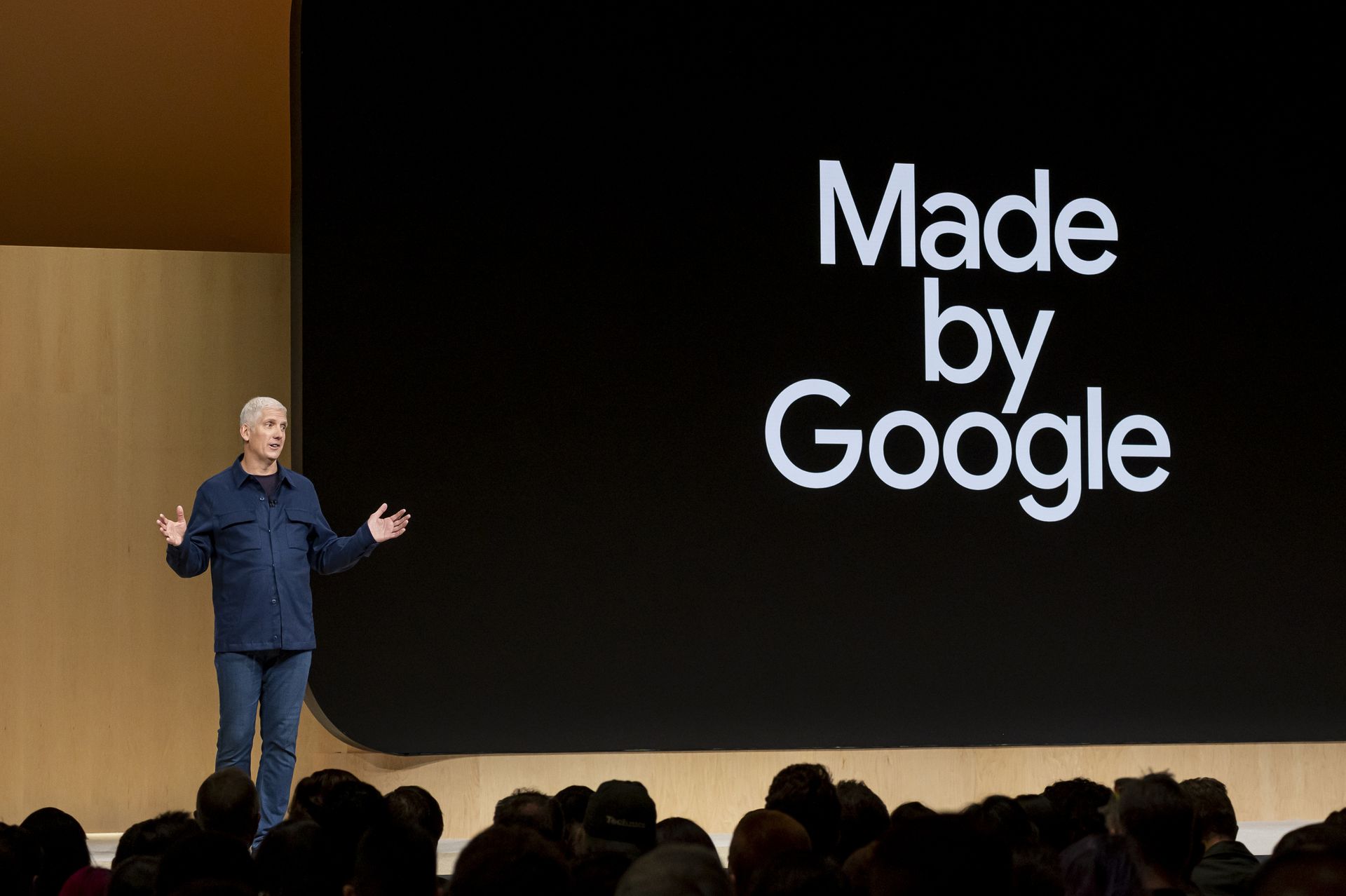
At the “Made by Google $GOOGL Event” on Wednesday, Google threw itself a 10th birthday party for the Pixel phone — complete with Jimmy Fallon, the Jonas Brothers, Steph Curry, and the kind of hype line that belongs on a T-shirt: "Ask more of your phone.” The hardware looked familiar, but the pitch was different. Pixel 10 isn’t just about specs, it’s about proving that an “AI phone” is something people might actually want to use every day.

The Pixel 10 line got the showy upgrades, while the company used the stage to push a fuller ecosystem with a tougher foldable, a brighter watch, and cheaper earbuds.
“This is a Taylor Swift album announcement for nerds,” Fallon quipped as the cameras rolled. Rick Osterloh, Google’s hardware chief, raised the stakes. “There have been a lot of broken promises about AI in phones,” he said. “Gemini is the real deal.”
The phones themselves are familiar. The Pixel 10 starts at $799, the Pro at $999, the Pro XL at $1,199, and a new Fold variant at $1,799 — all matching prices from last year. Every model now runs on the TSMC $TSM‑built Tensor G5 chip, with a 34% faster CPU and 60% quicker AI performance. The Pro XL pushes faster Qi2 charging; and the 10 Pro Fold picks up full IP68 dust-and-water resistance.
And AI is front and center. Every model features “Magic Cue,” which automatically surfaces relevant information — such as airline and restaurant reservation confirmations — when calling or texting people associated with the plans, drawing on Gmail, Calendar, and Maps. “Camera Coach” offers real‑time framing suggestions, and Pro models include “Super Res” or “Pro Res Zoom $ZM,” enabling up to 100× zoom party trick through on‑device generative AI processing. Language tools also get a boost; voice translations now mirror the speaker in real time across multiple languages via on‑device AI processing.
Photography upgrades include triple rear cameras across the lineup and stronger zoom capabilities. The Pixel 10 gets its first telephoto lens, while the Pro phones keep premium sensors and deliver enhanced zoom. Google embeds C2PA content credentials into photos, signaling when AI tools are used — a move designed to maintain photo authenticity as digital manipulation becomes more prevalent.
Most models hit stores on Aug. 28, while the Fold follows on Oct. 9. And Pro buyers get a year of Google AI Pro bundled in.
The Pixel Watch 4 got a serious boost — a 50 % brighter domed display, improved battery life, and satellite‑based SOS for when you're off the grid. For the first time, it’s also designed for easier repairs, offering replaceable batteries and screens. On the audio side, the new Pixel Buds 2a are designed for a value pitch without cheapening the experience. At $129, they’re the lightest and smallest such buds Google has made, now with active noise cancellation, the Tensor A1 chip, and Gemini AI assistant baked in, including message summaries and on‑the‑fly recommendations. The battery case even features a replaceable battery.
Google also used the stage to stitch in showbiz: The Jonas Brothers filmed a shot-on-Pixel music video to flex 8K and audio tricks, and NBA superstar Curry signed on as a “performance advisor” across Health, Pixel, and Cloud — a partnership Osterloh framed as merging “elite insights” with Google’s AI.
These AI pushes come as Apple $AAPL’s AI rollout, particularly its Siri enhancements, remains delayed. Google indirectly targeted those delays with a new ad highlighting its own availability of AI features and lampooning the endless “coming soon” messaging around AI upgrades. Between Wednesday’s laughs and the lens flare, Google was quietly positioning itself as the leader in the AI phone race. The company doesn’t just want your money today; it wants to live in your routine, powered by an AI that notices all of the details.
