
Quartz
Subscribe
Quartz
Subscribe
Edition
Business News
A.I.
Technology
Money & Markets
Leadership
Lifestyle
Latest

Get Quartz in your inbox

Free daily briefing on global business news.

Business News
AirlinesAutomobilesFoodPharmaceuticalsPolitics & GovernmentRetail & EcommerceSpace & AerospaceEarnings
Technology
A.I.ComputingConsumer TechSpace & AerospaceEarnings
Money & Markets
Economic IndicatorsMarketsPersonal FinanceEarnings
Lifestyle
Cars & BikesCollectingEntertainmentFood & Fine DiningHealth and FitnessReal EstateTravel
Quartz

Global business news for a smarter world

Topics

  • Business News
  • Money & Markets
  • Tech & Innovation
  • Generation A.I.
  • Lifestyle
  • Leadership

Products

  • Daily Brief
  • Weekly Digest
  • Member Benefits
  • Quartz Pro

Legal

  • Sitemap
  • About
  • Accessibility
  • Privacy
  • Terms of Service
  • Advertising

© 2026 Quartz Media, Inc. All rights reserved.

Economic Indicators

The Iran war has 'halted' global economic momentum, the IMF warns

In a severe scenario where energy disruptions extend into next year, global growth could fall to 2% and inflation could climb to 6%

By Cris Tolomia·3 min read·Updated April 14, 2026
Add QZ to Google
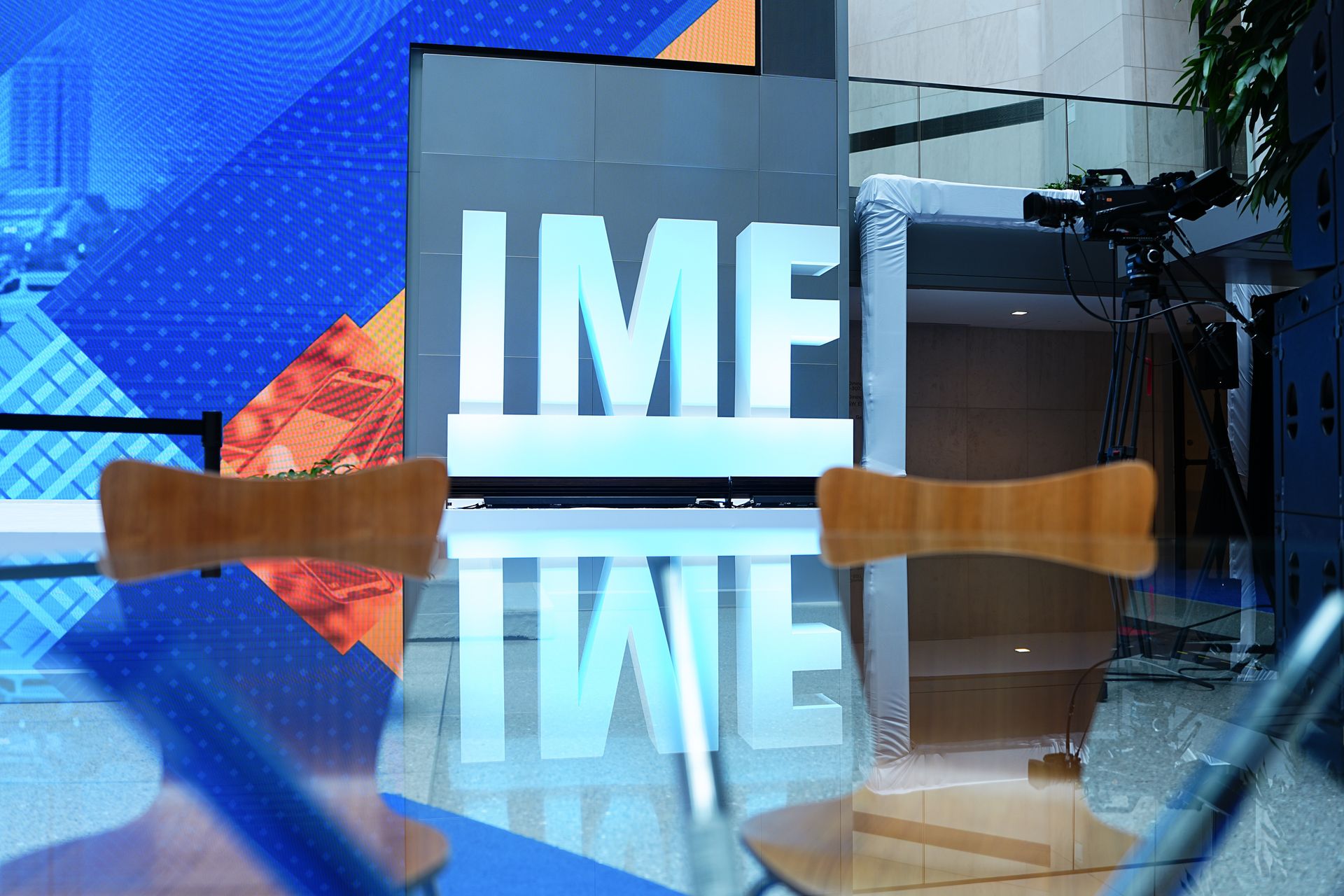
The Iran war has 'halted' global economic momentum, the IMF warns

Bloomberg / Getty Images

The International Monetary Fund cut its forecast for global growth to 3.1% in 2026, down from 3.3% projected in January, warning that war in the Middle East has halted economic momentum and raised the risk of a near-recession if the conflict drags on.

At 3.4% in 2025, last year's pace now looks stronger than what the fund expects this year. Alongside the growth downgrade, the IMF pushed its global inflation estimate for 2026 to 4.4%, a notable step up from both the 4.1% recorded in 2025 and the 3.8% the fund had penciled in for this year back in January.

In a blog post tied to the report's release, IMF chief economist Pierre-Olivier Gourinchas offered a blunt diagnosis: "War in the Middle East has halted this momentum." Elsewhere in the same post he wrote that "the global outlook has abruptly darkened following the outbreak of war in the Middle East."

Underlying those numbers is an assumption that fighting stays contained and that energy commodity prices climb roughly 19% this year. Should disruptions bleed into 2027 and force central banks to tighten monetary policy, the IMF's worst-case math turns considerably darker: worldwide output could slow to just 2% for two consecutive years while inflation rises to 6%, according to The New York Times.

Oil crossed the $100-per-barrel threshold after U.S. and Israeli strikes on Iran prompted Tehran to close the Strait of Hormuz and carry out retaliatory attacks on regional energy infrastructure. Natural gas prices have surged more than 80%, and fertilizer costs have climbed as well.

For the United States, the IMF now puts 2026 growth at 2.3%, according to ABC News. The eurozone's 21 member economies, battered by spiking natural gas costs, face a collective expansion of just 1.1% this year versus 1.4% in 2025. Sub-Saharan Africa saw one of the steeper downgrades, with the fund trimming its regional outlook to 4.3% from a prior 4.6%. Among the few countries receiving an upgrade is Russia: higher energy revenues have lifted the fund's estimate for Moscow's economy to 1.1% growth this year from 1% last year.

The economic fallout lands on an already complicated backdrop. Minutes from the Federal Reserve's March meeting showed policymakers divided over whether the next rate move should be a hike or a cut, with most officials judging that upside inflation risks had increased because of the Middle East conflict. Fed Chair Jerome Powell had said the central bank did not yet need to raise rates in response to the oil shock, noting that longer-run inflation expectations had remained stable. The Fed's next meeting is scheduled for April 28–29.

U.S. wholesale prices had already been running above expectations before the war began, rising 0.7% in February — double what economists had forecast — leaving the economy with less cushion to absorb the energy shock.

The IMF said downside risks dominate the outlook. A longer or broader conflict, deeper geopolitical fragmentation, disappointment over AI-driven productivity gains, or renewed trade tensions could all further weaken growth and unsettle financial markets. High public debt and eroding policy buffers, the fund said, add to the vulnerabilities.

Daily Brief

The essential business news, delivered fresh every morning.

Join 500,000+ readers who start their day with Quartz.

By subscribing, you agree to our Terms of Service and Privacy Policy.

Related

MarketsRoblox stock posted its worst day ever after pulling its full-year outlook
SpaceA discarded SpaceX rocket is about to slam into the moon at 5,400 mph
Cloud ComputingSpaceX will take another year to remove xAI's unpermitted gas turbines near Memphis
PharmaRohto is recalling nearly 12 million eye drop bottles over sterility concerns
MarketsAn ex-OpenAI researcher's AI hedge fund collapsed from $45 billion to $10 billion in a week