
JPMorgan $JPM Chase is suiting up for the economic draft. With a $1.5 trillion plan to bankroll “critical industries,” the bank is taking its marching orders from geopolitics, not quarterly guidance.
The bank’s $1.5 trillion “Security and Resiliency” plan fuses Wall Street’s balance sheet with Washington’s industrial ambitions
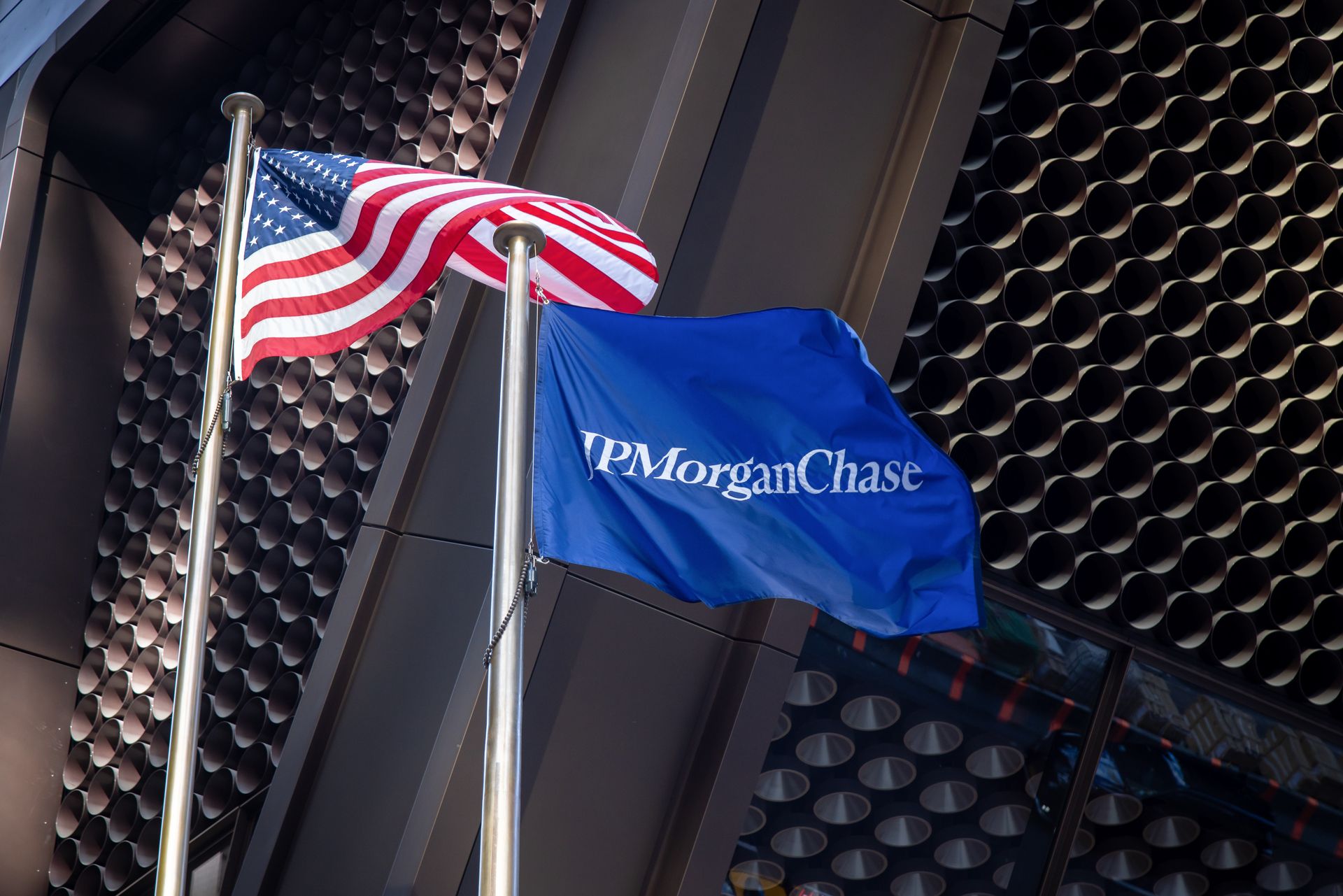
Michael Nagle / Bloomberg via Getty Images
JPMorgan $JPM Chase is suiting up for the economic draft. With a $1.5 trillion plan to bankroll “critical industries,” the bank is taking its marching orders from geopolitics, not quarterly guidance.
On Monday, JPMorgan Chase announced a decade-long Security and Resiliency Initiative that will mobilize capital across four national-interest buckets: supply chains and advanced manufacturing, defense and aerospace, energy independence, and frontier technologies such as AI and quantum computing. The bank also plans to invest up to $10 billion of its own money directly into companies in those sectors, making it one of the largest private commitments yet to America’s industrial revival.
The initiative expands a $1 trillion framework JPMorgan already had in motion, boosting its decadelong target by half and formalizing a strategy that fuses Wall Street’s balance sheet with Washington’s priorities. The $1.5 trillion headline number includes both new financing and the deals the bank will “facilitate” for clients — a mix of lending, underwriting, and advisory work. JPMorgan’s stock was up around 2.6% in the first hour of Monday trading.
Inside the firm, executives are building dedicated teams, hiring bankers, and creating an external advisory council to steer the effort. CEO Jamie Dimon cast the move as both patriotic and pragmatic in a press release: “It has become painfully clear that the United States has allowed itself to become too reliant on unreliable sources of critical minerals, products, and manufacturing — all of which are essential for our national security.”
Beijing recently further tightened export controls on rare earths; the Pentagon is racing to stockpile critical minerals; and President Donald Trump’s latest tariff volley (and threats of increased tariffs on China) has rattled markets. In this climate, Dimon’s decision to make “resiliency” a business line sounds like a patriotic flourish and more like economic triage.
JPMorgan’s 27-industry target list spans everything from midsize manufacturers to Fortune 500 giants, covering 27 industries from shipbuilding and robotics to nuclear power and battery storage. This also echoes Trump-era “America First” industrial policy, channeling private capital toward the same themes the White House has been hammering for months — self-sufficiency, defense readiness, and domestic capacity.
“Our security is predicated on the strength and resiliency of America’s economy,” Dimon said. “America needs more speed and investment. It also needs to remove obstacles that stand in the way: excessive regulations, bureaucratic delay, partisan gridlock and an education system not aligned to the skills we need.”
Dimon told the BBC last week that the biggest threat to the economy isn’t inflation or interest rates, it’s geopolitics — and he said the U.S. should be building weapons, not waiting for warnings.
“People talk about stockpiling things like crypto, I always say we should be stockpiling bullets, guns, and bombs,” he said. "The world's a much more dangerous place, and I'd rather have safety than not."
The scale of JPMorgan’s initiative also signals a shift in how finance defines opportunity. Industrial policy, once the government’s problem, is becoming an investable theme. By positioning itself as a conduit for capital into defense, energy, and critical infrastructure, JPMorgan is effectively turning geopolitics into a growth market. The payoff isn’t just patriotic optics; it’s first-call status in the deal flow of the decade — where capital, policy, and power are now negotiating the same term sheet.
Join 500,000+ readers who start their day with Quartz.
By subscribing, you agree to our Terms of Service and Privacy Policy.