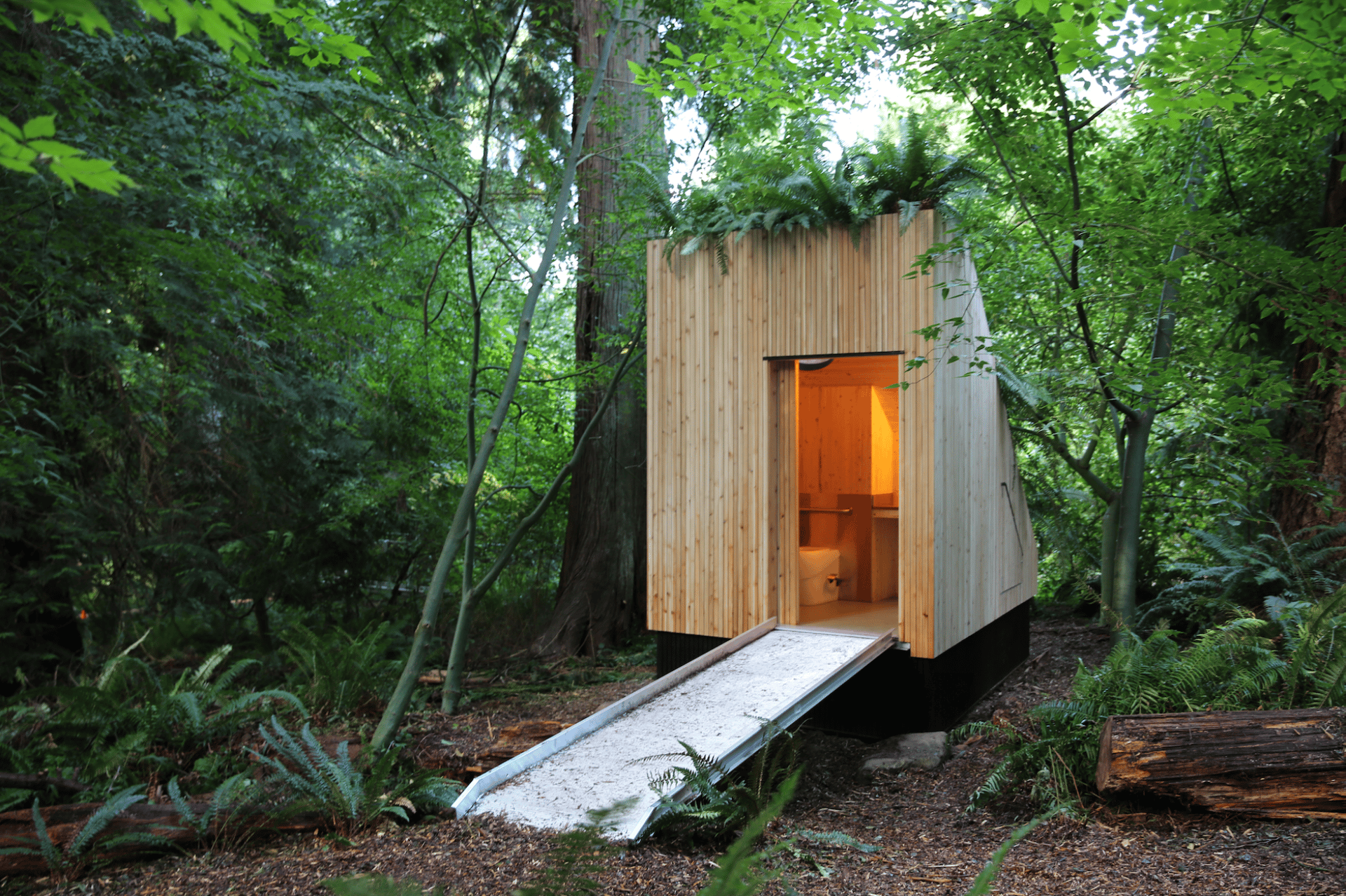
Generally, if you've got mushrooms growing in or around your toilet, something has gone horribly wrong. But researchers at the University of British Columbia have found a way to embrace the fungus, creating the world's first mushroom-powered toilet. Yes, really.

A prototype of the MycoToilet made its debut earlier this month, using mycelia — the root networks of mushrooms — to transform poo and such into compost. A six-week pilot test is underway now to determine the toilet's efficiency. Creators are hopeful it will create as much as 21 cubic feet of soil and more than 529 gallons of liquid fertilizer each year.
Toilets, typically, aren't a motherload of technological (or environmental) innovation. The outhouse was the standard until the early 1900s, when more homes began getting indoor plumbing, making the flush toilet (which was actually invented in 1596) popular. But researchers say it makes sense to embrace nature when nature calls.
“We wanted to turn a daily routine everyone knows into a pleasant experience that reminds us of our connection to ecological cycles,” said Joseph Dahmen, associate professor at UBC’s school of architecture and landscape architecture (SALA) and head of the MycoToilet project.
Once someone does their business, a system in the toilet separates solid waste from liquid. Any number twos are funneled to a mycelium-lined compartment, where researchers say fungi absorb the odors and microbes break it down into compost. (To be clear, mushrooms don't absorb all the odors, though lab tests have shown mycelium-liners remove 90% of the compounds that stink. A low-powered fan in the stall should help with the rest.)
In addition to acting as nature's Febreze, mushrooms also produce enzymes that transform waste into simpler compounds, which accelerates decomposition.
As you might expect, the MycoToilet is a bit different than your standard Kohler potty. It uses no water, no chemicals, and no electricity. Bafflingly, the team opted against a mushroom-shaped housing around it in favor of a more modular appearance, with a cedar exterior.

Photo: Joseph Dahmen
The device will require four maintenance visits a year and is wheelchair accessible. It's located in the University's botanical garden in Vancouver, amongst the ferns and Rhododendron. A scientist at the UBC Botanical Garden, by the way, discovered a previously unidentified mushroom there in 1987, which became known as the Death Cap mushroom. Sadly, the stinkhorn mushroom is not native to the area.