
While Washington debates easing chip export restrictions, there's already a thriving black market that has made the policy discussion largely academic
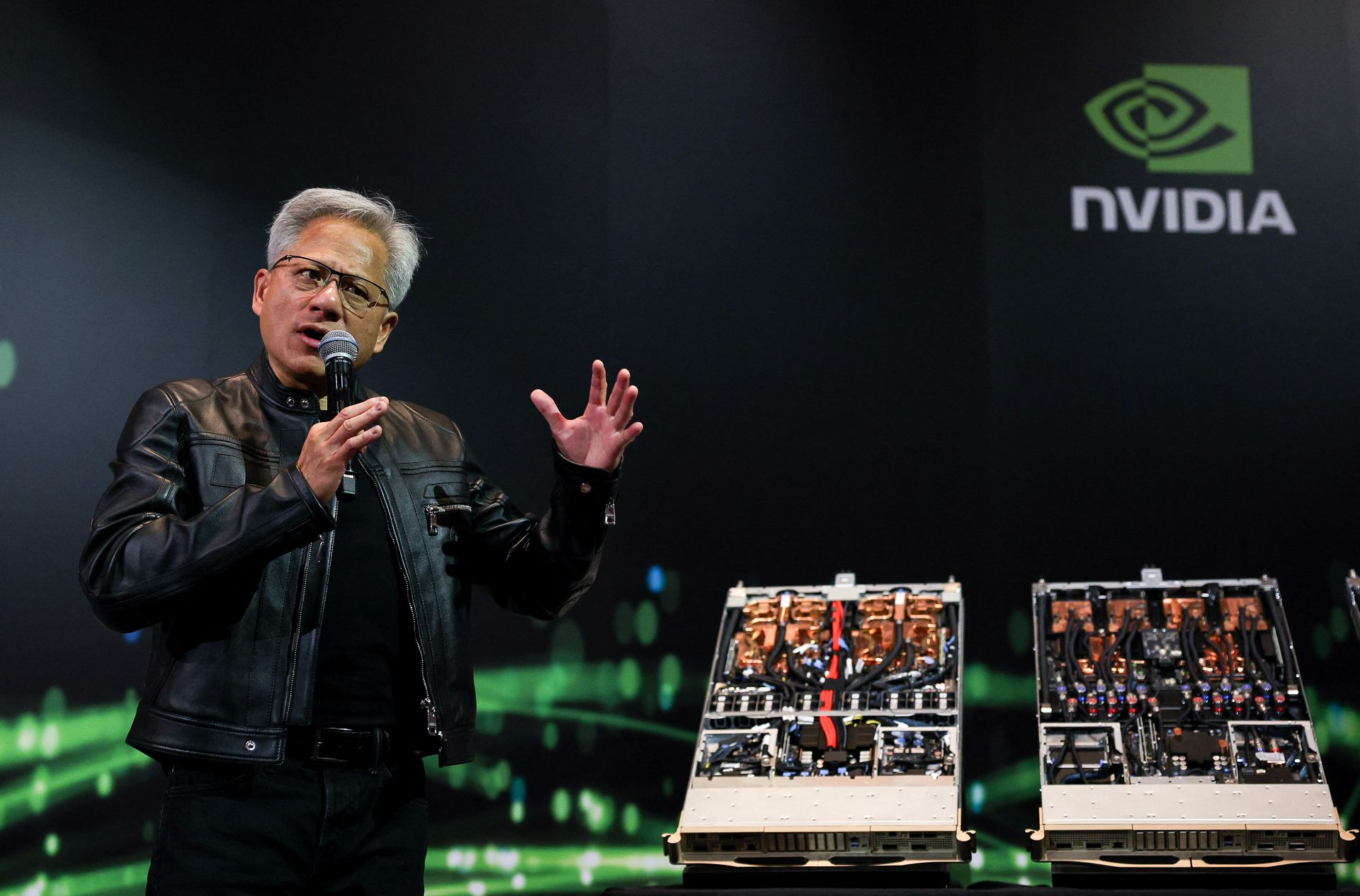
The U.S. allowed Nvidia $NVDA to resume sales of its downgraded H20 AI chip to Chinese clients on Monday. That's not enough for CEO Jensen Huang, who is already pushing for permission to sell more advanced processors to the world's second-largest economy.
"Whatever we're allowed to sell in China will continue to get better and better over time," Huang said this week at the China International Supply Chain Expo in Beijing. "Technology is always moving.”
Join 500,000+ readers who start their day with Quartz.
By subscribing, you agree to our Terms of Service and Privacy Policy.
But while Washington debates easing restrictions on chip exports to China, there's already a thriving black market that has made the policy discussion largely academic. Research from the Center for a New American Security (CNAS) estimates that between 10,000 and several hundred thousand banned Nvidia chips may have been smuggled to China in 2024 alone. Chinese firms are already planning to install more than 115,000 restricted Nvidia AI chips in some three dozen data centers across the country's western deserts — chips they cannot legally purchase without U.S. government licenses that haven't been granted.
The smuggling operation appears sophisticated and widespread. One smuggler reportedly handled an order worth $120 million for servers containing 2,400 banned Nvidia H100s destined for China, according to The Information. Chinese businessmen have openly bragged online about obtaining hundreds of restricted H200 GPUs, while authorities in Singapore arrested three people suspected of diverting AI servers worth $390 million.
Huang has consistently maintained there's "no evidence of any AI chip diversion," arguing that the massive servers are "nearly two tons" and easy to track. But Commerce Under Secretary Jeffrey Kessler directly contradicted those claims. "It's happening,” he told lawmakers earlier this year. “It's a fact."
The smuggling networks have become increasingly sophisticated. As of this month, more than 70 distributors were openly marketing restricted processors, with many offering delivery within weeks. The chips flow through a complex web of shell companies, third-party resellers, and intermediaries across Southeast Asia. Malaysia has emerged as a particular concern, with the country's imports of advanced GPUs surging over 3,400% in early 2025, prompting new permit requirements for AI chip exports. Malaysian authorities said they "will not tolerate the misuse of Malaysia's jurisdiction for illicit trading activities."
Smugglers have used creative methods to move the hardware, including hiding chips in shipments labeled as tea or toys, and even packing them alongside live lobsters. Despite the logistical challenges, the evidence suggests the networks are moving substantial quantities of hardware across borders.
The implications extend beyond trade policy. Chinese AI companies such as DeepSeek have already demonstrated impressive results that have caught Washington's attention, and Trump officials are now investigating whether the company accessed restricted chips through intermediaries to achieve those breakthroughs.
Those Chinese-made tools are already gaining global traction: DeepSeek's models are now being tested internally by major banks, including HSBC and Standard Chartered, while Saudi Aramco has recently installed DeepSeek in its main data center. Even American cloud providers like Amazon $AMZN Web Services, Microsoft $MSFT, and Google $GOOGL offer DeepSeek to customers.
If China's most advanced AI capabilities are already being built on smuggled top-tier chips while the government simultaneously funds development of domestic alternatives, it could undermine the entire rationale for export controls designed to preserve U.S. dominance in AI. Once the chips are out there, whether through legal or illegal channels, it becomes a new race to see whose AI models get adopted worldwide.
“The No. 1 factor that will define whether the U.S. or China wins this race is whose technology is most broadly adopted in the rest of the world,” Microsoft President Brad Smith said at a Senate hearing in May. “Whoever gets there first will be difficult to supplant.”