
Oil prices climbed toward $95 a barrel on Wednesday after U.S. Central Command completed its 11th consecutive night of strikes against Iran, with Secretary of State Marco Rubio declaring that Tehran is "not serious" about diplomatic talks.
Brent crude rose above $94 a barrel on Wednesday after the U.S. completed its 11th straight night of strikes against Iran
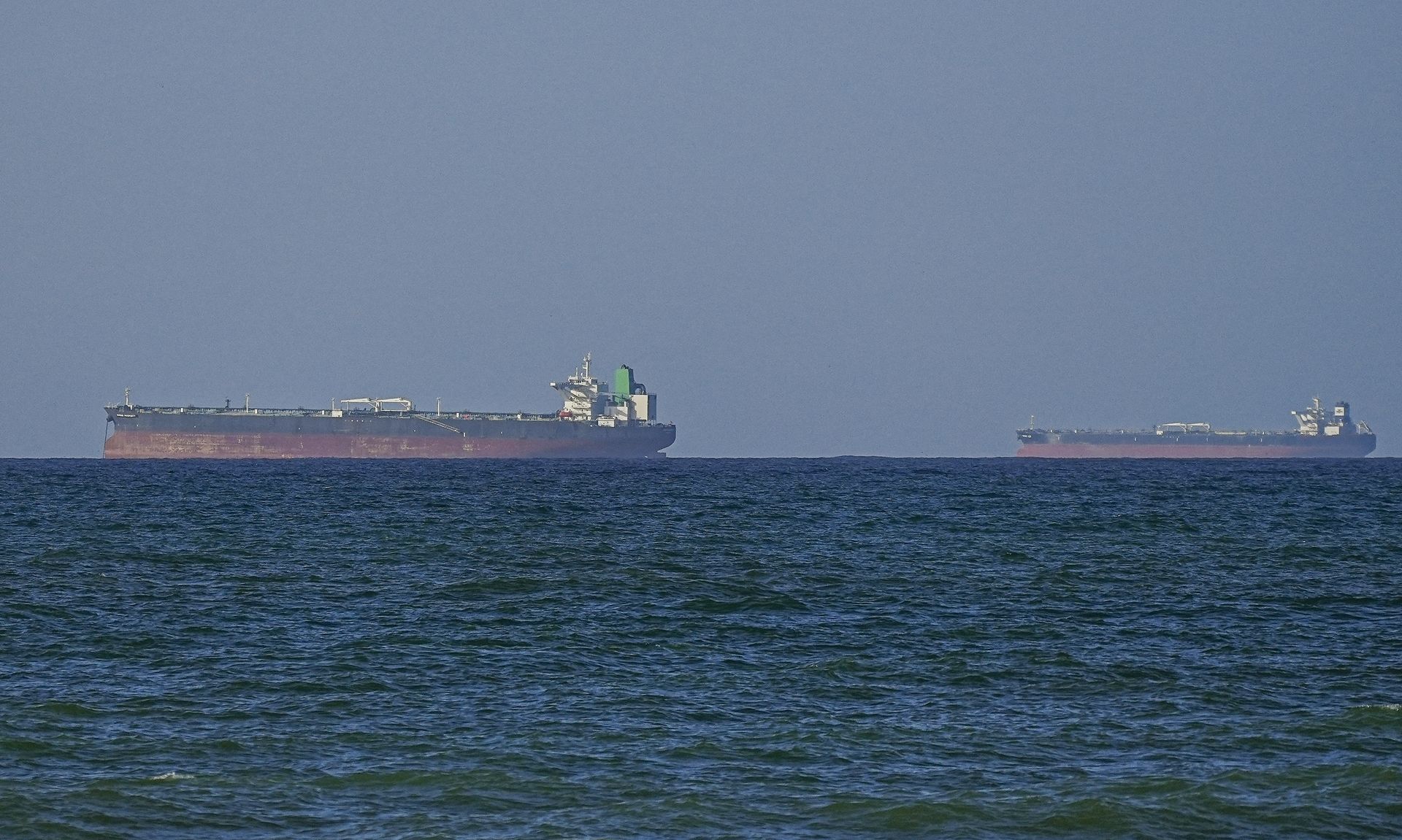
Vessels passing through the Strait of Hormuz following a ceasefire deal reached between the U.S. and Iran. (Shady Alassar/Anadolu via Getty Images)
Oil prices climbed toward $95 a barrel on Wednesday after U.S. Central Command completed its 11th consecutive night of strikes against Iran, with Secretary of State Marco Rubio declaring that Tehran is "not serious" about diplomatic talks.
By early Wednesday morning, Brent crude futures were up 3.5% at $94.20 a barrel, while the front-month U.S. West Texas Intermediate contract had advanced 3.8% to $87.56 a barrel.
Speaking at the ASEAN Foreign Ministers' meeting in the Philippines on Wednesday, Rubio said Washington remained committed to diplomacy but accused Tehran of failing to honor terms the two sides had agreed to regarding the Strait of Hormuz. "The problem we're having right now is that they're not serious about talks," he said. "If they're serious, we're serious. If they're not, then we will do what is necessary to protect our interests and also the interests of our allies."
A central dispute between the two sides is Iran's claim to control traffic through the strait. Rubio said Iran "demands the right" to manage the waterway — something he described as having "no basis under international law" — and warned that ceding any country effective authority over an international waterway — including the power to levy tolls and endanger vessels that refuse — would establish a perilous global precedent with consequences far beyond the Middle East, according to CNBC.
According to CENTCOM, Tuesday night's operations struck a range of Iranian assets — including military operations centers, aircraft hangars, drone storage facilities, maritime capabilities, and logistics infrastructure — as part of an ongoing effort to reduce Iran's capacity to menace commercial vessels in the strait.
The Strait of Hormuz has been the flashpoint of the broader conflict. The U.S. and Iran signed an interim memorandum of understanding on June 17 that halted military operations and called for reopening the waterway, but the deal left the question of its future management unresolved. Washington and Tehran drew sharply different conclusions from that language, and fighting broke out again as the diplomatic window closed. Gas prices in the U.S. climbed back to $4 a gallon earlier this week as the threat of prolonged supply disruptions intensified.
The supply picture is complicated by pressure elsewhere. ING analysts flagged in a Wednesday morning note that ongoing tanker attacks in the Black Sea had halted oil deliveries to Russia's CPC terminal from Kazakhstan, putting roughly 1.7 million barrels per day of supply at risk, according to CNBC.
Rising energy prices are feeding into broader market anxiety about inflation. Money markets on Wednesday morning were pricing in a 24.1% chance of a Federal Reserve rate hike this month and a 69% chance of at least a quarter-point increase in September, according to the CME $CME's FedWatch tool.
Join 500,000+ readers who start their day with Quartz.
By subscribing, you agree to our Terms of Service and Privacy Policy.