OpenAI is offering $555,000 plus equity for a Head of Preparedness — which could signal an industry maturing, or an industry hiring someone to stand closer to the blast radius. Either way, the anxiety is well-compensated.

The company that made AI mainstream is now hiring someone to lose sleep over it — a head of 'preparedness' — but the insomnia comes with equity
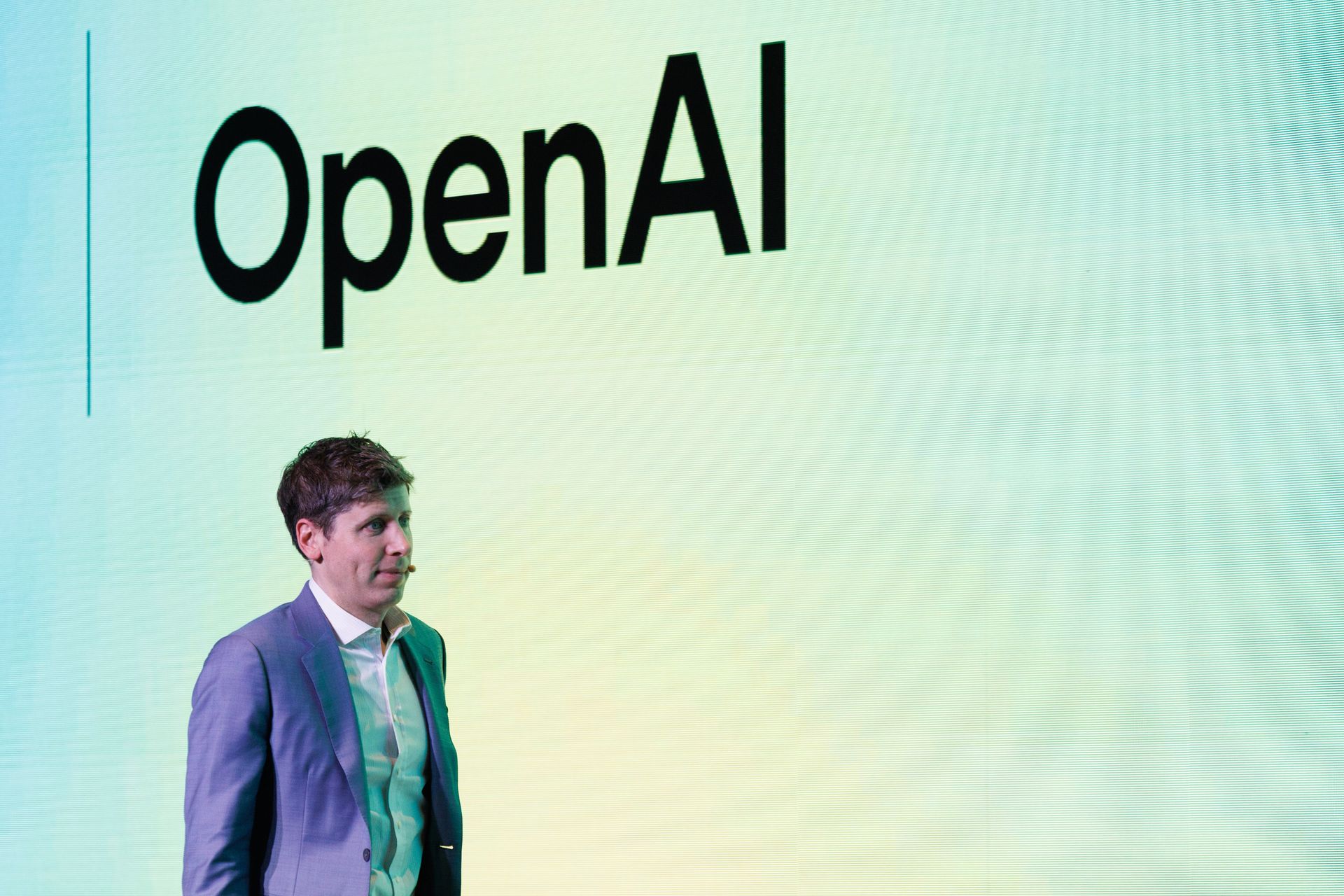
SeongJoon Cho / Bloomberg via Getty Images
OpenAI is offering $555,000 plus equity for a Head of Preparedness — which could signal an industry maturing, or an industry hiring someone to stand closer to the blast radius. Either way, the anxiety is well-compensated.
The job listing reads like a grown-up version of the “imagine the worst-case scenario” exercise, except the worst case now has a budget line, a launch calendar, and a board committee. On paper, the role is less about moral philosophy and more about industrial plumbing. You’d run the technical strategy behind OpenAI’s Preparedness Framework, coordinating capability evaluations, threat models, and mitigations into what the posting calls an “operationally scalable safety pipeline.”
The company’s pitch is that this person will “track” frontier capabilities that create “new risks of severe harm” — corporate language for figuring out what breaks, who gets hurt, and whether it’s safe to ship anyway. The work spans the risk domains OpenAI now treats as the high-stakes basics: owning evaluations, threat models, and safeguards that directly shape launch decisions — across cybersecurity, biological and chemical, and AI self-improvement — with “policy monitoring and enforcement” in the loop.
When AI safety critics complain that companies talk about danger like it’s an opinion rather than an engineering constraint, this role is OpenAI’s counterargument: an org chart with a directly responsible individual. Someone has to run the factory floor where frontier models are stress-tested for severe-harm risks, matched to threat models, and shipped only with mitigations sturdy enough to survive contact with the internet.
CEO Sam Altman promised that whoever takes it will “jump into the deep end pretty much immediately,” and he’s out selling this as a “stressful job” for a reason — he’s publicly pointing to models that can mess with mental health and models that are getting good enough at computer security to surface “critical vulnerabilities,” which is the kind of combo that doesn’t stay trapped in a system card; it leaks into lawsuits, safety rollbacks, and “why didn’t anyone stop this?” meetings. The stakes are high, the timeline is faster, and the margin for “we’ll patch it later” is shrinking.
The risk list has grown both more mundane — job loss, misinformation — and more nightmare-adjacent, from cyber misuse and bio-release questions to self-improving systems and the slow erosion of human agency. The internal politics aren’t subtle, either. Former safety leader Jan Leike wrote in 2024 that “safety culture and processes have taken a backseat to shiny products.” Even OpenAI’s updated framework leaves room to “adjust” safety requirements if a rival ships a high-risk model without similar protections — Silicon Valley admitting, in corporate-legal English, that safety is now part of the race, not a referee standing outside it.
Public skepticism is catching up. A recent Pew poll found that 50% of Americans are more concerned than excited about AI’s growing role in daily life, up from 37% in 2021. Fifty-seven percent rate AI’s societal risks as high, versus 25% who say the benefits are high. Gallup reports that 80% of U.S. adults want the government to maintain AI safety and data-security rules even if it slows development. Trust is thin: only 2% of respondents say they fully trust AI to make fair, unbiased decisions, while 60% distrust it at least somewhat.
OpenAI has spent months publicly tightening how ChatGPT behaves in sensitive situations — explicitly naming “psychosis or mania,” “self-harm and suicide,” and “emotional reliance on AI” as focus areas for safety improvements. Meanwhile, the broader public conversation has turned grim and specific: A Washington Post investigation described multiple wrongful-death lawsuits alleging that ChatGPT responses contributed to suicides, while also noting OpenAI’s claim that users bypassed guardrails and that the company pointed people to crisis resources.
Chatbots have drifted into the therapy-adjacent lane — sometimes by design, sometimes by user need — and that’s where “psychosis or mania,” self-harm, and emotional reliance stop being edge cases and start looking like product risk. When your product sits in the same mental category as “someone I talk to when I’m spiraling,” the safety bar stops being theoretical — and the PR strategy of smiling through it starts to look like malpractice insurance.
Preparedness is OpenAI’s attempt to make that bar not such a reach. In the Preparedness Framework v2, OpenAI defines “severe harm” as outcomes on the scale of “the death or grave injury of thousands of people” or “hundreds of billions of dollars of economic damage.” The company narrowed its “Tracked Categories” to biological and chemical capability, cybersecurity, and AI self-improvement, while moving some areas into “Research Categories.” And OpenAI also spells out internal governance: a Safety Advisory Group makes recommendations, leadership can accept or reject them, and a board safety committee provides oversight.
OpenAI’s safety org has been through visible churn. After OpenAI formed a “preparedness” team in 2023, the company reassigned its former head of preparedness, Aleksander Madry, in July 2024, with execs stepping in to cover the role. (The current Head of Recruiting, Joaquin Quiñonero Candela, previously served as Head of Preparedness.) And the company has lived with reputational damage from internal critics. Hiring a high-profile “preparedness” lead is, at minimum, OpenAI trying to look like the kind of place that can ship frontier models without outsourcing the hard questions to a blog post and an apology drafted at 2 a.m.
In Silicon Valley, “preparedness” is the phase of ambition where products start coming with disclaimers — and the disclaimers start needing leadership. This hire is a promise that the guardrails will hold under gravity. Increasingly, the public is treating that promise like it should come with consequences if it doesn’t.
Join 500,000+ readers who start their day with Quartz.
By subscribing, you agree to our Terms of Service and Privacy Policy.