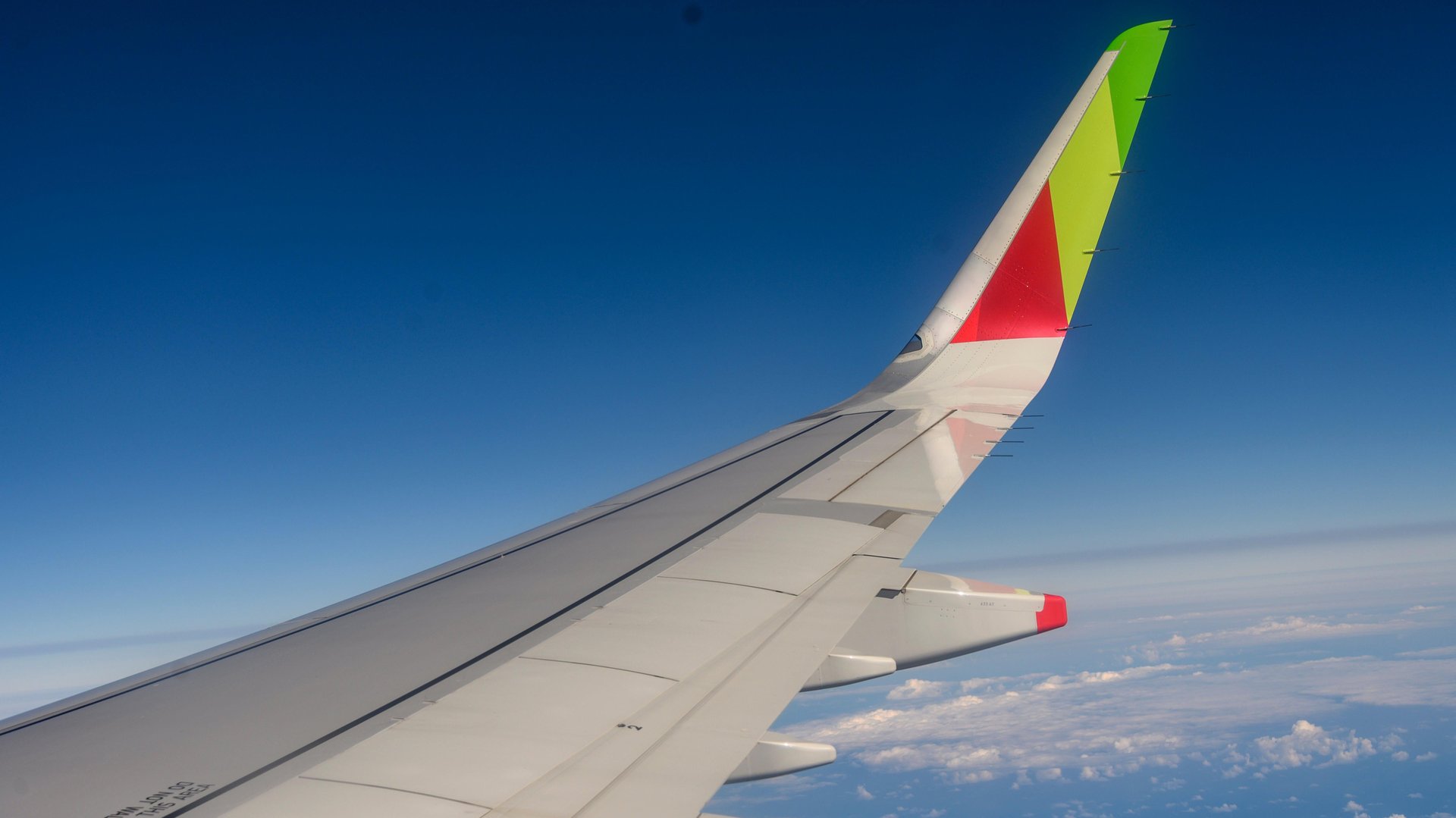
In 1897, British aerodynamicist Frederick W. Lancaster patented “wing endplates,” vertical surfaces to be placed at the end of wings to stop the airflow from the bottom and the top from meeting, reducing drag. “Endplates in many ways act much like winglets do, but the improvement to the lift is rather poor, because flat plates by themselves are not very good aerodynamic surfaces,” explains Bowers.
The idea was refined for modern aircraft in the 1970s by NASA engineer Richard Whitcomb, who imagined vertical wing extensions inspired by the way birds curl up the end of their wings when in need of lift.
Whitcomb tested the idea in a wind tunnel and found that winglets could achieve a reduction of drag of about 5%. At the same time, winglet research was happening independently of NASA, and business jet manufacturer LearJet was the first to mount winglets on an actual aircraft, in 1977. Two years later, NASA first flew an Air Force KC-135 test plane – not too different from a Boeing $BA 707 airliner – equipped with nine-foot-high winglets. Over 47 test flights, NASA confirmed Whitcomb’s wind tunnel findings.

Winglets are now seen on most small and mid-size aircraft in the world, but larger planes use raked wingtips that sweep backward more drastically than the rest of the wing. These raked wingtips are more efficient for larger aircraft, and still provide comparable wing tip vortex suppressing properties and comparable fuel savings to winglets. Aside from fuel savings, both winglets and raked wingtips improve aircraft directional stability, reducing the plane’s susceptibility to turbulence.