Samsung and Massachusetts General Hospital announced a joint clinical study to investigate whether Galaxy Watch can help adults starting GLP-1 weight-loss drug therapy monitor and manage muscle loss, a common side effect of the treatment.

The six-month clinical study will enroll 100 adults starting weight-loss drug therapy to test whether smartwatch data can help manage muscle loss
NurPhoto / Getty Images
Samsung and Massachusetts General Hospital announced a joint clinical study to investigate whether Galaxy Watch can help adults starting GLP-1 weight-loss drug therapy monitor and manage muscle loss, a common side effect of the treatment.
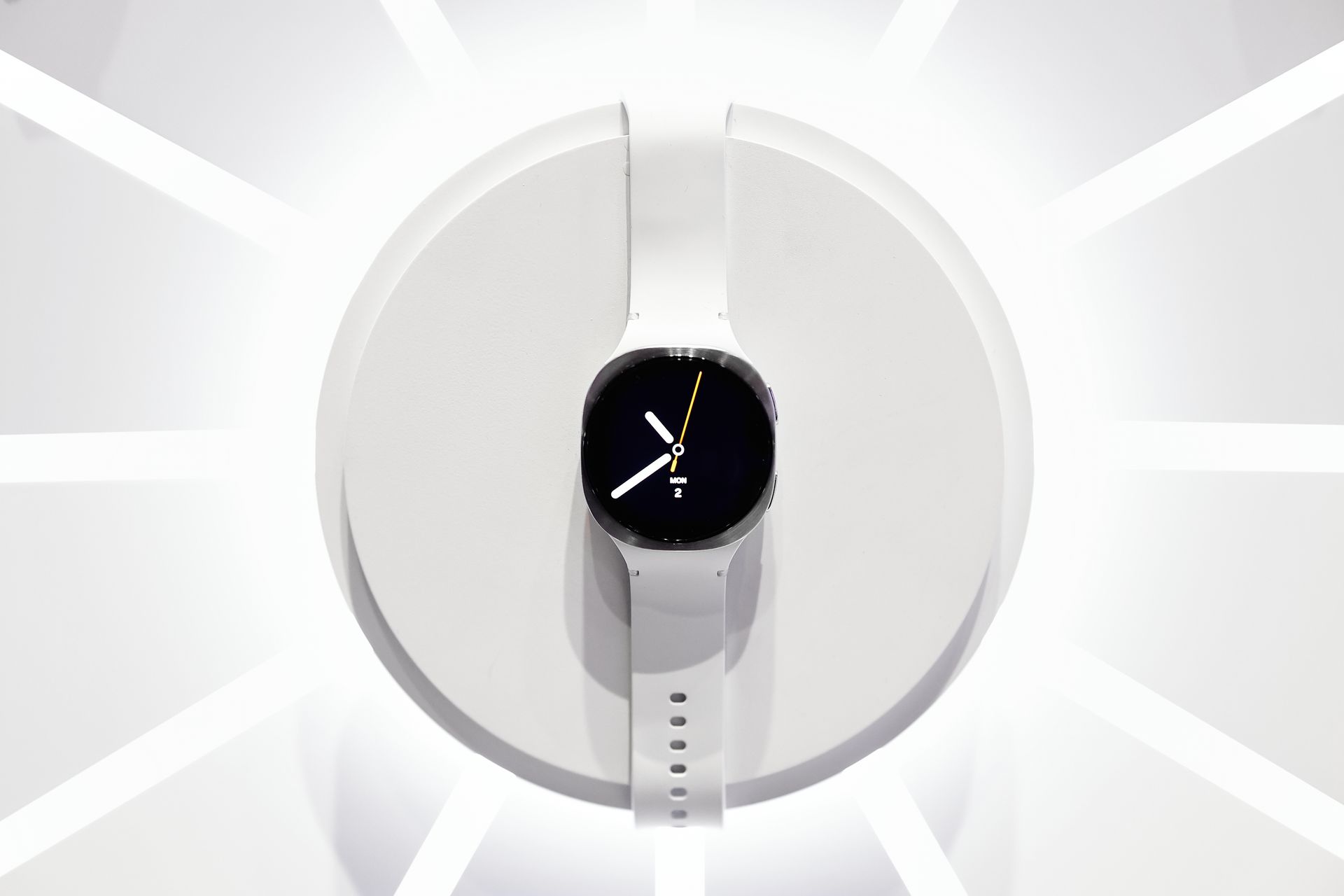
Enrollment targets 100 adults who are just beginning GLP-1 therapy, with participants assigned to one of two groups under the direction of Dr. Melissa Putman, director of the MGH Diabetes Research Center, over a six-month period. Galaxy Watch8, paired with Samsung Health, will be worn by participants in the first group, giving them access to body composition measurements, activity and heart rate data, and customized guidance around exercise. Participants in the second group will not use a wearable and will instead follow the routine clinical pathway for new GLP-1 patients, Samsung said.
To measure how participants' bodies are actually changing, the research team will administer DXA scans — widely regarded as the gold standard for body composition imaging — across both groups, allowing them to assess what value, if any, the wearable data adds to that clinical picture.
"Many GLP-1 patients struggle with muscle mass loss, a common side effect that can cause an increased risk of cardiovascular disease and a drop in basal metabolic rate, which can lead to future weight regain," Dr. Putman said in a statement. "We're interested in exploring how continuous data from a wearable device can provide invaluable insights into a patient's activity levels, heart rate and body composition, giving clinicians a more holistic view of treatment impact and allowing for more timely, data-driven adjustments to their care plan."
Central to the study's tracking capability is the BioActive Sensor built into Galaxy Watch8, a unified chipset that combines optical heart rate monitoring, electrical heart rate sensing, and bioelectrical impedance analysis — the last of which underpins the watch's body composition estimation feature, Samsung noted.
Samsung and MGH have worked together previously on digital health research using Galaxy Watch and Samsung Health, including studies on Advanced Glycation End Products. The MGH Diabetes Research Center, which focuses on diabetes and GLP-1 obesity treatment, initiated the current study after identifying wearables as a potential tool for monitoring body composition changes during treatment.
Samsung has previously validated Galaxy Watch's ability to predict fainting episodes in a clinical study with Chung-Ang University Gwangmyeong Hospital in South Korea, where the watch detected vasovagal syncope up to 5 minutes before occurrence with 84.6% accuracy. The company has also collaborated with Stanford Medicine on Galaxy Watch's sleep apnea feature.
Nearly one in five adults in the U.S. report having taken a GLP-1 medication, according to Samsung.
Join 500,000+ readers who start their day with Quartz.
By subscribing, you agree to our Terms of Service and Privacy Policy.