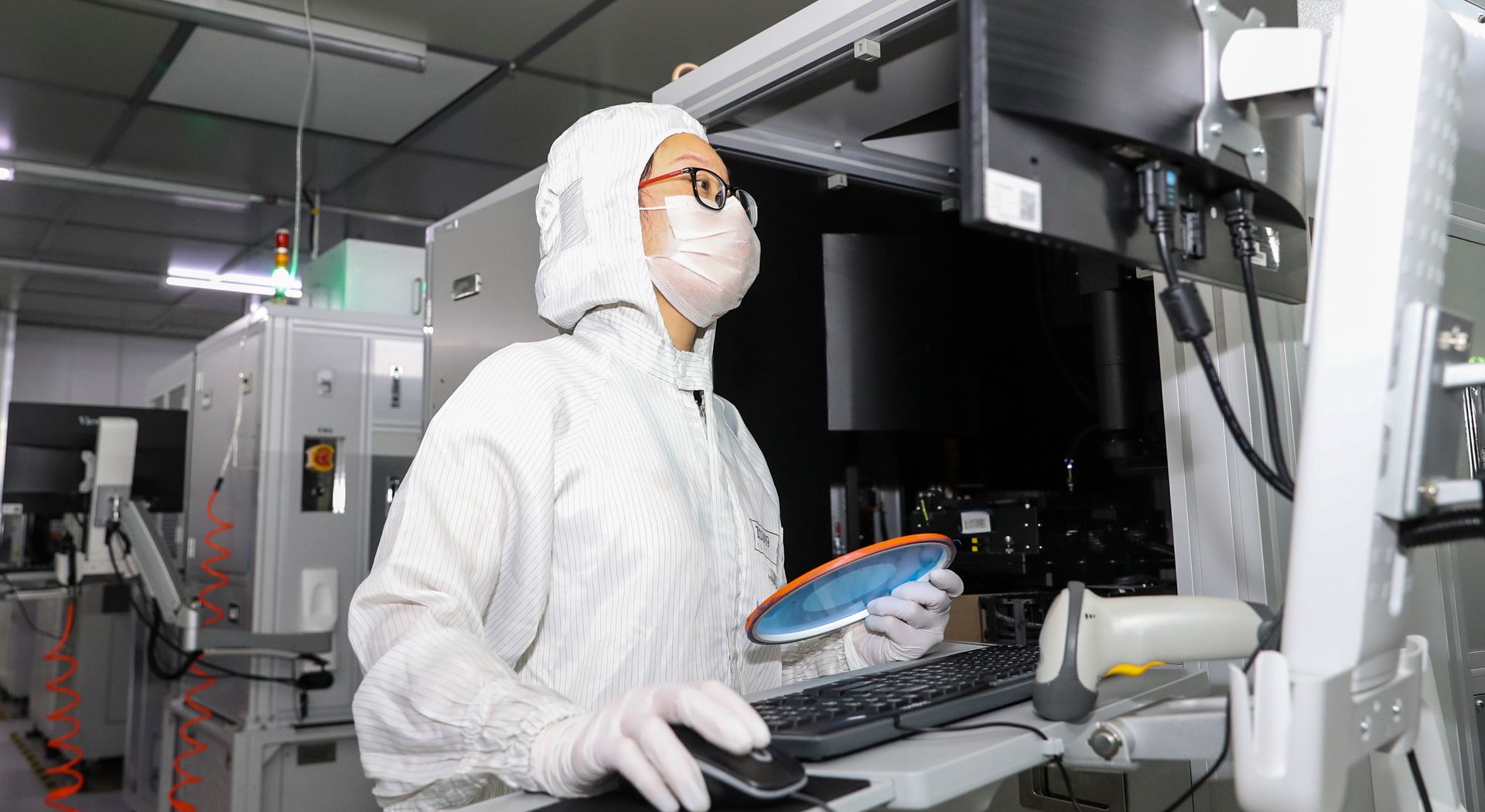
In 1966, two Texas Instruments $TXN managers ran an experiment. They wanted to know how fast an inexperienced worker could become a skilled one. So they redesigned the company's manufacturing training from the ground up, building it for people entering without any relevant skill set. The results were clear: New hires reached full competence faster, made fewer mistakes, and stayed on the job longer than anyone expected.

The semiconductor industry now faces a similar test at a much larger scale. A 2023 report from the Semiconductor Industry Association and Oxford Economics projected that 67,000 technical jobs could go unfilled by 2030, a shortage large enough to send people looking for precedent. One chip-performance researcher, Lizy John, recently pointed back to the 1970s, drawing a direct comparison to when companies trained biology majors and former teachers into 30-year engineering careers in as little as six months.
The 1970s ramp-up was real, and it shaped how the industry still thinks about training today. But the plants those workers walked into don't look anything like the ones now under construction.
Texas Instruments and Motorola's 1970s playbook
The two Texas Instruments managers — Earl R. Gomersall, who ran manufacturing for TI's integrated circuits line, and M. Scott Myers, the company's manager of management research — noted in their Harvard Business Review study how the working group reached full mastery in about half the time conventionally oriented workers needed.
The approach relied on motivation and clarity. New hires in their experimental group were reassured that 99.6% of people in their role eventually succeeded and told plainly what to expect instead of being thrown straight onto the line. Other departments at TI adopted the same approach soon after.
TI became known as a training machine because of results like these. Mary Anne Potter, who started at TI in 1962 as a process engineer on Minuteman integrated circuits, later recalled in an oral history that TI "also stood for 'training institute'" since so many graduating engineers came, gained experience, and left for other companies. TI engineers were "greatly sought after," she said. The company trained at a scale the rest of the industry didn't have to match on its own.
Motorola followed a similar path in Arizona, building its semiconductor operation near Arizona State University in part to tap the educated labor pool nearby. According to EE Times, the company ran a formal 20-week training program that included an introduction to corporate culture, lectures from senior engineers in each design area, and model projects that put trainees on real, hands-on work within their first 10 weeks.
By the late 1970s, Motorola's own HR department had concluded the rules of corporate training needed rewriting. A corporate-wide study in 1978 tested employee skills and found that many workers lacked basic competencies. The company responded by expanding beyond technical instruction into teaching fundamentals, a shift that eventually produced the Motorola Training and Education Center in the 1980s and, later, Motorola University.
Testing the six-month claim against today's plants
Both companies eventually built systems that worked, but neither one happened overnight. John's six-month estimate for building a skilled worker has some real support, at least for certain job categories. A 2024 report from the National Academies on semiconductor workforce development recommended that technical skills programs at two-year institutions "should typically run for 10 to 20 weeks." In Arizona, Maricopa Community Colleges now offers a 10-day accelerated training program for semiconductor technician roles at TSMC $TSM, the Taiwan-based chipmaker building a new plant in the state.
But those programs produce entry-level workers, and time to full proficiency is a different measure entirely. According to a 2026 study published in the International Journal for Multidisciplinary Research, time to proficiency "often spans months or years, particularly for advanced nodes and heterogeneous integration processes," a reference to some of the most demanding chipmaking techniques. Lithography, the process that etches circuit patterns onto silicon, requires technicians who take a long time to fully certify. Equipment engineers face a similarly long certification process. When either drags on, machines sit idle longer before they're cleared for production, pushing back how soon a plant can turn out chips reliably.
The drawn-out certification process reflects a jobs mix that barely resembles the 1970s, when plants were labor-intensive operations with a workforce ratio tilted heavily toward operators. That ratio has since flipped. Research on semiconductor plants moving from 150mm to 200mm wafers, the thin discs of silicon that chips are built on, found that operators fell from 73% to 62% of the workforce, while engineers rose from 15% to 25% over the same stretch.
Modern plants need fewer operators and more engineers and technicians to run them. According to Semiconductor Digest, capital spending on equipment rose from about 40% of total plant construction costs in the 1970s to more than 70% by the mid-1990s. Automated material handling systems replaced human operators in cleanrooms, where a single person standing still can shed hundreds of thousands of airborne particles per minute.
A worker who operates the equipment needs different training than one who designs it. Of the technical jobs at risk, the Semiconductor Industry Association and Oxford Economics report found that 35% require four-year engineering degrees and 26% need master's or doctoral degrees. No single company can close a shortfall that large on its own, so the federal government stepped in, committing an expected $250 million over 10 years to the National Semiconductor Technology Center's Workforce Center of Excellence, which brings together private companies, colleges, labor organizations, and nonprofits to develop training solutions together.
Whether that structure can produce workers fast enough remains an open question.
