
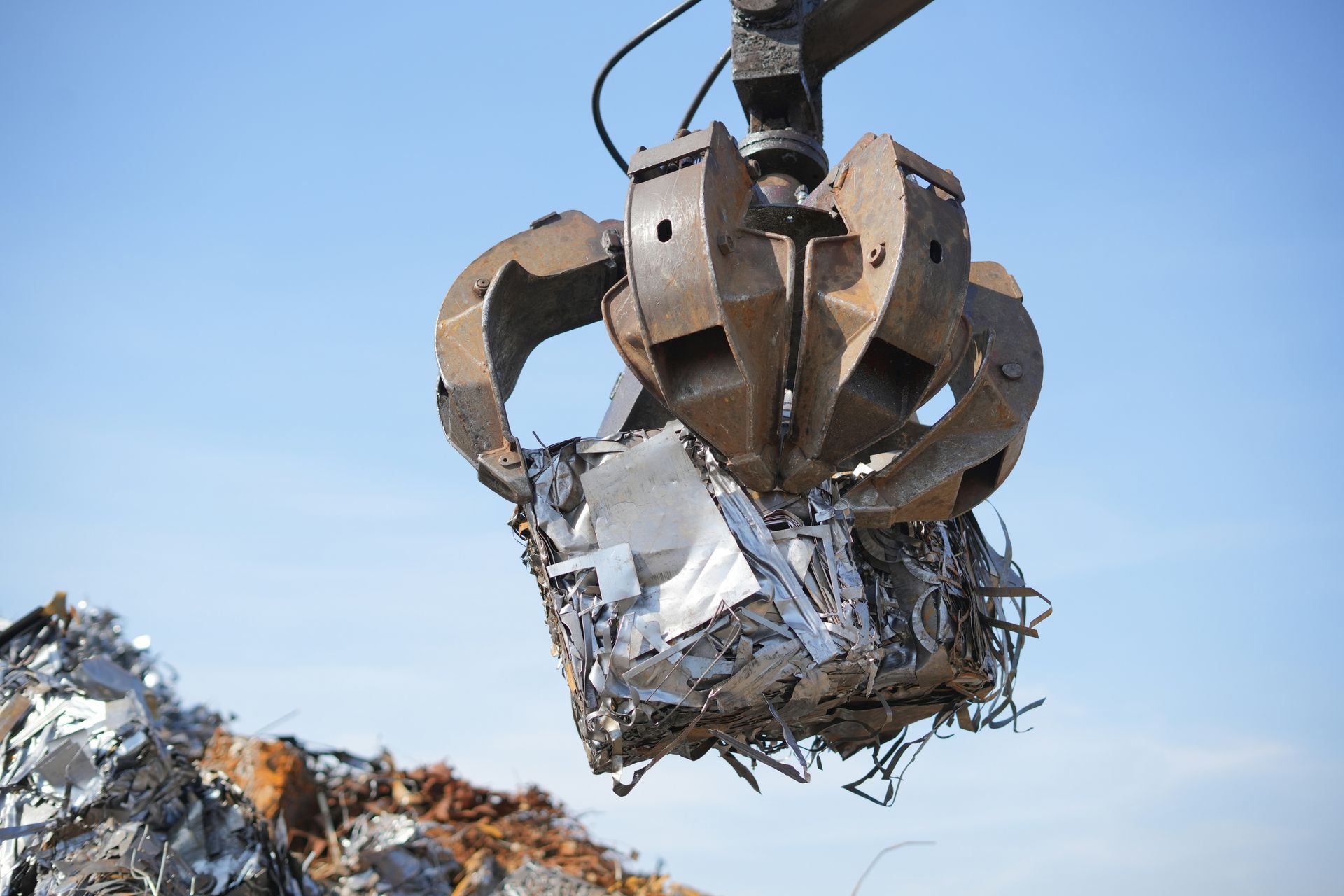
Matanya Horowitz has a pitch that sounds almost too clean. His company, AMP, deploys cameras and robotic arms that can identify and sort about 90% of the material moving through a recycling facility. "Pretty much anything you and I can identify, it can learn to identify," Horowitz recently told Quartz.
The robots don't call in sick. They don't care what country a shipping container is headed to. What they can't do, yet, is conjure buyers for what they sort.
That quandry sits at the heart of a recycling industry that has spent 40 years solving the wrong problem. The U.S. recycling rate climbed from roughly 16% in 1990 to about 35% in 2017, then stopped. It has hovered near 32% for the better part of two decades, according to the Environmental Protection Agency. Every generation of technological or logistical fix has unlocked one constraint and tightened another. AI-powered robotic sorting is the newest entry in that sequence.
A participation ceiling
Before the mid-1990s, the American households that bothered to recycle at all did most of the sorting themselves. Residents separated metals, glass, and plastics into one bin and newspapers into another. Each material type had in its own bag, collected by trucks with three or more compartments.
The material that reached processing plants arrived clean and marketable. Contamination rates were low. But sorting was inconvenient, and inconvenience kept participation low. Cities could only divert as much material as households were willing to prepare.
In 1989, Phoenix became one of the first cities to adopt single-stream recycling, a system that collects all recyclables in a single bin for sorting at a processing facility. Collection time was cut in half. By 1993, Phoenix had built a large-scale materials recovery facility — an industrial plant that sorts mixed recyclables by material type — and began selling baled materials in bulk.
The model spread fast. According to Scientific American, recovery facilities equipped to handle single-stream recycling grew from a handful in 1995 to 93 in 2003. A Glasdon report found that municipalities using single-stream systems rose from 29% in 2005 to 80% by 2015. Industry groups argued the consolidated truck routes and reduced bin count could cut curbside collection costs by up to 40%.
The savings on collection, though, came at a cost inside the facilities. Broken glass embedded in paper bales. Residual liquid from bottles soaked cardboard. The resulting product was dirtier, and buyers paid less for it. The Institute for Local Self-Reliance found that contamination rates in single-stream programs ran about 10 percentage points above dual-stream levels. Operating costs at single-stream facilities came in roughly 8% higher, and capital costs about 35% higher on average.
The decade-long detour east
For years, the contamination problem had a release valve: China.
American haulers could bale contaminated single-stream material, load it into shipping containers, and send it across the Pacific at a profit. China's recycling processors handled nearly half of the world's recyclable waste for 25 years, according to Yale Environment 360.
The arrangement masked the contamination crisis single-stream recycling had created. It also killed any incentive to build domestic processing capacity. Decades of reliance on Chinese buyers had choked off the development of U.S. infrastructure and domestic markets.
Then, the arrangement suddenly ended. Beijing banned 24 categories of solid waste on Jan. 1, 2018, and capped the allowable contamination level for plastic imports at 0.05%, down from the 10% it had previously tolerated. The policy, known as National Sword, drew a line most U.S. facilities couldn't come close to meeting.
The consequences were immediate. The Solid Waste Association of North America found that National Sword contributed to a 50% drop in revenues from curbside recyclable sales. Contamination at materials recovery facilities, running between 15% and 25%, was costing recycling programs more than $1 billion a year. Some collection programs shut down. Others tightened their accepted materials lists. Some, according to Governing, sent their recyclables to landfills or incinerators.
Scientists from the University of Georgia concluded that the ban would displace 111 million metric tons of plastic waste through 2030. A separate University at Buffalo study, published in the journal Sustainability, found that plastic landfilled in the U.S. rose 23.2% after National Sword took effect.
The crisis forced the industry to look inward in a way that decades of gradual progress never had. Waste Management has since committed $1.4 billion to recycling automation, and companies like AMP are deploying computer vision and robotic pickers that can sort material no human sorter would catch.
The technology is more capable than anything the industry has had before. What it cannot manufacture is demand. Buyers exist for only a fraction of what these systems can pull from the waste stream. Without them, sorted material is still waste.
Even if the robots are ready, the market still isn't.
