
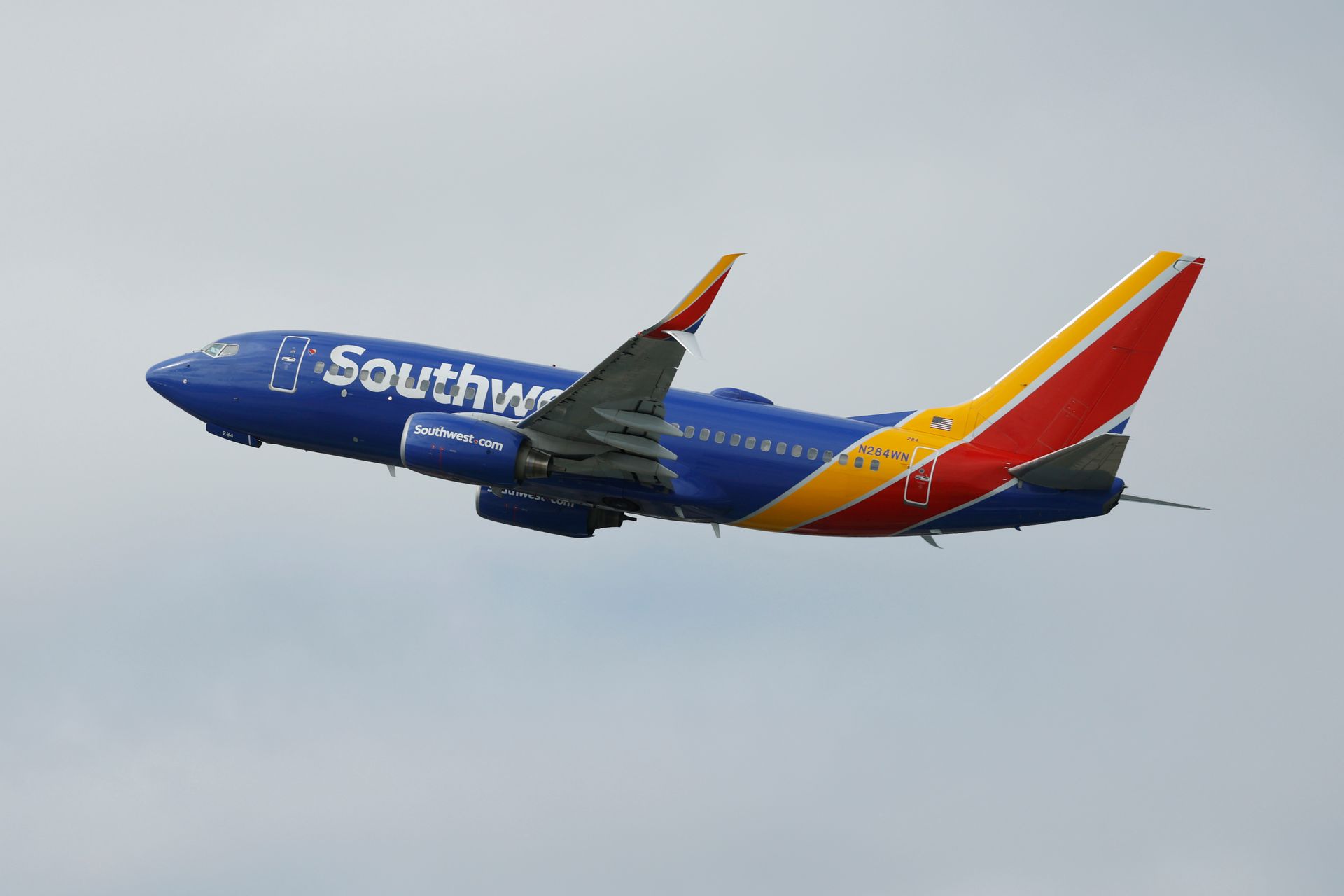
Southwest Airlines chartered a ship this spring to move jet fuel from Texas to California, where prices were higher and supply concerns had intensified — a first for the airline, Chief Financial Officer Tom Doxey told CNBC.
The Dallas carrier used a Jones Act waiver to move 12.6 million gallons from Houston through the Panama Canal to Los Angeles
Southwest Airlines chartered a ship this spring to move jet fuel from Texas to California, where prices were higher and supply concerns had intensified — a first for the airline, Chief Financial Officer Tom Doxey told CNBC.
According to the company, the vessel left Houston, transited the Panama Canal, and docked in Los Angeles on May 28 with approximately 12.6 million gallons of jet fuel on board. To put that volume in perspective, Southwest burned through 564 million gallons of jet fuel during its most recent full quarter.
"It brought like a week's supply to the West Coast at a time when supply was most constricted ... when it was most at risk," Tom Doxey told CNBC.
Southwest secured a Jones Act waiver to make the move possible — that 1920 statute ordinarily mandates that any cargo transported between domestic ports must sail aboard a U.S.-flagged ship. President Donald Trump issued the waiver in March as fuel prices surged following the start of the conflict with Iran and shipping disruptions spread through the Strait of Hormuz. Southwest said concerns about West Coast supply have since eased.
Unlike most other regions of the United States, the West Coast draws heavily on imported fuel to meet its needs. Jet fuel prices have been volatile since the U.S. and Israel struck Iran in February, and Southwest said its fuel expenses rose nearly $900 million in the second quarter compared with the same period last year. Among airline operating costs, only labor exceeds jet fuel.
After moderating through late spring and into early summer, prices have pushed higher again in recent weeks as the standoff with Iran has flared back up.
The fuel crunch has reshaped how airlines operate across the industry. The International Air Transport Association now expects combined industry net profit to fall to $23 billion in 2026, down from $45 billion in 2025, as jet fuel prices average around $152 per barrel this year. North American airlines are forecast to earn $9.4 billion, compared with $12.4 billion in 2025.
United Airlines, which flies more internationally than any other U.S. carrier, said last week it is relying on the latest available fuel prices for its quarterly estimates because of the volatility. The airline said jet fuel added $575 million in costs, or a $1.12 hit to adjusted earnings per share, for the third quarter alone.
Over the past ten years or so, U.S. airlines largely stopped using futures contracts to hedge against fuel price swings, a strategy they felt less urgency to maintain when domestic supply was plentiful and prices remained relatively stable.
Join 500,000+ readers who start their day with Quartz.
By subscribing, you agree to our Terms of Service and Privacy Policy.