Space Exploration Technologies Corp. announced the commencement of a senior unsecured notes offering on Monday, its first entry into the public bond market, days after completing the largest initial public offering on record.

The company plans to use proceeds to repay bridge financing, with AI infrastructure cited as a key funding priority
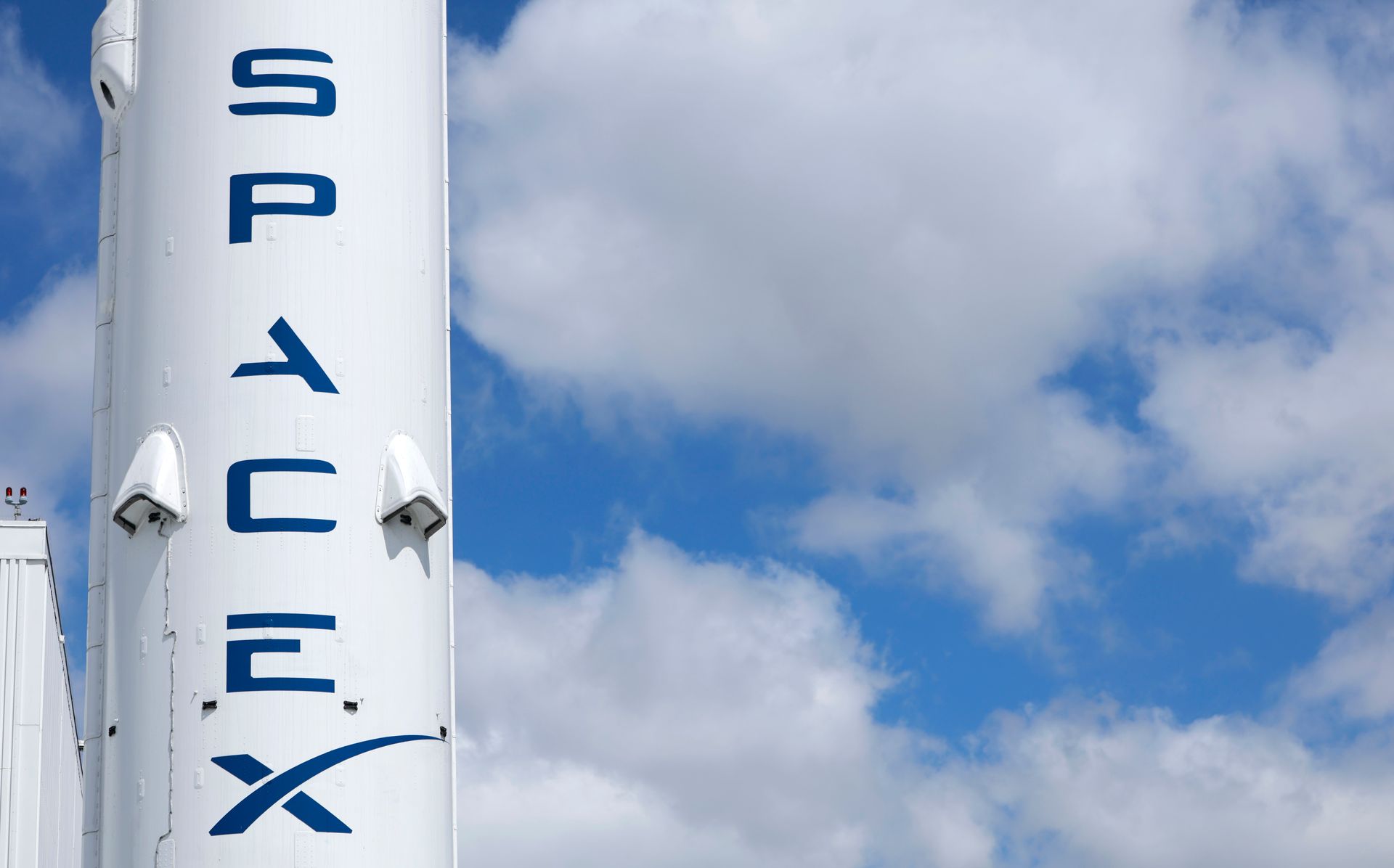
Mario Tama / Getty Images
Space Exploration Technologies Corp. announced the commencement of a senior unsecured notes offering on Monday, its first entry into the public bond market, days after completing the largest initial public offering on record.
At least $20 billion is the target for the offering, with bonds maturing across a range spanning five to 30 years. SpaceX said in its SEC filing that it intends to use the net proceeds to repay outstanding borrowings under its bridge loan facility in full, cover related fees and expenses, and apply any remainder to general corporate purposes.
The notes will be sold to qualified institutional buyers under Rule 144A and to non-U.S. persons under Regulation S, the company said. They have not been registered under the Securities Act and may not be offered or sold in the United States absent registration or an applicable exemption.
Investor calls are being arranged by the same five institutions — Bank of America $BAC, Citigroup $C, Goldman Sachs $GS, JPMorgan $JPM Chase, and Morgan Stanley $MS — that originally extended the bridge financing to SpaceX, Bloomberg reported. The bridge loan accounts for the bulk of SpaceX's roughly $29.1 billion in long-term debt.
SpaceX disclosed in its filing that it held approximately $100.8 billion in cash and cash equivalents as of June 19, 2026. The company received investment-grade ratings from all three major ratings agencies ahead of the offering. Moody's $MCO Ratings assigned a Baa1 rating, Fitch Ratings assigned BBB+, and S&P Global $SPGI Ratings assigned BBB.
Bond proceeds are also earmarked for SpaceX's AI buildout — data centers and related infrastructure among them. Agreements with Google $GOOGL and Anthropic to supply computing capacity are valued at approximately $75 billion in total. SpaceX has also said it is exploring the construction of data centers in space, according to CNBC.
SpaceX's IPO, which priced at $135 per share and pushed the company's market capitalization past $2 trillion, closed on June 12. The offering raised nearly $86 billion after underwriters exercised the greenshoe allotment. During the IPO roadshow, Bret Johnsen and Gwynne Shotwell signaled to potential shareholders that future capital raises would come through borrowing rather than new equity issuance — effectively treating the IPO as a one-time stock sale.
SpaceX stock fell about 5% Monday. The decline extended a losing streak that began last week, which included a drop tied to MSCI assigning SpaceX its lowest possible ESG rating, a CCC, citing insufficient management of environmental, social, and governance risks.
Join 500,000+ readers who start their day with Quartz.
By subscribing, you agree to our Terms of Service and Privacy Policy.