
NASA has released a stunning new picture of a supersonic aircraft breaking the sound barrier.
The aircraft operated by Boom Supersonics managed to break the sound barrier without anyone on the ground hearing it
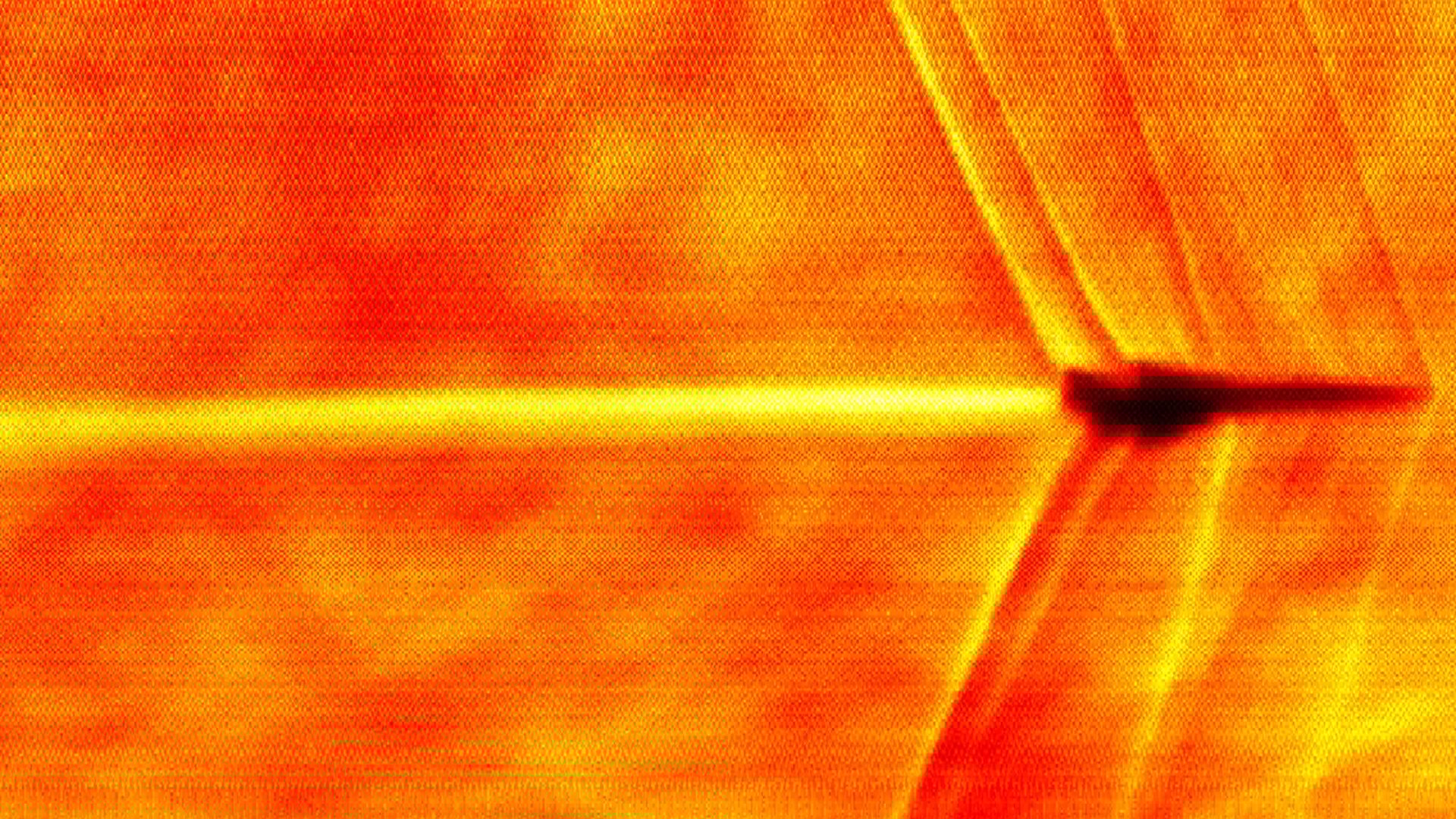
NASA has released a stunning new picture of a supersonic aircraft breaking the sound barrier.
The photo shows Boom Supersonic’s demonstrator aircraft XB-1 during a Feb. 10 flight.
The privately-owned Boom Supersonic partnered with NASA to take the image with its Schlieren photography technology, which visualizes the shock waves that come from a high-speed jet.
To capture the photo, Boom had to plan exactly where the jet would travel and make sure it was flying in front of the sun at the moment it snapped the image.
“This image makes the invisible visible — the first American-made civil supersonic jet breaking the sound barrier,” Blake Scholl, founder and CEO of Boom Supersonic, said in a press release.
Boom planes would cut coast-to-coast U.S. travel times by 50% and do it without making an audible boom, “which paves the way for coast-to-coast flights up to 50% faster,” Scholl said. The firm is able to avoid the noise by breaking the sound barrier at an altitude high enough that the sound is never able to reach the ground.
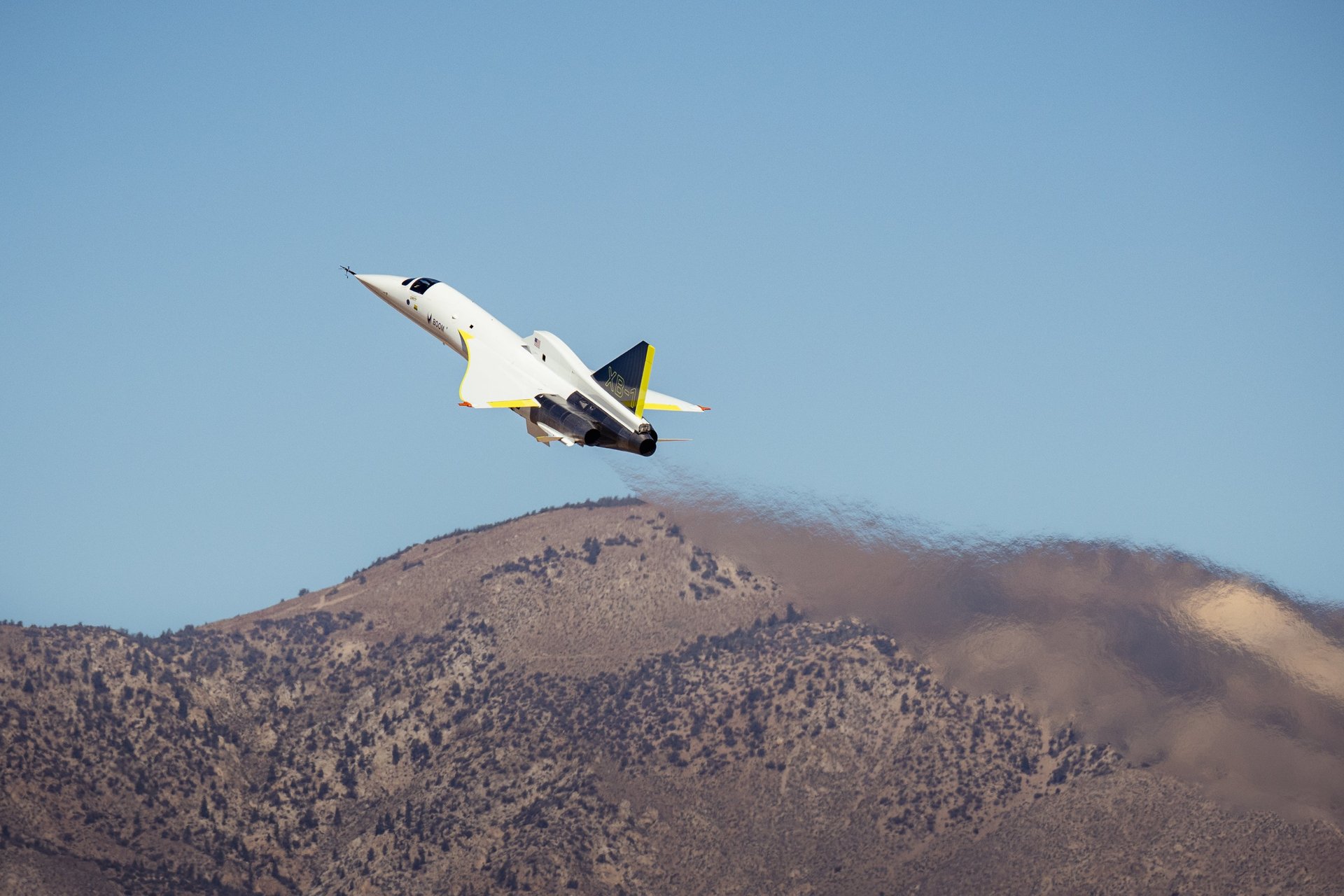
Boom is testing the technology with hopes of operating the first commercial supersonic airline. Its jets currently travel at speeds of around 750 miles per hour, but it hopes to eventually cruise at Mach 1.7, or 1,300 miles per hour.
The achievement marks a potential turning point in commercial aviation’s decades-long quest to bring back faster-than-sound travel following the Concorde’s demise. But while Boom has secured more than $600 million in funding and 130 provisional orders from major airlines, the path to profitability remains challenging. The company must prove it can overcome the same physics and economics that grounded Concorde while also navigating new concerns about aviation’s environmental impact.
Boom’s planes travel faster over water, about two times the speed of current commercial airplanes. The company said its planes could revolutionize long-haul flights, cutting a 8.5 hour trip from Seattle to Tokyo down to just 4.5 hours.
—Jackie Snow contributed to this article.
Join 500,000+ readers who start their day with Quartz.
By subscribing, you agree to our Terms of Service and Privacy Policy.