
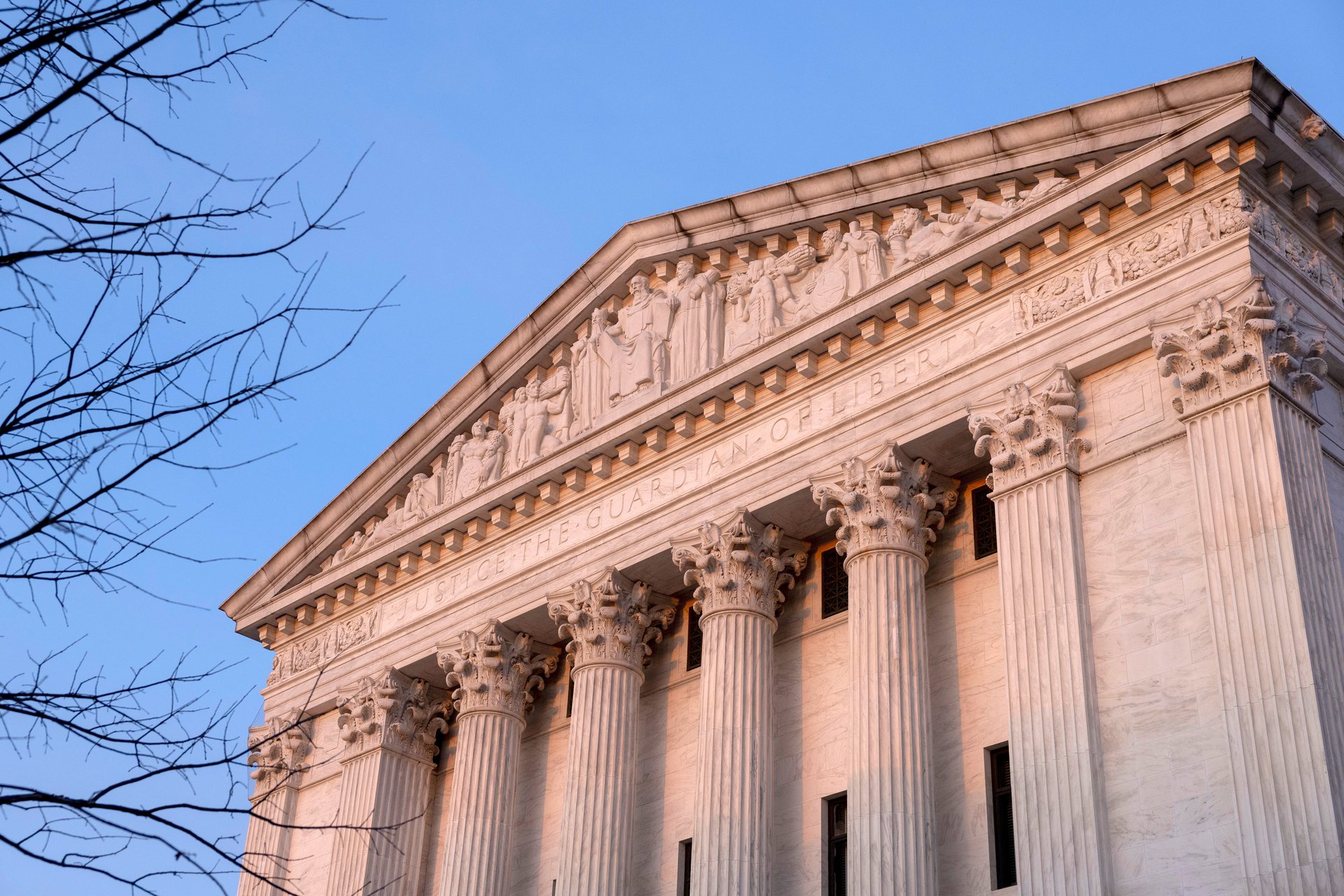
WASHINGTON (AP) — The Supreme Court agreed on Monday to take up a Biden administration appeal over the regulation of difficult-to-trace ghost guns that had been struck down by lower courts.
The justices by a 5-4 vote had previously intervened to keep the regulation in effect during the legal fight. Ghost guns, which lack serial numbers, have been turning up at crime scenes with increasing regularity.
The regulation, which took effect in 2022, changed the definition of a firearm under federal law to include unfinished parts, like the frame of a handgun or the receiver of a long gun, so they can be tracked more easily. Those parts must be licensed and include serial numbers. Manufacturers must also run background checks before a sale, as they do with other commercially made firearms.
The requirement applies regardless of how the firearm was made, meaning it includes ghost guns made from individual parts or kits or by 3D printers. The rule does not prohibit people from buying a kit or any type of firearm.
The Justice Department had told the court that local law enforcement agencies seized more than 19,000 ghost guns at crime scenes in 2021, a more than tenfold increase in just five years.
U.S. District Judge Reed O’Connor, in Fort Worth, Texas, struck down the rule last year, concluding that it exceeded the Bureau of Alcohol, Tobacco, Firearms and Explosives’ authority. O’Connor wrote that the definition of a firearm in federal law does not cover all the parts of a gun. Congress could change the law, he wrote.
A panel of the 5th U.S. Circuit Court of Appeals made up of three appointees of then-President Donald Trump largely upheld O'Connor's ruling.
The Supreme Court allowed the regulation to remain in effect while the lawsuit continues. Chief Justice John Roberts and Justice Amy Coney Barrett joined with the court’s three liberal members to form the majority. Justices Samuel Alito, Neil Gorsuch, Brett Kavanaugh and Clarence Thomas would have kept the regulation on hold during the appeals process.
Barrett, Gorsuch and Kavanaugh were appointed by Trump.
Arguments won't take place before the fall.
___
Follow the AP's coverage of the U.S. Supreme Court at https://apnews.com/hub/us-supreme-court.