President Donald Trump signed an executive order Tuesday asking artificial intelligence companies to give the federal government early access to their most powerful AI models before public release, framing the measure as a national security initiative rather than a regulatory constraint.
Under the framework, AI developers that choose to participate would make their most powerful models available to federal agencies for cybersecurity evaluation — giving the government a window of as long as 30 days before those models reach outside organizations. Whether a given model rises to the level of a "covered frontier model" — the threshold that activates the early-access request — would be determined through a classified benchmarking assessment of its advanced cyber capabilities. Language in the order prohibits any reading of it as authorizing the government to impose licensing, preclearance, or permitting rules on the development or release of AI models.

Responsibility for building out the framework and hardening cybersecurity protections for critical infrastructure falls to several agencies named in the order, among them the Treasury and Defense departments, the Department of Homeland Security, and the Cybersecurity and Infrastructure Security Agency. A separate provision tasks the Treasury secretary with standing up a clearinghouse dedicated to AI cybersecurity — an entity that would work on a voluntary basis alongside the private sector to find software flaws and organize efforts to patch them.
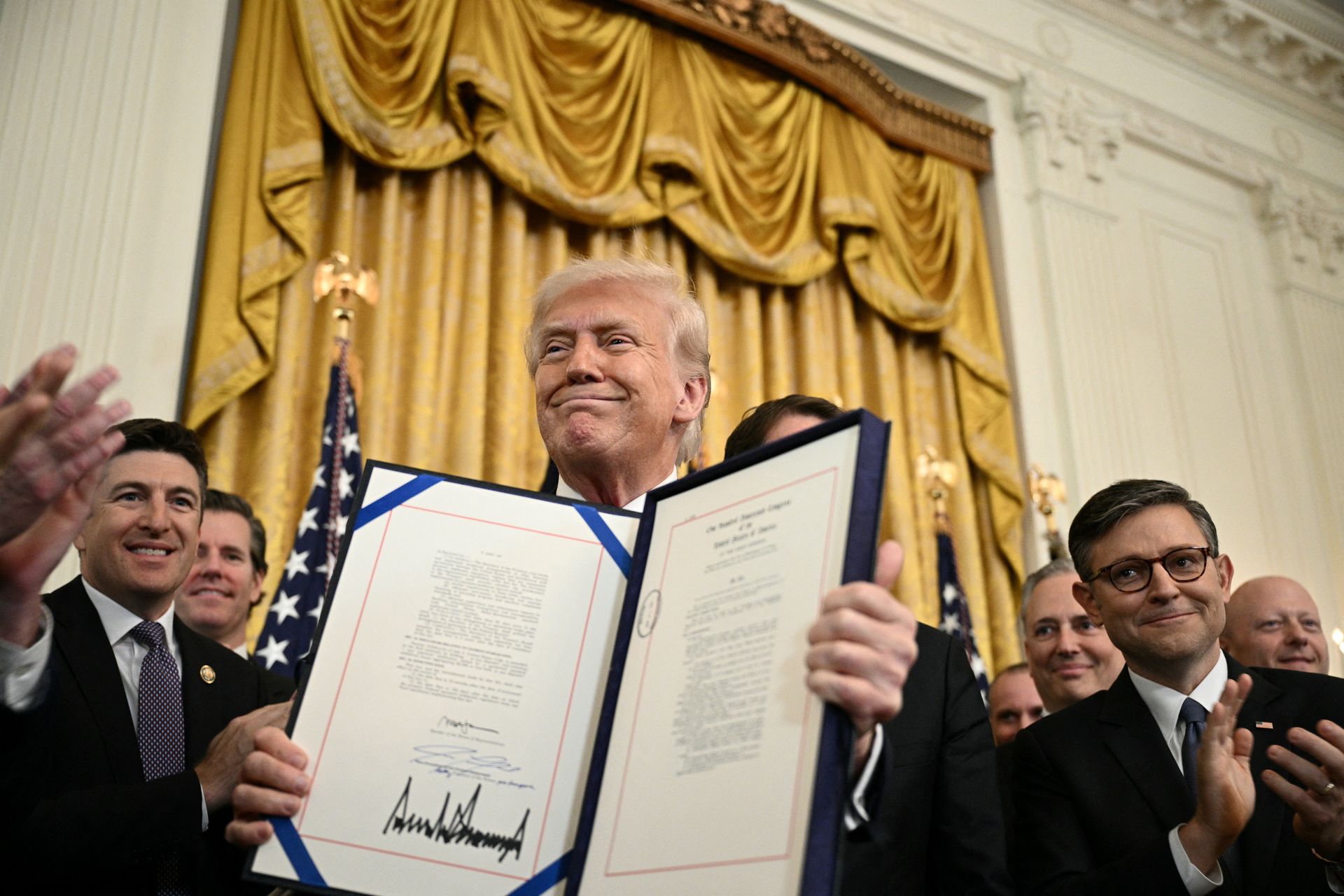
Trump signed the order in private, according to CNBC. Google $GOOGL, Anthropic, and OpenAI met with the federal officials about cybersecurity as the order was being developed, according to Reuters.
For much of his second term, Trump had taken a hands-off approach to regulating the AI industry, pushing back on state-level regulations and positioning the federal government as a facilitator rather than a watchdog — a stance the new order appears to complicate.
The signing comes weeks after Trump pulled a previous version of the order at the last minute, telling reporters he did not like certain aspects of it and warning it risked undermining U.S. competitiveness against China. "We're leading China, we're leading everybody, and I don't want to do anything that's going to get in the way of that lead," Trump said at the time.
The order's development was also shaped by the emergence of Anthropic's Mythos model, which drew attention in Washington for its ability to identify vulnerabilities in widely used software. Following the Mythos rollout, Anthropic executives held discussions with top White House figures — among them Chief of Staff Susie Wiles and Treasury Secretary Scott Bessent. That relationship remains complicated: the administration had earlier branded Anthropic a supply-chain risk — effectively locking the startup's models out of defense contractor work — and Anthropic has taken the government to court in an effort to undo that label.