Quartz
Subscribe
Quartz
Subscribe
Edition
Business News
A.I.
Technology
Money & Markets
Leadership
Lifestyle
Latest

Get Quartz in your inbox

Free daily briefing on global business news.

Business News
AirlinesAutomobilesFoodPharmaceuticalsPolitics & GovernmentRetail & EcommerceSpace & AerospaceEarnings
Technology
A.I.ComputingConsumer TechSpace & AerospaceEarnings
Money & Markets
Economic IndicatorsMarketsPersonal FinanceEarnings
Lifestyle
Cars & BikesCollectingEntertainmentFood & Fine DiningHealth and FitnessReal EstateTravel
Quartz

Global business news for a smarter world

Topics

  • Business News
  • Money & Markets
  • Tech & Innovation
  • Generation A.I.
  • Lifestyle
  • Leadership

Products

  • Daily Brief
  • Weekly Digest
  • Member Benefits
  • Quartz Pro

Legal

  • Sitemap
  • About
  • Accessibility
  • Privacy
  • Terms of Service
  • Advertising

© 2026 Quartz Media, Inc. All rights reserved.

Politics & Government

Trump is replacing expiring global tariffs with forced-labor duties on 60 countries

The new duties of 10% to 12.5% took effect Friday at the same moment Trump's temporary 10% worldwide tariff expired

By Cris Tolomia·3 min read·Updated July 24, 2026
Add QZ to Google
Trump is replacing expiring global tariffs with forced-labor duties on 60 countries

Chip Somodevilla/Getty Images

President Donald Trump imposed new tariffs of 10% to 12.5% on 60 trading partners Friday, citing their failure to ban imports produced with forced labor, with the duties taking effect at the same moment his temporary 10% global tariff expired at 12:01 a.m. ET.

The Office of the U.S. Trade Representative said the measures, brought under Section 301 of the Trade Act of 1974, reach 99.4% of U.S. imports. In practice, the action steps in for the temporary 10% worldwide tariff, which had been running for 150 days before lapsing Friday, according to CNBC.

U.S. Trade Representative Jamieson Greer said in a statement that "decades of moral suasion have not eradicated forced labor from global supply chains" and that the action "will begin to correct what is both a human rights abuse and distortive trade practice."

Under the final determination, 17 economies — including Argentina, Bangladesh, Canada, India, Mexico, and the United Kingdom — will face a 10% duty. Those countries have either enacted forced-labor import prohibitions, committed to doing so through trade agreements, or established partial regimes that restrict certain forced-labor goods. For the European Union, Taiwan, Japan, South Korea, and Switzerland, the new rates were calibrated so that when added to existing most-favored-nation tariff rates, the combined burden reaches either 10% or 12.5%. The remaining 38 economies, including China, face a 12.5% rate, according to Reuters.

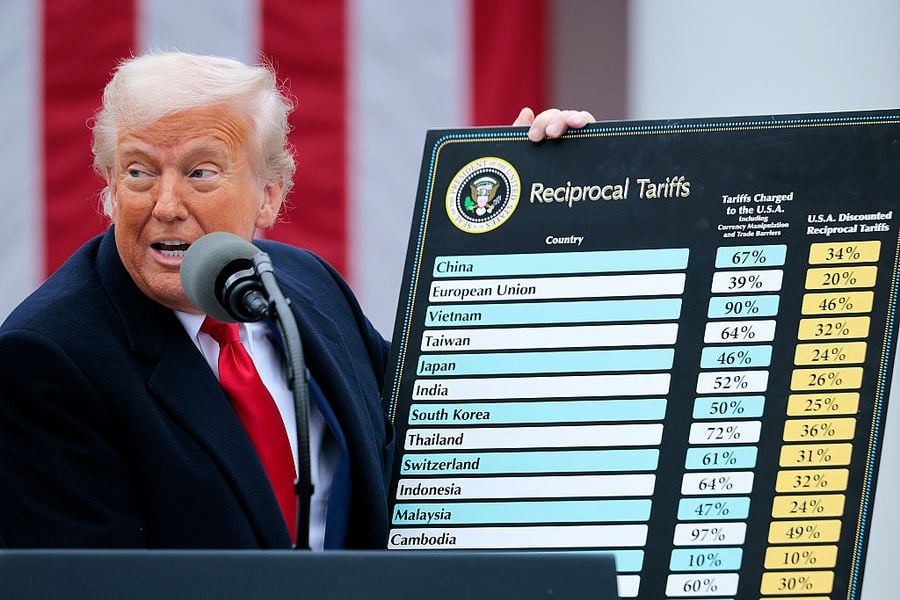
Certain products are exempt from the new tariffs, including goods already subject to Section 232 steel and aluminum duties, raw materials whose taxation could threaten domestic supply, and products that cannot be produced in sufficient quantities in the United States. Some products of specific countries are also exempted to encourage those governments to adopt or strengthen forced-labor import bans. Goods in transit at the time the tariffs took effect are exempted until 12:01 a.m. ET on July 28, according to Reuters.

The USTR said in a fact sheet that the United States is the only country in the world to both adopt and enforce a ban on imports made with forced labor, and that the tariffs apply to economies covering the top 60 U.S. trade partners. Tariff-rate quotas for textiles and apparel from Bangladesh, Cambodia, Indonesia, and Malaysia will be established by September 1, 2026, under a White House memorandum signed by Trump.

As signaled earlier this week, the administration has been working to replace the temporary Section 122 authority — which carries a statutory 150-day limit — with more durable Section 301 authority. Because Section 301 has a track record of surviving court tests, legal experts consider the new duties less exposed to the kind of judicial reversal that ended Trump's "liberation day" tariffs in February, according to NPR. A separate Section 301 investigation into excess manufacturing capacity by 16 economies has not yet been finalized.

A senior Trump administration official told reporters the action surpasses anything the United States — or any country — has previously done on international labor rights, according to CNBC. The USTR said it received more than 2,100 public comments and heard testimony from over 100 witnesses during the investigation.

Daily Brief

The essential business news, delivered fresh every morning.

Join 500,000+ readers who start their day with Quartz.

By subscribing, you agree to our Terms of Service and Privacy Policy.

Related

PharmaSanofi is scrapping its once-touted eczema drug in a new CEO pipeline overhaul
AirlinesSouthwest Airlines chartered a ship to haul jet fuel to California during spring supply crunch
Business NewsTikTok is facing a massive E.U. fine for exposing kids' accounts to strangers
Economic IndicatorsOdds of a September Fed rate hike surged to 82% as oil topped $100 a barrel
MarketsCharter's revenue slid again as broadband subscriber losses mounted