President Donald Trump said Monday that the U.S. ceasefire with Iran is "on life support" after dismissing Tehran's counteroffer to a U.S. war-ending proposal as "garbage."

The diplomatic standoff has left the two sides without a clear path to reopening the Strait of Hormuz
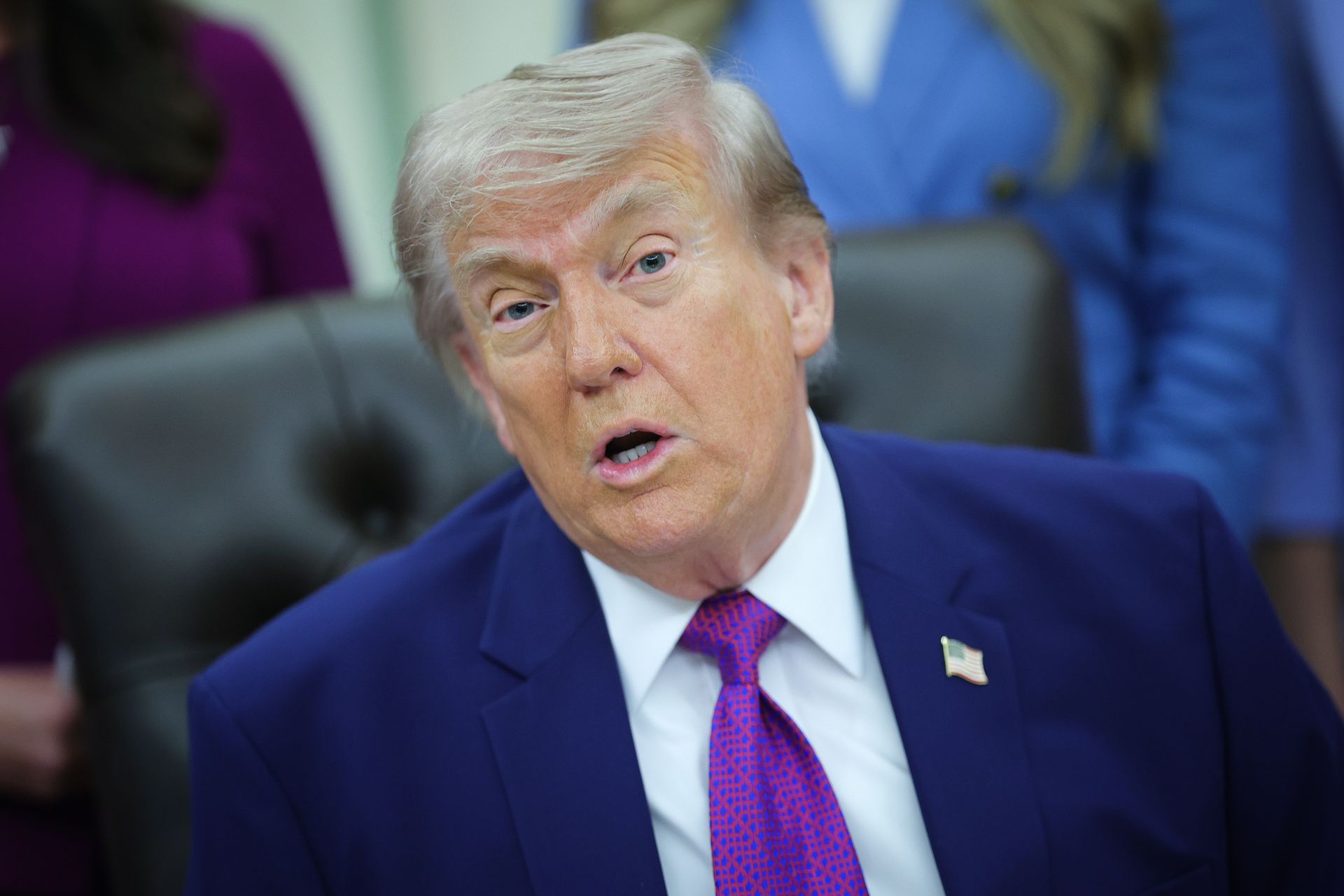
Kevin Dietsch / Getty Images
President Donald Trump said Monday that the U.S. ceasefire with Iran is "on life support" after dismissing Tehran's counteroffer to a U.S. war-ending proposal as "garbage."
"I would say the ceasefire is on massive life support, where the doctor walks in and says, 'Sir, your loved one has approximately a 1% chance of living,'" Trump told reporters in the Oval Office. He added that the Iranian reply was "unbelievably weak" and that he did not finish reading it.
Trump had signaled his displeasure a day earlier in a Truth Social post calling the Iranian response "TOTALLY UNACCEPTABLE!" At a news conference Monday, Iranian Foreign Ministry spokesman Esmail Baghaei pushed back sharply, calling Tehran's submission "reasonable and generous" while charging that the U.S. had approached the talks with "one-sided views" and was pressing "unreasonable" and "excessive demands," according to NBC News.
Tehran's submission centered on a formal end to hostilities, the removal of the U.S. naval blockade strangling Iranian ports, the unfreezing of Iranian funds held abroad, and guaranteed transit rights through the Strait of Hormuz, according to The Washington Post. On the question of nuclear activities, Tehran insisted those issues be deferred entirely to a later round of talks — a stance that clashed directly with a 14-point American framework that had made nuclear concessions a central element.
Despite his sharp language, Trump said a diplomatic solution remained "very possible" because Iranian leaders "change their mind." Trump claimed that Iranian officials had verbally committed, roughly 48 hours before, to letting American personnel extract the canisters of highly enriched uranium — more than 900 pounds of the material — that had been entombed in underground caverns by U.S. bombing, before walking back that commitment. "They changed their mind because they didn't put it in the paper," he said. Iran has said there has been no agreement on nuclear issues.
April 8 marked the start of the ceasefire, which Trump agreed to after threatening to obliterate Iran's "whole civilization"; when the original two-week window closed, he opted on April 21 to keep it in place. Accusations of violations have flowed in both directions throughout its duration, keeping the truce fragile from the outset. The week prior saw a cascade of hostilities: Iranian forces launched strikes against the United Arab Emirates, naval exchanges erupted in the Strait of Hormuz, and U.S. military aircraft destroyed two Iranian-flagged tankers that the Pentagon said were trying to breach the blockade.
Brent crude, the global benchmark, rose more than 3% to almost $105 a barrel Monday. The diplomatic standoff has left the two sides without a clear path to reopening the Strait of Hormuz, which handles about one-fifth of the world's seaborne oil under normal conditions. Saudi Aramco CEO Amin Nasser warned Monday that global oil markets will not normalize until 2027 if the disruption extends further.
Diplomatic activity continued over the weekend when Rubio and Witkoff sat down Saturday with Qatari Prime Minister Mohammed bin Abdulrahman Al Thani, with war-termination efforts topping the agenda, according to The Washington Post. Pakistani mediators have also been involved in the talks.
Join 500,000+ readers who start their day with Quartz.
By subscribing, you agree to our Terms of Service and Privacy Policy.