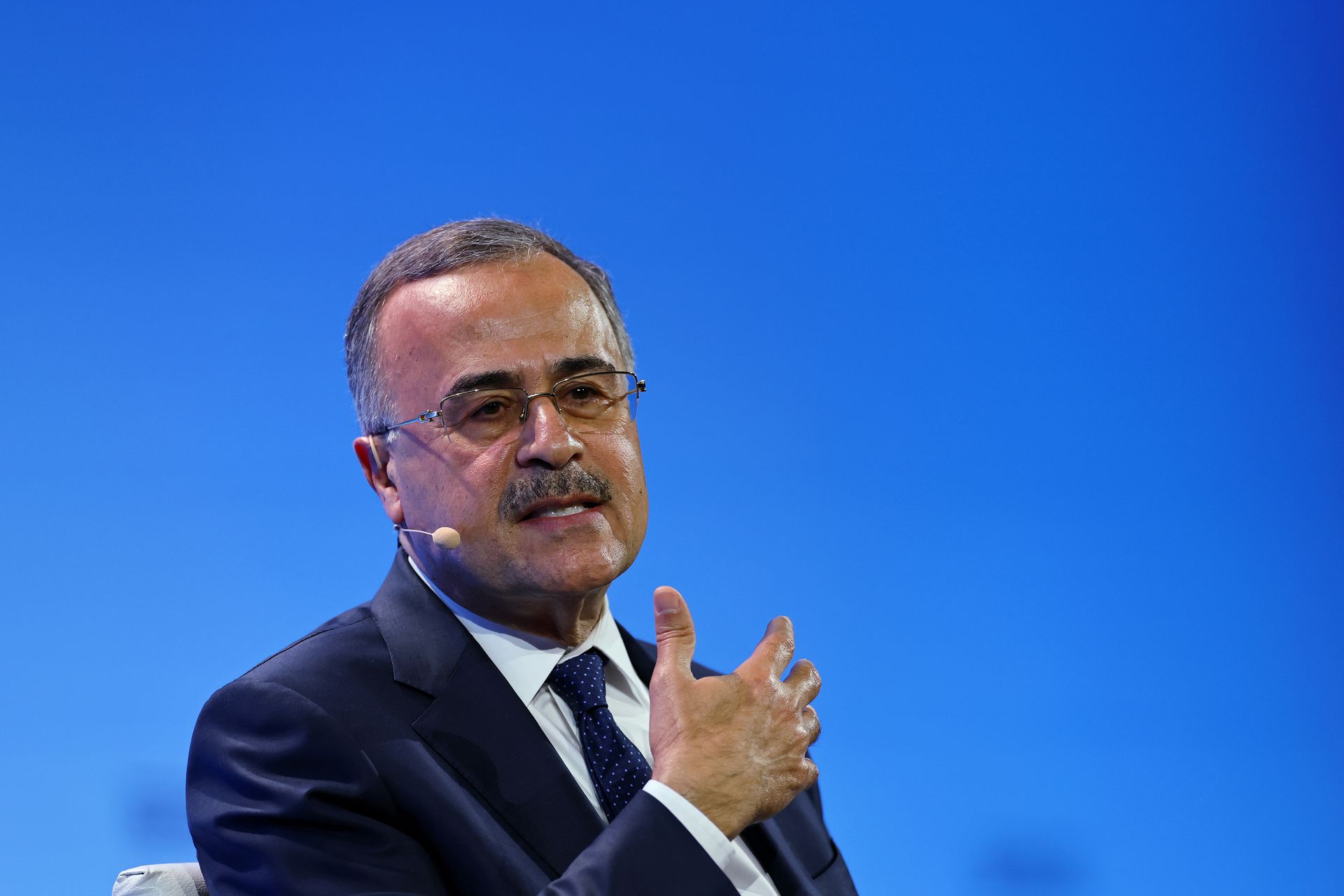
Saudi Aramco CEO Amin Nasser warned Monday that the global oil market will not normalize until 2027 if the disruption to the Strait of Hormuz extends beyond a matter of weeks, even as the company reported a 26% increase in first-quarter adjusted net income.
“If the Strait of Hormuz opens today, it will still take months for the market to rebalance, and if its opening is delayed by a few more weeks, then normalization will last into 2027,” Nasser said during an earnings call, according to MarketWatch.
To work around the blockage, the kingdom shifted a portion of its crude shipments onto the East-West pipeline, delivering oil to the Red Sea terminal at Yanbu rather than through the Gulf. Vessel-tracking figures compiled by Bloomberg put average daily exports from that port at close to 4 million barrels in April, still short of what Aramco was moving before the conflict began. First-quarter crude volumes were up year-over-year, the company noted, but slipped relative to the preceding quarter.
Nasser credited advance planning with limiting the damage, while cautioning that the broader market remains under strain. "While Aramco has been able to mitigate some of the impact thanks to strategic foresight, such as the East-West pipeline, global energy system supplies remain constrained," he said. "The energy industry needs to plan and invest more in resilience."
Now three months into the fighting, the crisis has sent oil prices toward $100 a barrel while choking off the Strait of Hormuz, a chokepoint that under normal conditions handles about one-fifth of the world's seaborne oil. Diplomatic efforts have repeatedly stalled, with Washington and Tehran showing little progress toward an agreement. Pakistani mediators are awaiting Tehran's formal response to a proposed memorandum of understanding. President Donald Trump has said it is "too soon" to talk about a peace deal while warning that a failure to reach one would mean renewed military strikes at a far greater scale.
The conflict escalated further after Iran launched missile and drone attacks against the United Arab Emirates, threatening a ceasefire that had already been under strain since it took effect in early April. Brent crude briefly reached $126 a barrel in late April before retreating.
Debt levels crept higher over the period, with the gearing ratio moving from 3.8% at year-end 2025 to 4.8% by the close of the first quarter.