Markets were rattled Wednesday as President Donald Trump suggested the U.S. ceasefire with Iran had collapsed, a statement that drove oil prices sharply higher and pushed U.S. stock futures into the red amid rising Middle East tensions.

"I think it's over," the president said when asked about the state of the ceasefire. His remarks followed a fresh outbreak of hostilities
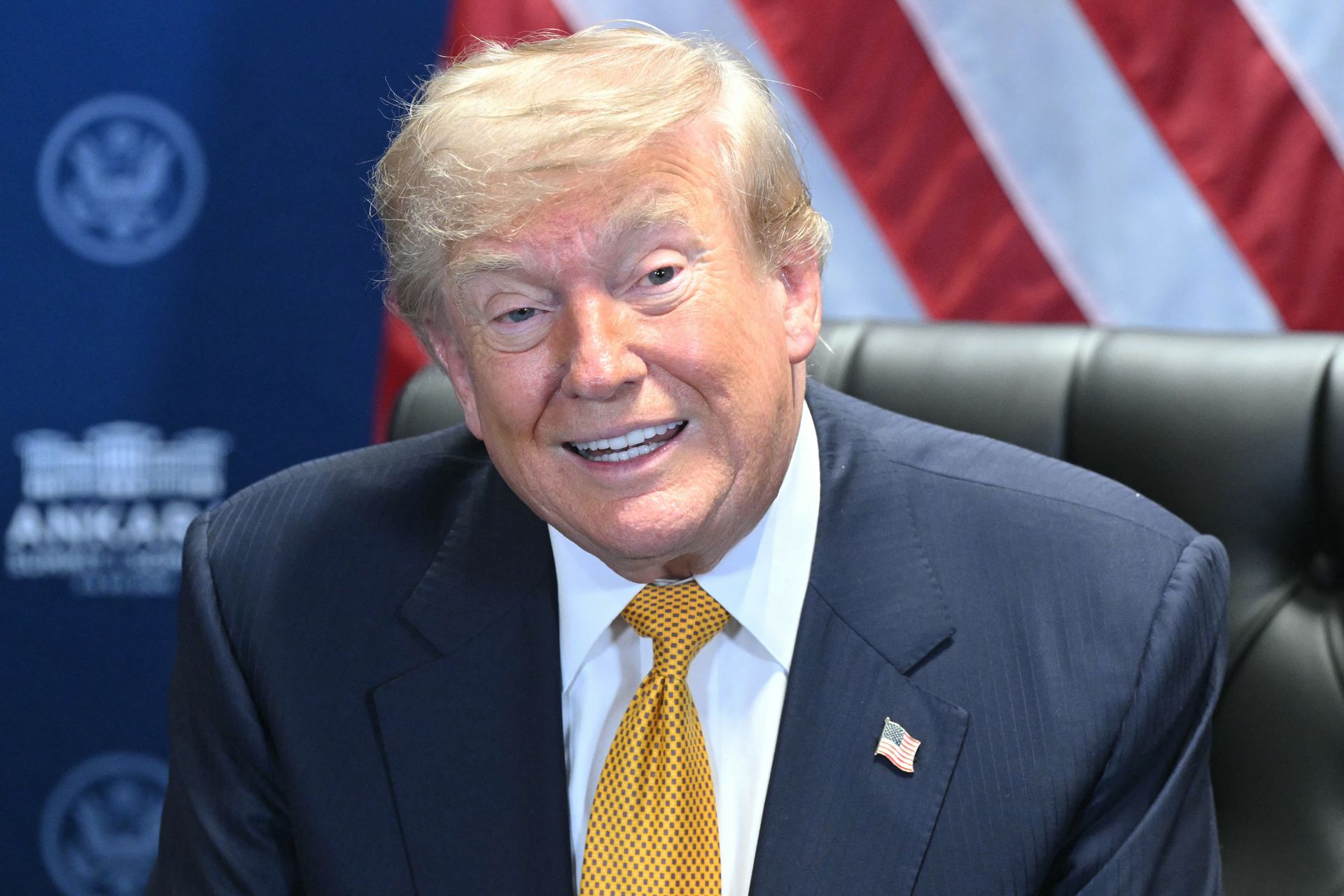
SAUL LOEB / Getty Images
Markets were rattled Wednesday as President Donald Trump suggested the U.S. ceasefire with Iran had collapsed, a statement that drove oil prices sharply higher and pushed U.S. stock futures into the red amid rising Middle East tensions.
Following Trump's remarks at a NATO summit in Turkey, Dow Jones Industrial Average futures were pointing to a decline of 564 points, or 1.1%, with S&P 500 futures off 0.9% and Nasdaq $NDAQ 100 futures losing 1.3%. In energy markets, West Texas Intermediate crude was trading at $73.99, up 5%, while Brent futures advanced 5.2% to $78.39 a barrel.
"To me, I think it's over," Trump said when asked about the state of the ceasefire.
His remarks followed a fresh outbreak of hostilities. U.S. Central Command said that Tuesday's military action targeted more than 80 sites inside Iran in response to Iranian attacks on three commercial ships in the Strait of Hormuz. Separately, the Treasury Department moved to cut off Iran's ability to sell oil on global markets, rescinding a license that had previously authorized those transactions.
Tehran pushed back sharply, with Iran's foreign ministry issuing a statement that described the U.S. action as a "gross violation" of the memorandum of understanding the two sides agreed to last month. The ministry added that its armed forces "will not hesitate to defend Iran's territorial integrity, national sovereignty, and national security against American military aggression."
At the same summit in Ankara, NATO Secretary General Mark Rutte offered a defense of the U.S. military action, calling it "absolutely necessary," according to CNBC. "When you have a ceasefire and Iran is basically violating the ceasefire — we see what happened yesterday with ships being attacked — I think it is totally crucial that the U.S. forcefully reacts."
Across the Atlantic, the pan-European Stoxx 600 shed 1.8%, with every major regional index and sector finishing lower on the day — the lone exception being oil and gas, which gained on the surge in crude prices.
Wednesday's calendar also includes the 2 p.m. ET release of minutes from the Federal Reserve's June policy meeting — the first chaired by Kevin Warsh. Analysts expect the readout to offer a clearer window into the thinking behind the Fed's decision to hold rates steady, as well as the conditions under which policymakers might feel compelled to raise them further. Adam Crisafulli, founder of Vital Knowledge, flagged the release as a potential source of market-moving information. "The FOMC minutes will be [a] wildcard simply because Warsh was so opaque at the most recent press conference," he wrote in a note reported by CNBC. "Normally, [Jerome] Powell provided fairly comprehensive accounting of the meeting discussion, but that didn't happen with Warsh, so the minutes, which are likely to be hawkish in tone, could contain some surprises."
Join 500,000+ readers who start their day with Quartz.
By subscribing, you agree to our Terms of Service and Privacy Policy.