
President Donald Trump signed an executive order on Thursday finalizing a trade deal with Japan, establishing 15% on most Japanese goods.
The agreement also stated that Tokyo will step up purchases of U.S. rice by 75% and more agricultural products totaling $8 billion annually
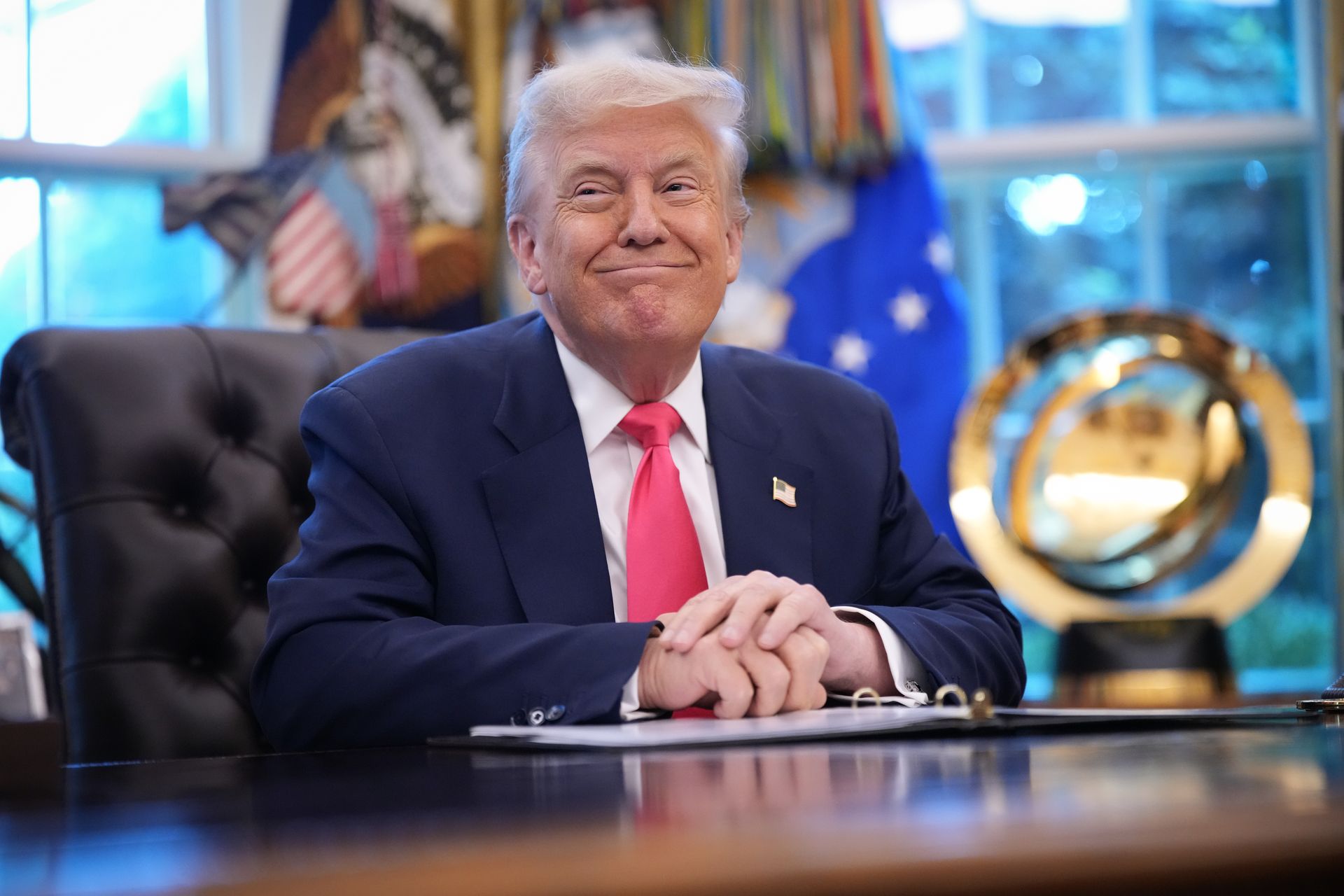
President Donald Trump speaks in the Oval Office on August 14, 2025 in Washington, DC. (Andrew Harnik/Getty Images)
President Donald Trump signed an executive order on Thursday finalizing a trade deal with Japan, establishing 15% on most Japanese goods.
The White House said in its executive order that the agreement will boost the U.S. economy, coupled with fortifying U.S. manufacturing. The accord will assign other tariffs for autos, pharmaceuticals, aerospace products, and natural resources that aren't readily available in the U.S.
Japan also agreed to invest about $550 billion in a direction that will be determined by the Trump administration. The White House said that the anticipated investment will generate a flood of jobs in the U.S.
The agreement also stated that Tokyo will step up its purchases of U.S. rice by 75% and agreed to buy U.S. agricultural products totaling $8 billion annually.
The president's ability to unilaterally impose tariffs is legally tied up, however, after a federal court found Trump didn't have limitless authority to use a 1970s law to do so on dozens of trade partners. The tariffs were left in place until mid-October, but the Trump administration filed a petition late Wednesday with the Supreme Court to overturn the lower court ruling. They warned that the decision jeopardizes Trump's ability to forge trade deals with foreign governments.
"The stakes in this case could not be higher," the petition said, adding that stripping the president's ability to unilaterally impose tariffs risks exposing the U.S. to retaliation from trade partners "without effective defenses and thrust America back to the brink of economic catastrophe."
The petition listed "historic trade deals" with the U.K, E.U., South Korea, Japan, Indonesia, Philippines, and Vietnam, though it acknowledges the Trump administration is still molding frameworks into final agreements. It added that there are still "dozens of countries" negotiating trade deals with the U.S.
Join 500,000+ readers who start their day with Quartz.
By subscribing, you agree to our Terms of Service and Privacy Policy.