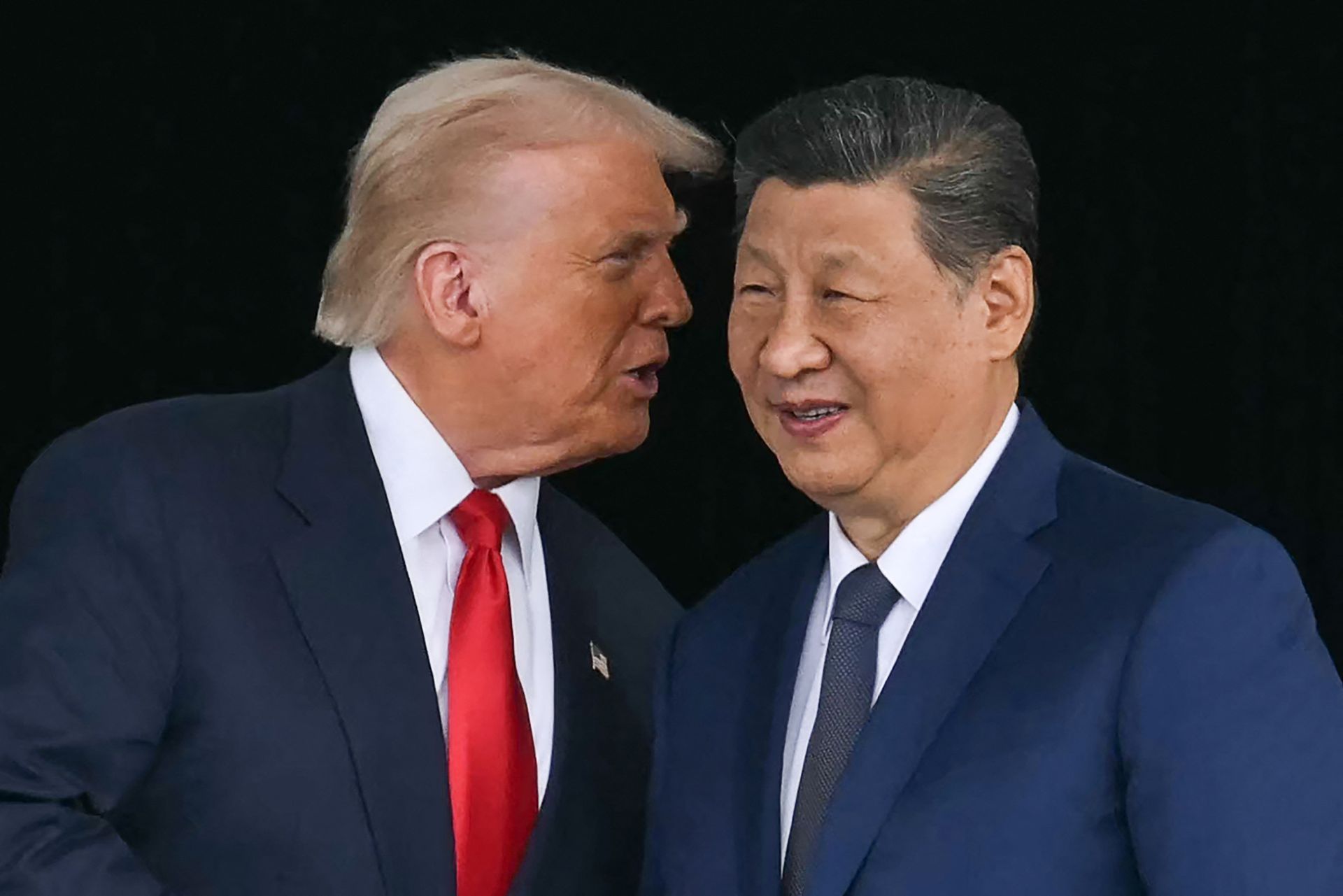
Ahead of a planned summit between President Donald Trump and Chinese President Xi Jinping, a broad coalition spanning the U.S. auto industry and congressional lawmakers from both parties has coalesced around a single demand: keep Chinese vehicles out of the American market.
Reuters reports that the alarm has drawn together an unlikely coalition — from factory workers and parts suppliers to steel producers and elected officials — all warning that Chinese automakers, drawing on state-backed resources and the ability to price far below market rates, could gut the foundation of American manufacturing if given a foothold.
The coordinated push traces back to remarks Trump made at the Detroit Economic Club in January, where he said he welcomed the idea of Chinese automakers setting up factories on American soil and putting Americans to work, according to Reuters. For an industry that had methodically worked to erect barriers against Chinese vehicles — including strict data security regulations and steep EV tariffs — the remarks set off a wave of concern that years of effort could be undone.
Senator Elissa Slotkin, the Michigan Democrat, appeared at the same Detroit venue on Thursday with a pointed message for the White House: any agreement with Beijing that opens American showrooms to Chinese-branded cars would be a mistake. "Please don't make a bad deal," Senator Slotkin said. She also promoted the bipartisan Connected Vehicle Security Act of 2026, which she introduced with Republican Senator Bernie Moreno of Ohio.
The bill would lock into statute a data-security framework put in place under the Biden administration that effectively shuts out Chinese vehicles, a move designed to make any future reversal politically and legally difficult. It would also empower the Commerce Department to identify and block high-risk vehicle technologies. Software and vehicle restrictions would take effect in 2027, with hardware restrictions following in 2030, according to Senator Moreno's office. A companion bill in the House, sponsored by Democratic Representative Debbie Dingell and Republican Representative John Moolenaar — both from Michigan — would go further by banning industry partnerships with Chinese companies. Reuters was told by congressional aides that the bill, which has drawn wide support, stands a realistic chance of becoming law before year's end, potentially as a rider on a larger transportation funding package.
GM, Ford $F, Stellantis $STLA, Honda $HMC, and the Alliance for Automotive Innovation all issued statements backing the Senate bill. UAW President Shawn Fain also voiced support, saying in a statement that the legislation "puts common sense guardrails on a major threat to our nation's auto industry."
The industry's concern is rooted partly in what has already happened in other markets. Chinese automakers made striking inroads in Europe over the past year, with their collective market share climbing to 6% — twice what it had been — and surging as high as 14% in Norway and 11% in Britain, according to Reuters. In Mexico, 34 Chinese auto brands now hold about 15% of the market. To illustrate the pricing gap, Geely's EX2 electric vehicle is available in Mexico for roughly $22,700 — a figure that undercuts the entry-level Tesla $TSLA Model 3's U.S. sticker price of $38,630 by more than $15,000.

At an April event in Detroit, U.S. Trade Representative Jamieson Greer sought to ease concerns, telling the audience that the connected car rule would remain intact and that vehicle trade was not part of the upcoming Beijing discussions, according to Reuters. Commerce Secretary Howard Lutnick has also ruled out Chinese investment in the U.S. auto sector. Despite those assurances, Scott Paul of the Alliance for American Manufacturing cautioned that the industry is not entirely reassured, given Trump's repeated emphasis on drawing new assembly plants to the United States. Paul told Reuters the president has not ruled anything out: "He's left wiggle room in dealing with the auto sector."