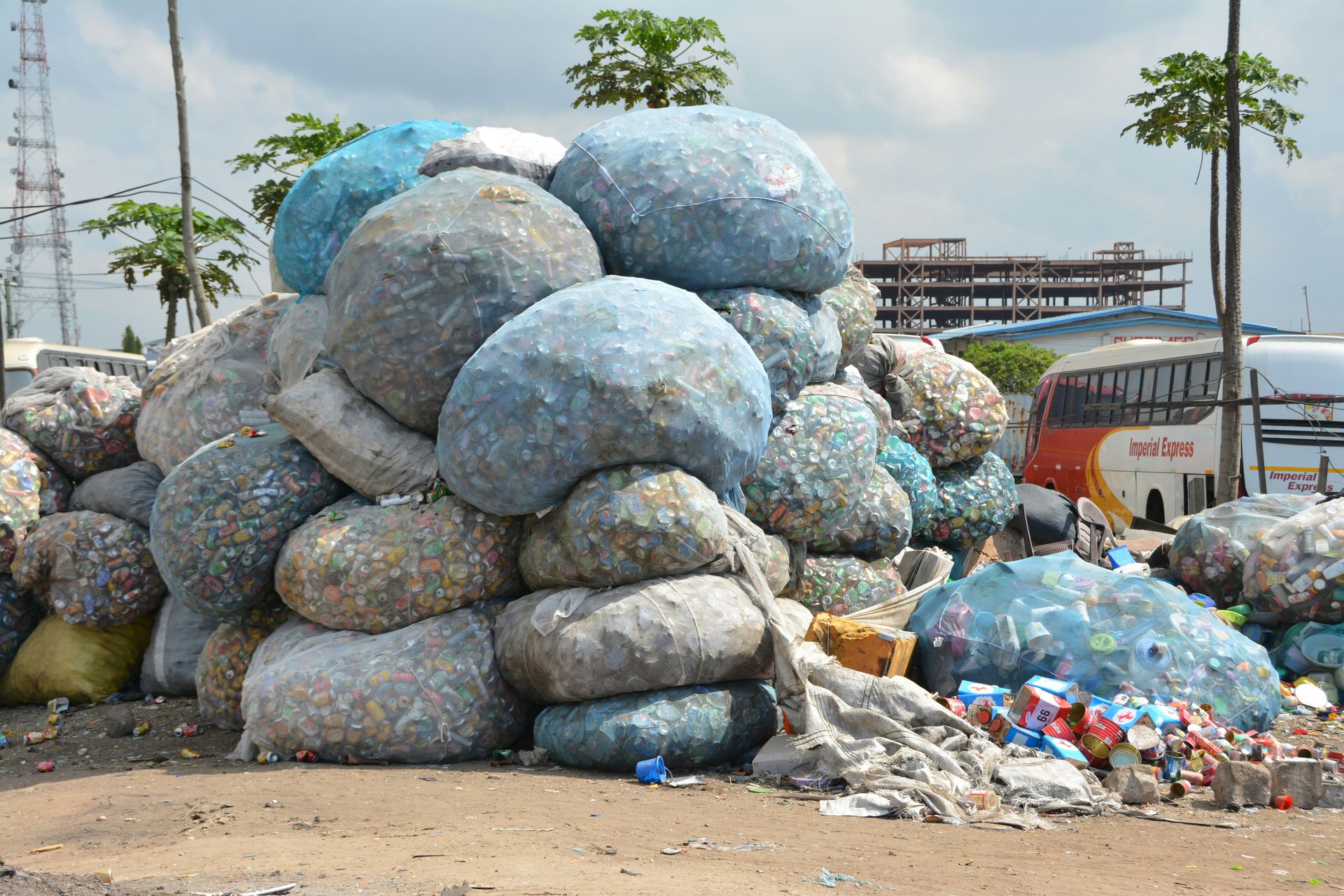
Americans generate 47 million tons of recyclable material every year and recover just 10 million tons of it. The rest disappears into a system that loses material at every stage — the home, the sorting facility, the export dock, the incinerator — and has been losing it at roughly the same rate for a decade, according to The Recycling Partnership's 2024 State of Recycling report. The national recycling rate sits at 32%. It was 35% in 2017. The infrastructure built to close that gap has not been funded. The habits assumed to drive it never fully formed.

Stagnation is part of what's driving investment in AI-powered waste sorting. The companies behind it are building technology to extract value from a broken system, not repair it. To understand why those failures persist, it helps to trace where the material actually goes.
Most recyclables never leave the house
The biggest loss happens before any truck pulls up. Of everything that goes unrecycled, 76% is never collected at all. Every other failure in the system — the contaminated bale, the overseas shipment that never sailed — is a rounding error next to that.
While 73% of U.S. households have some form of recycling access, that figure drops to 37% for multifamily homes such as apartment buildings, condos, and duplexes. About 20 million households, or 63% of all multifamily residences, are simply cut off. Even among those who do have access, only 59% actually use it. And those who do use it put a little above half of their recyclable material in the right bin.
Seven out of 10 cardboard boxes, three out of four milk jugs, four out of five steel cans, and seven out of 10 aluminum cans end up in the trash. Film and flexible packaging — the soft plastic wrapping on everything from frozen meals to shipping envelopes — posts the worst rate of all: 80% goes straight to landfill, in part because most curbside programs refuse to take it.
Robotics companies such as AMP have built sorting systems that process mixed garbage directly, removing the consumer from the equation entirely.
Of the material that reaches a materials recovery facility — the industrial sorting plant where collected recyclables are separated, cleaned, and baled — about 87% is successfully processed and sent to market, according to The Recycling Partnership. The industry target is 95%.
Single-stream collection — the model where households dump all their recyclables into one bin — raises participation rates. It also increases the volume of non-recyclable items flowing into sorting facilities, where they foul the process and degrade the value of what arrives with them.
The export market that collapsed
For decades, the U.S. solved its surplus recycling problem the same way it solved a lot of surplus problems: it shipped it overseas. China consumed 56% of the world's plastic recyclables and absorbed roughly 4,000 shipping containers of U.S. recyclables every day. Then, in 2018, China announced a policy known as National Sword, which imposed a 0.5% contamination limit on imported recyclables and banned many plastics outright. The U.S. recycling industry, built on the assumption that China would keep buying, had no backup plan.
The fallout was measurable and fast. The quantity of plastic landfilled in the U.S. rose by 23.2% following National Sword's implementation, according to a study published by University at Buffalo researchers. U.S. scrap plastic exports fell to 918 million pounds in 2023, the fourth straight year of record lows since the Census Bureau began tracking in 2002 and an 81% decline from the 2014 peak of 4.8 billion pounds, according to Resource Recycling.
Paper followed a similar trajectory. Exports of recovered waste paper declined about 14% in 2023, falling below 13 million tons, the lowest volume in well over a decade, according to Trade Map data cited by Statista. India stepped in as the leading destination for U.S. paper scrap, but no single country or coalition of buyers has come close to replacing the volume China once took.
Where it all ends up
The most recent comprehensive data from the Environment Protection Agency's Facts and Figures report covers 2018 and shows the final accounting: about 35 million tons, roughly 11.8% of all municipal solid waste, were burned in facilities that recover energy from combustion. More than 146 million tons, or about 50%, were buried in landfills. These figures cover all household waste, not recyclables alone.
The national recycling rate tells its own story. That rate climbed from 6% in 1960 to 35% in 2017. Then it fell to 32.1% in 2018 and has barely moved since, according to the EPA, which has set a national goal of 50% by 2030.
Education campaigns and better signage won't help the country reach that target. The EPA estimated in a 2024 report that as much as $43.4 billion would have to be invested in curbside collection, drop-off programs, and processing infrastructure. That level of spending, the agency projected, could recover an additional 82 to 89 million tons of packaging and organic waste per year, lifting the national recycling rate from 32% to 61%.
But the money hasn't materialized. The gap hasn't closed. And the cardboard box on the curb, like the 79% of recyclable material that goes uncaptured every year, keeps ending up in the same place.
