
The World Bank cut its global growth forecast for 2026 to 2.5%, calling the slowdown the worst hit to the global economy since the COVID-19 pandemic as soaring energy prices from war in the Middle East fuel a new round of inflation.
The bank cut its 2026 global growth forecast to 2.5%, citing the Middle East war's toll on energy markets and inflation
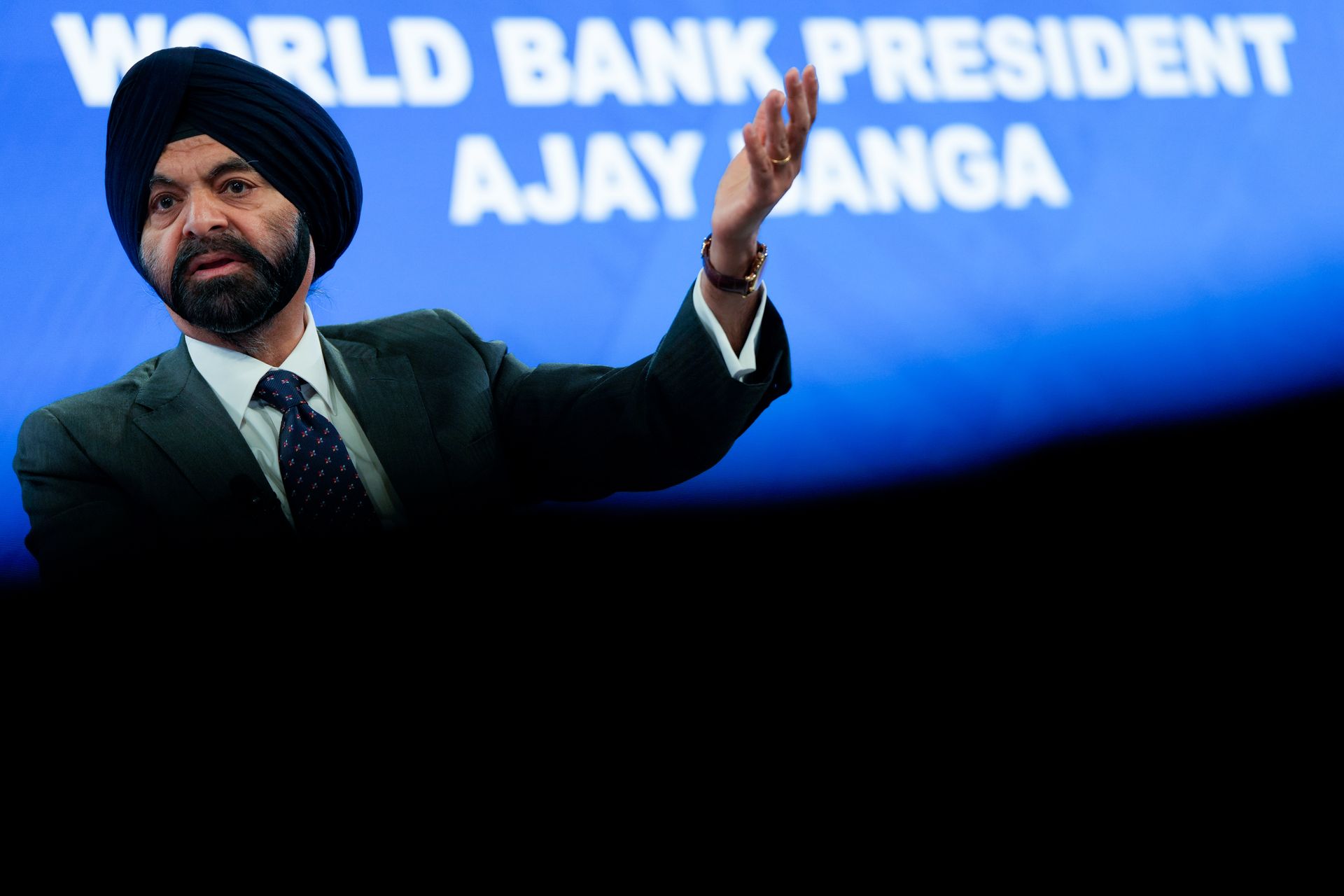
Bloomberg / Getty Images
The World Bank cut its global growth forecast for 2026 to 2.5%, calling the slowdown the worst hit to the global economy since the COVID-19 pandemic as soaring energy prices from war in the Middle East fuel a new round of inflation.
After expanding at a 2.9% rate in 2025, the world economy is now projected to slow further, with the 2026 figure representing the weakest growth rate recorded since the COVID-19 pandemic first emerged. The revised forecast comes in 0.1 percentage point below what the bank had expected in January. The bank warned growth could fall to just 1.3% if energy supply disruptions intensify and financial markets come under stress.
Since U.S. and Israeli forces struck Iran on Feb. 28, oil, gas and fertilizer prices have swung sharply as months of disruption to shipping through the Strait of Hormuz have reverberated through global supply chains. Commodity prices, which analysts had anticipated would fall this year, have instead surged 22%, pushing the bank's inflation projection for 2026 to 4% — nearly a full percentage point above the 3.3% recorded in 2025.
The bank's baseline forecast assumes an average Brent crude oil price of $94 per barrel for the year — up 36% from 2025 — with the worst energy disruptions abating by the end of July. In an intermediate scenario, if disruptions last longer and oil averages $115 per barrel, growth could slow to 2.1% and inflation could reach 4.4%.
Developing economies have been hit especially hard. The bank now projects growth in those countries at a post-pandemic low of 3.6% in 2026, down from 4.4% in 2025. The Middle East, North Africa, Afghanistan and Pakistan region absorbed the steepest revision, with the bank cutting its growth forecast by 2.7 percentage points to 1.6%.
Energy-exporting nations bore the brunt of the downward revisions, with the UAE, Iraq and neighboring Middle Eastern countries suffering the steepest forecast cuts among the two-thirds of all countries that saw their outlooks reduced. The UAE is now expected to grow 2.4% in 2026, down from a January forecast of 5%.
World Bank chief economist Indermit Gill told reporters the global economy has grown significantly more fragile compared with the conditions that prevailed in 2008 or 2018, and that elevated interest rates, persistent inflation and unpredictable policymaking would characterize the years ahead. World Bank deputy chief economist Ayhan Kose warned that if energy disruptions triggered financial market stress, confidence could erode quickly.
The bank forecast U.S. growth at 2.2% in 2026 and China's at 4.2%, while the euro area is expected to expand just 0.8%, down from 1.4% in 2025. India remained the fastest-growing large economy, with GDP seen rising 6.6% this year.
The conflict appeared to be escalating on Thursday, when President Donald Trump threatened additional attacks on Iran and a takeover of its energy infrastructure.
The World Bank's bleak outlook follows similar warnings from other major institutions. The OECD cut its own global growth forecast for 2026 earlier this month, warning a prolonged conflict could trigger the deepest worldwide slowdown in 40 years outside of Covid and the 2008-2009 financial crisis. The IMF had previously cut its global growth forecast to 3.1%, warning that war in the Middle East had halted economic momentum.
Join 500,000+ readers who start their day with Quartz.
By subscribing, you agree to our Terms of Service and Privacy Policy.