Your kids will kick and scream and hate you for it, but science says it’s best to take away screens from children in the hours leading up to bedtime.
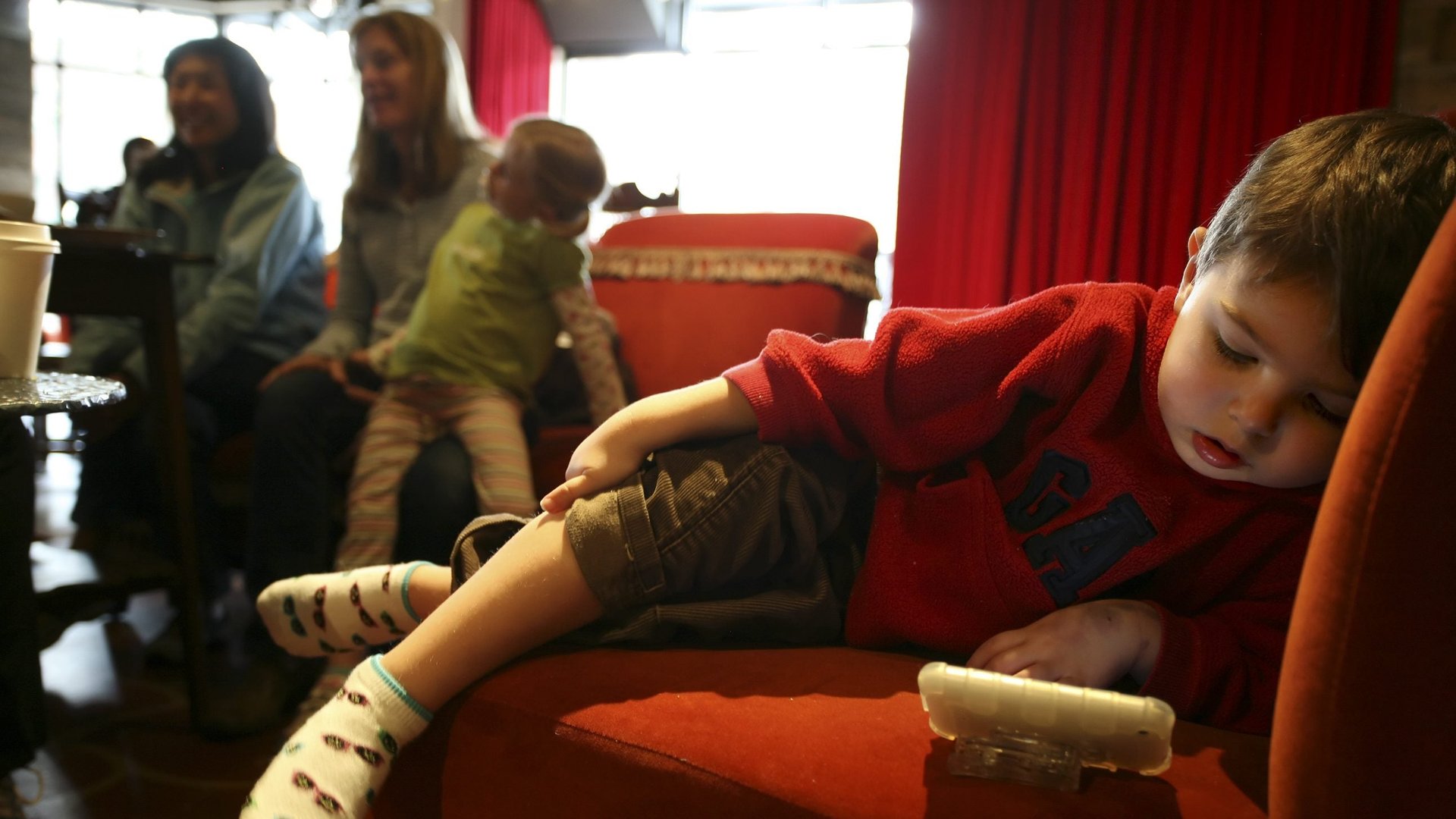
Your kids will kick and scream and hate you for it, but science says it’s best to take away screens from children in the hours leading up to bedtime.
A team out of the University of Colorado, Boulder conducted a review of all the available academic literature on how screens are robbing our children of sleep. “Of more than five dozen studies looking at youths ages 5 to 17 from around the world, 90% have found that more screen time is associated with delayed bedtimes, fewer hours of sleep, and poorer sleep quality,” according to a statement released with their findings.
Join 500,000+ readers who start their day with Quartz.
By subscribing, you agree to our Terms of Service and Privacy Policy.
The team’s review, published in this month’s issue of the journal Pediatrics, found three main screen-related reasons that children are robbed of sleep:
Because of these factors, children are simply not getting enough shut-eye. The National Sleep Foundation’s 2014 “Sleep in America Poll” (pdf) found that over 30% of elementary-school children and well over 50% of both middle and high schoolers don’t get the recommended nightly allowance. And this is a big problem. As the authors point out, “Healthy sleep patterns in childhood and adolescence are associated with lower obesity risk, better psychological well-being, improved cognitive functioning, and lower risk-taking behaviors.”
To curb this effect, the authors recommend that we remove all electronic media from our children’s bedrooms, including TVs and mobile phones, and establish firm bedtime routines. It’s also imperative to educate children that sleep is important and necessary—not just an inconvenient eight hours that you can’t be watching Netflix $NFLX.
