In 2017, the world deployed an ever-expanding amount of solar and wind power, setting a new record for renewable-power capacity added to the grid. In fact, the money spent on renewable installations was more than twice the sum spent on nuclear and fossil-fuel power, according to the annual Global Status Report published by renewables policy group REN21.
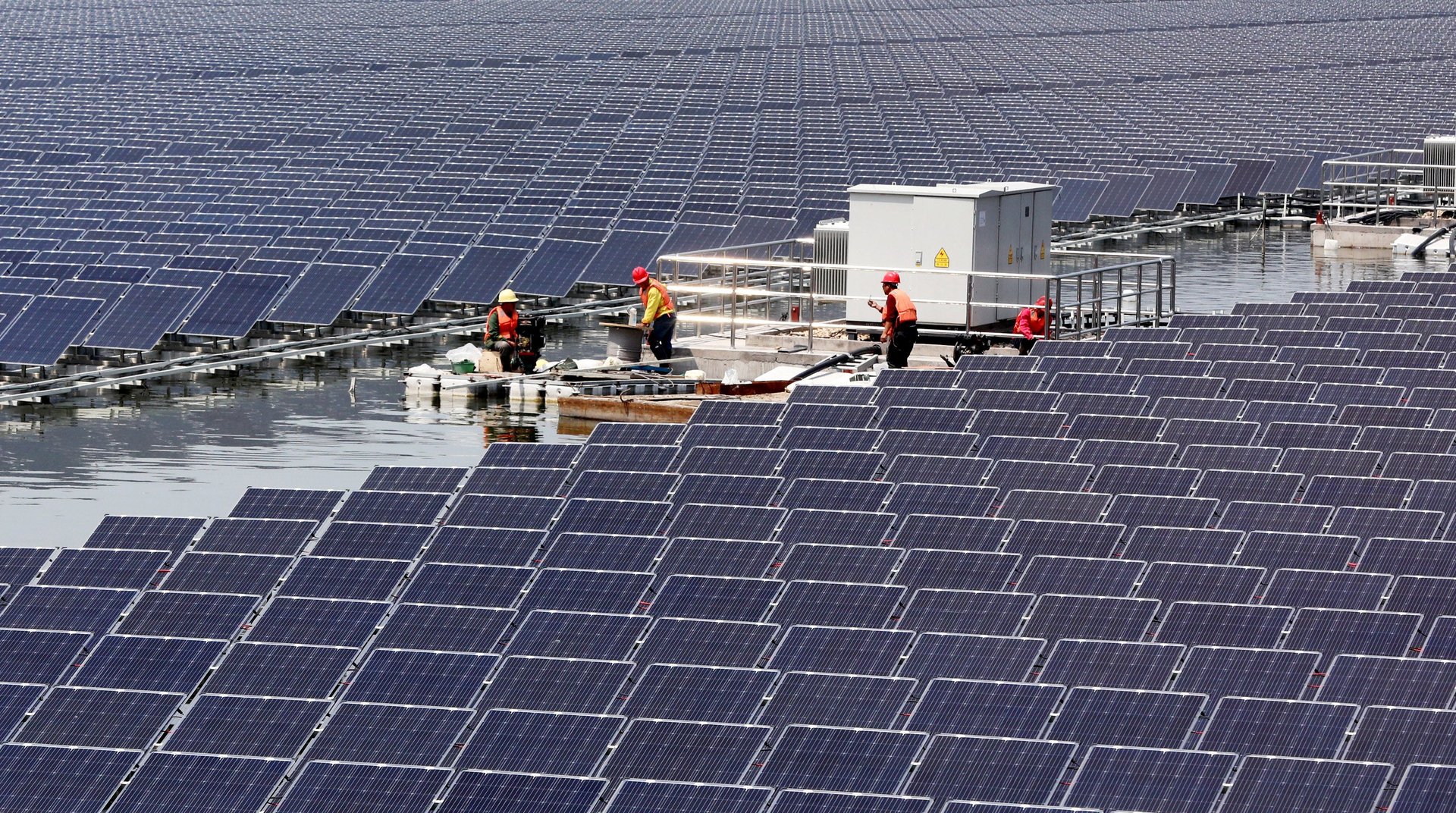
In 2017, the world deployed an ever-expanding amount of solar and wind power, setting a new record for renewable-power capacity added to the grid. In fact, the money spent on renewable installations was more than twice the sum spent on nuclear and fossil-fuel power, according to the annual Global Status Report published by renewables policy group REN21.
Over the past 10 years, global installed renewable-power capacity, which includes hydropower, has doubled:
Join 500,000+ readers who start their day with Quartz.
By subscribing, you agree to our Terms of Service and Privacy Policy.
That growth, however, isn’t enough to reduce emissions. World demand for energy increased by 2.1% last year, and low-carbon sources could not keep pace. As a result, the word’s energy-related carbon emissions rose by 1.7%, the first rise in four years.
It’s an important reminder that, despite all the talk about the growth of renewables, we still rely heavily on fossil fuels. Over the past 30 years, despite the rise of zero-carbon sources like nuclear, solar, and wind, the world still gets 80% of its energy from coal, oil, and natural gas.
“We may be racing down the pathway towards a 100% renewable electricity future, but when it comes to heating, cooling and transport, we are coasting along as if we had all the time in the world,” said Rana Adib, executive secretary of REN21. “Sadly, we don’t.”
