The prince of a Bronze Age civilization was murdered 3,846 years ago in what is possibly the earliest recorded political murder.
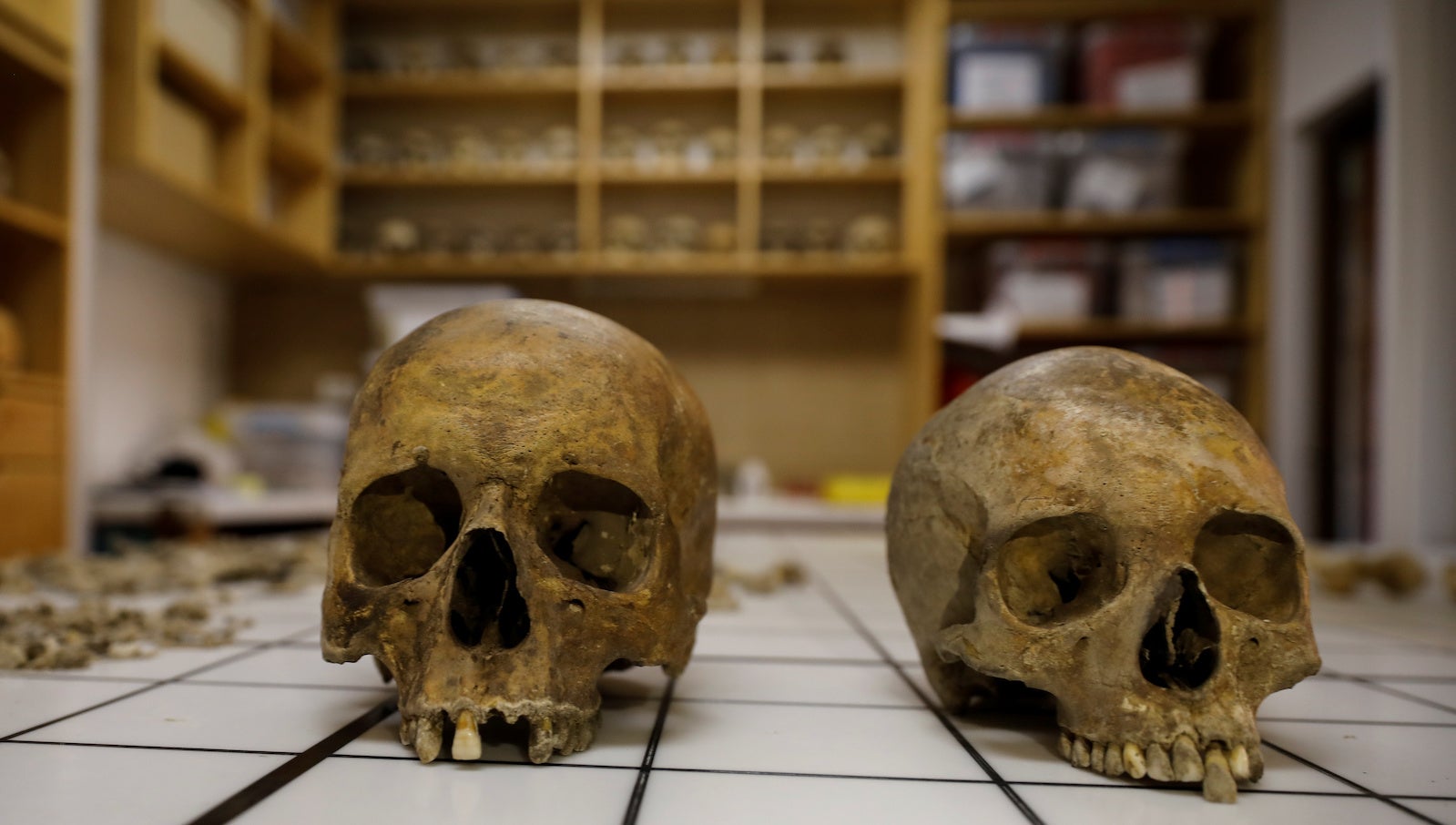
The prince of a Bronze Age civilization was murdered 3,846 years ago in what is possibly the earliest recorded political murder.
Historian Kai Michel and Saxony-Anhalt state archaeologist Harald Meller stake that claim in their new book about the Unetice culture in what is now the central Thuringia region of Germany. The prince’s body was discovered at the Leubingen archaeological site in 1877, elaborately buried with his weapons and a 10-year-old child, who may have been a sacrifice.
Join 500,000+ readers who start their day with Quartz.
By subscribing, you agree to our Terms of Service and Privacy Policy.
“As far as we can tell, we have now found evidence of the oldest political assassination in history,” Michel told Deutsche Welle.
The prince had at least three severe injuries to his body, with a sharp dagger deep into his stomach and spine, splitting his collarbone. Meller, the archaeologist, noted his injuries are where Roman gladiators would have aimed.
“It must have been a trusted person close to him. Perhaps a relative, friend or bodyguard,” he also told the German newspaper. “The ruler was unsuspecting and surprised by the attack. It could well be that he, like Julius Caesar in ancient Rome, was the victim of a conspiracy.”
The revelation marks a grim year where we also discovered the largest known child sacrifice in human history, which took place roughly 550 years ago.
