In the high-stakes, low-profit world of aviation, every little bit of savings helps—no matter how small.
In the high-stakes, low-profit world of aviation, every little bit of savings helps—no matter how small.
Almost nowhere is this more true than in “fuel tankering,” the common name for the practice of flying jets with extra fuel on board to save money. Sometimes, fuel tankering serves as a way to avoid paying more for gas, which helps keep ticket prices down. Planes may load up at one airport to avoid paying a sometimes steep premium at their destination: At Amsterdam’s Schiphol airport, for example, jet fuel is about 55% cheaper than on the French island of Corsica.
Join 500,000+ readers who start their day with Quartz.
By subscribing, you agree to our Terms of Service and Privacy Policy.
On other occasions, it allows them to avoid slow changeover times at airports and avoid long refueling stops. (Planes only make money when they’re flying, after all.) Around 30% of all flights within Europe use either partial or full fuel tanking.
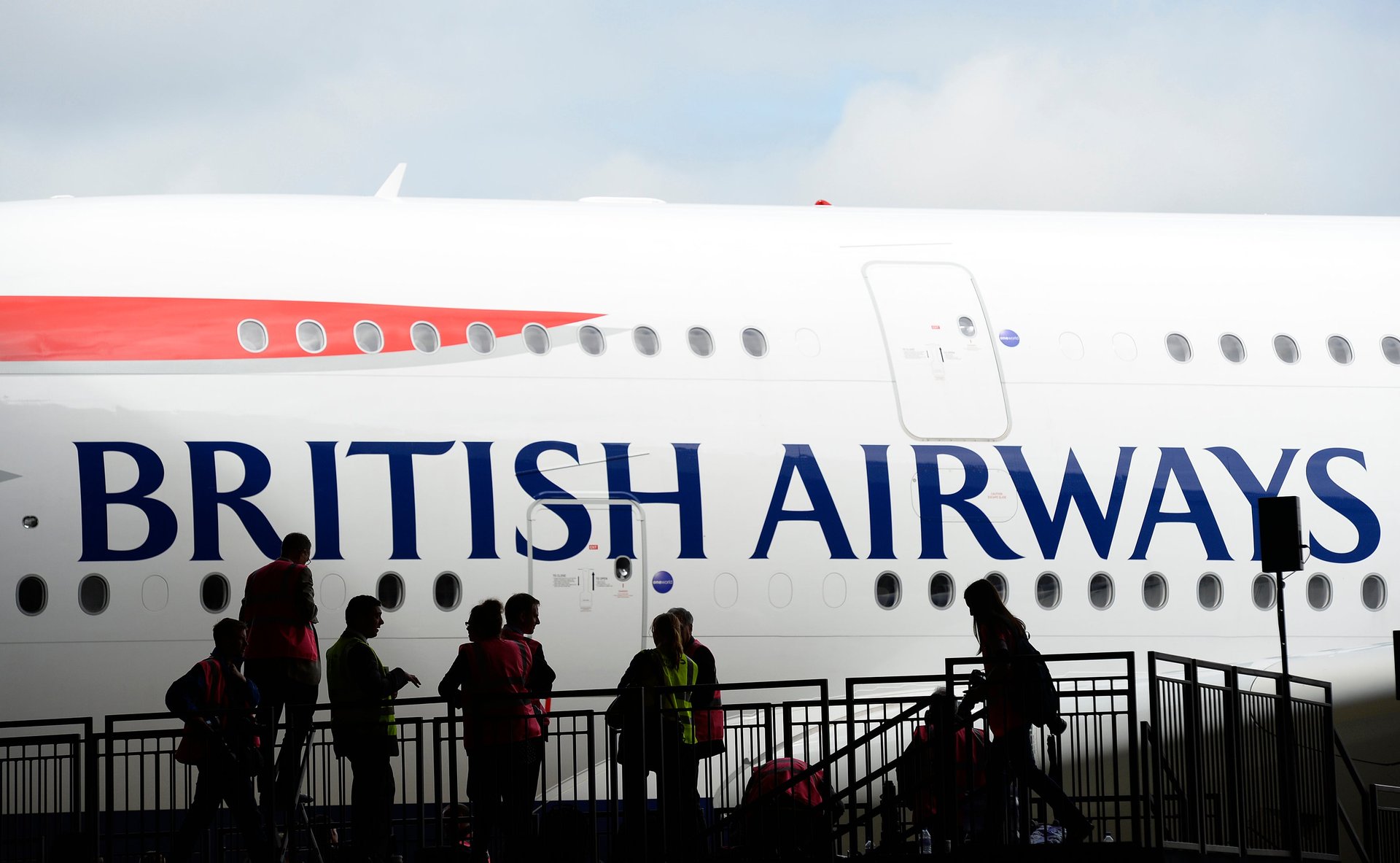
The savings can be minute. A recent investigation by BBC Panorama found that on at least one British Airways flight to Italy, the plane carried about 3.3 tons of additional fuel in order to save just £40 ($52).
Airlines argue that even savings this small eventually add up, allowing them to keep ticket prices down. But the practice is itself fuel-intensive. Every additional 100 pounds of fuel carried burns an extra four pounds of fuel, leading to flights with a greater carbon footprint. Though the 3.3 tons of extra jet fuel carried on the flight to Italy may have saved British Airways a few pennies along the way, they resulted in an additional 1320 lb (600kg) of CO2 burn.
Across all of Europe, according to a June 2019 Eurocontrol report, fuel tankering saves airlines €265m ($292m) a year, but puts an additional 993,182 tons of CO2 into the atmosphere in the process. For context, that’s roughly the same annual emissions of more than 200,000 on-road passenger vehicles.
While the practice is reportedly common in the US, the investigation did not explore North American carriers, who have not released their figures.
At a time when all eyes are on aviation for its perceived outsized impact on the environment, it’s an embarrassing look for the sector. Now, airline bosses are beginning to question the value of the practice. “We continue to do tankering today. We’re challenging that, we’re asking ourselves whether this is sustainable, and whether we should be pricing in the environmental impact of that,” said Willie Walsh, CEO of International Airlines Group, according to The Guardian. “Clearly the financial savings incentivize us to do tankering. But maybe that’s the wrong thing to do.” The group, which owns airlines such as British Airways and Iberia, has committed to net zero emissions by 2050.
