The US isn’t the egg devouring machine it once was. Not on a per capita basis, anyway.

The US isn’t the egg devouring machine it once was. Not on a per capita basis, anyway.
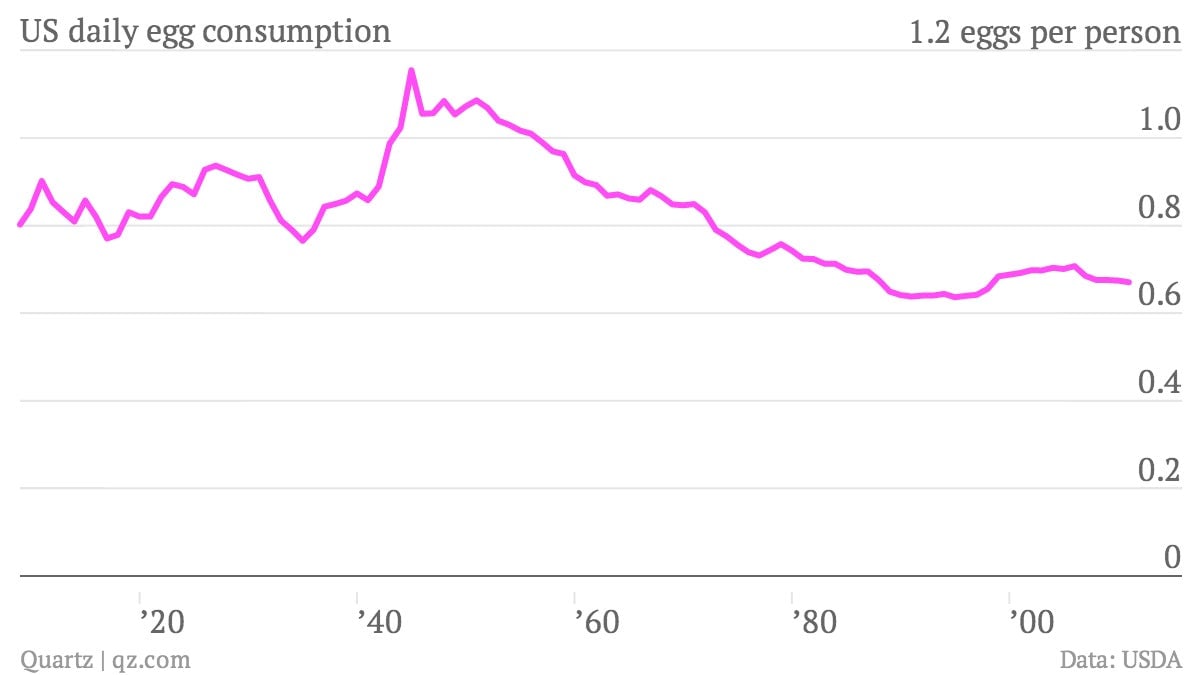
In 2013, the average American ate less than one egg per day (roughly .68), according to unreleased data from the United States Department of Agriculture (USDA). Back in 1945, at the peak of American egg consumption, the average American cracked open well over one full egg per day (1.15 to be precise). That’s almost 70% more than today:
Join 500,000+ readers who start their day with Quartz.
By subscribing, you agree to our Terms of Service and Privacy Policy.
So what’s going on?
For one, eggs, while still pretty cheap, have been getting pricier. “Eggs are a fairly price-sensitive foodstuff,” David Harvey, an agricultural economist at the USDA, told Quartz. “Egg consumption is affected not only by the price of eggs, which has been rising, but also the price of competing protein products, like meat, which have been falling.”
That dynamic helps explain why egg consumption peaked in the forties: The answer might lie in wartime rationing. “My suspicion is that people were consuming more eggs around the time of World War II, because meat was being so heavily rationed,” Harvey said.
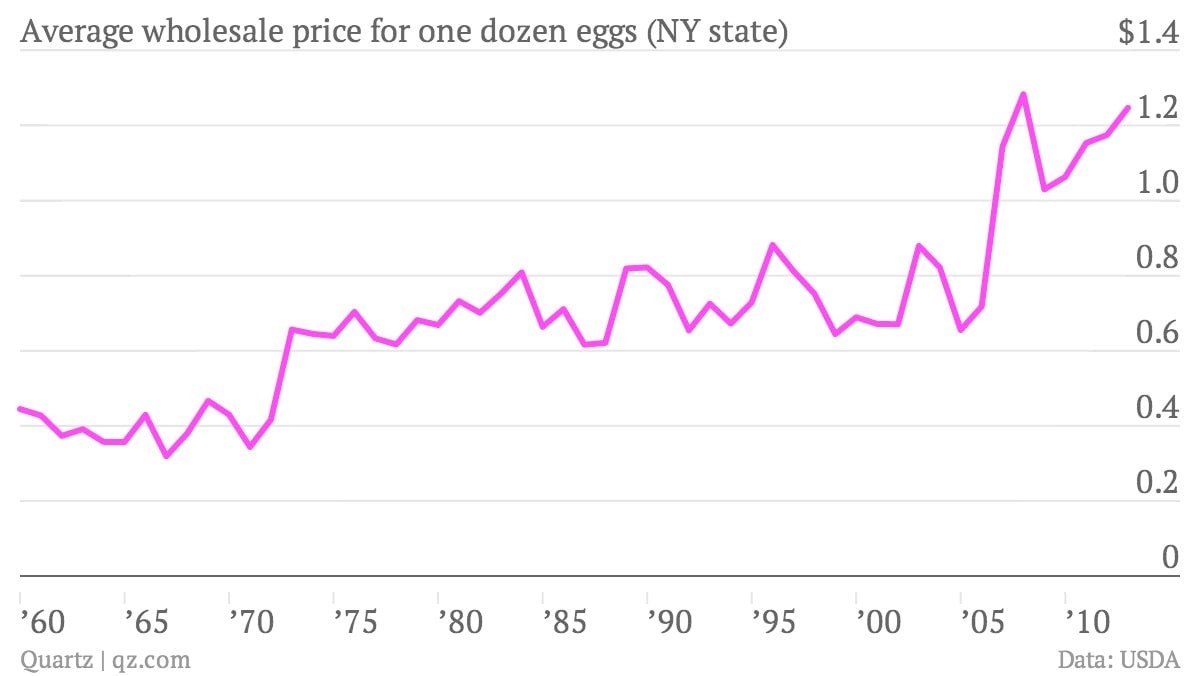
Today, to use New York state for an example, the average wholesale price of a dozen eggs is $1.25—about 300% higher than the $0.32 you would have paid in 1967.
Prices, however, only tell part of the story. Over the years, eggs have become mired in concern about the health risks of eating them.
“The major factors behind egg consumption trends are consumer preference factors, in particular, concerns over the cholesterol content of eggs and the risk of coronary heart disease and stroke,” the US International Trade Commission noted in a 1999 report. By its estimates, the “cholesterol scare” cost the US egg industry $10 billion.
While eggs contain cholesterol, the current consensus amongst nutritionists is that consuming it in food has a smaller effect on the bodily levels than once thought. Some studies recommend limiting consumption to one egg per day, while others found little to no association between egg consumption and high cholesterol and coronary heart disease.
But cholesterol isn’t the only health hurdle the industry has has to surmount; concerns over salmonella have complicated the demand for eggs, too.
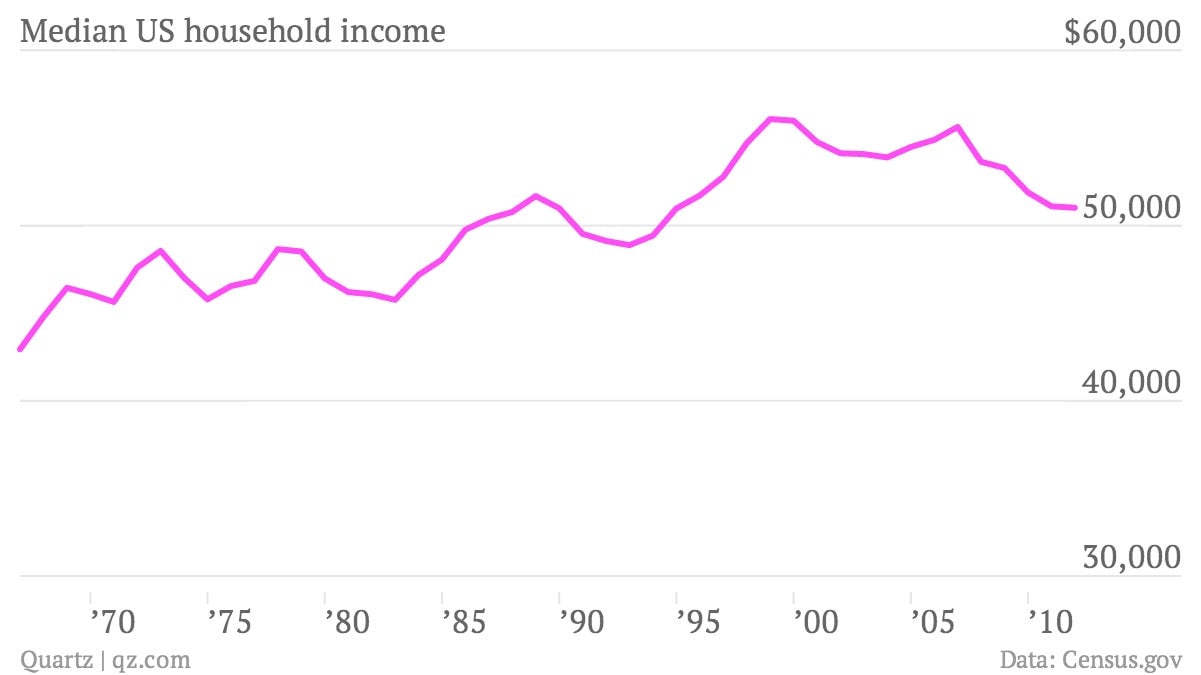
When people get richer, they tend to consume fewer eggs, according to the US International Trade Commission. Americans are a good deal richer than they were in decades past—the median US household makes roughly 19% more than it did back in 1967, according to US Census data.